



A practical guide to BAS alarm management for facilities
In this post
%20(1).avif)
Learn how to reduce alarm noise, eliminate nuisance alerts, and connect BAS alarms to work for faster response, safer operations, and better reliability.
Building Automation System alarms play a central role in safe, reliable operations. The signal set should help teams respond quickly, keep equipment stable, and highlight issues that put the facility at risk. Many organizations face the opposite. Alarm lists grow louder every year, visibility across systems fragments, and operators struggle to identify the alerts that require action.
This guide breaks down the core principles of strong BAS alarm management. You’ll learn what qualifies as a true alarm, where most programs fall short, and how teams use alarm management software to clean up noise, support faster response, and improve reliability.
Principles of effective BAS alarm management
Effective alarm management starts with a clear definition of what an alarm is meant to do within a building management system. Modern smart buildings generate signals from HVAC equipment, sensors, lighting control, security systems, air handlers, and a wide range of automation points. Many of these signals contribute to comfort, safety, and energy efficiency, but only a limited set qualifies as true alarms that support timely operator action.
Thousands of BAS alarms may exist across equipment groups, yet only a smaller subset has a direct impact on building performance, energy consumption, or critical operations. Cleaner, better-defined alarms give operators a focused view of the conditions that require attention, especially during busy shifts or after-hours events when staffing is limited.
The state of BAS alarm management
Many teams have inherited alarm lists filled with thousands of unacknowledged signals across panels, equipment controllers, and centralized control interfaces. Operators often recall situations where a critical alarm slipped through the noise and led to downtime, unsafe conditions, or degraded system performance. These patterns reveal deeper configuration and workflow issues.
Because alarm systems are built into every BAS platform, teams often activate alarms without reviewing thresholds, operational value, or the connection to maintenance or energy management system workflows. This gap fills the list with low-value signals from lighting zones, fan statuses, temperature deviations, or security points that do not require action. Alarm overload, nuisance alarms, and alarm fatigue develop over time.
A stronger approach uses clear rules for what belongs in the alarm list and why. These practices create a cleaner signal set that operators can navigate quickly during urgent events involving major equipment, such as boilers, chillers, pumps, or air handlers.
Common alarm problems in facilities
Alarm issues typically develop gradually, especially in buildings with older BAS hardware or multiple generations of smart building technology. Common problems include:
- Alarm overload and alarm fatigue that hide critical issues
- Nuisance alarms that repeat without requiring any action
- Limited visibility across BAS panels, buildings, or centralized control screens
- Slow or inconsistent response because ownership is unclear
- Missed alarms that lead to safety risks, equipment failures, or increased energy consumption
- No integration between the BAS and a CMMS, which introduces gaps in follow-up
- High volumes of non-actionable alarms competing for operator attention
These conditions make quick response difficult and increase operational risk. Better alarm definitions and clearer routing help teams focus on events tied to equipment, safety, and building performance.
What is a facility alarm (or what should it be)?
A facility alarm is a signal that identifies an abnormal space condition, performance deviation, or equipment malfunction. The issue falls outside normal operation and requires timely operator action, such as creating a work order in the CMMS or adjusting a BAS setpoint. Many alarms originate from HVAC equipment, lighting control, environmental monitoring, or the energy management system, and those that qualify as true alarms relate to safety, asset protection, or reliability.
A consequence follows when the issue remains unaddressed. This can include equipment damage, safety exposure, increased energy consumption, or disruption to spaces that depend on stable conditions. This definition aligns with ANSI/ISA-18.2.
Consider a chilled-water pump that fails at 2 a.m. Flow drops, temperatures drift, and loads shift to other air handlers. A clear alarm routes to the right team with the context they need. Operators act on it, document the work in the CMMS, and stabilize the system. Ignoring the signal or acknowledging it without action leaves the failure in place and adds strain to the building’s energy management system.
What happens when alarms don’t follow the definition?
Poorly defined alarms create noise that slows operators down. Weak criteria lead to mixed priorities, repetitive alerts, and signals from equipment or environmental points that do not require action. Sorting through this noise delays response and limits the team’s ability to catch issues tied to safety, occupant comfort, or building performance. Volumes of low-value alarms also obscure conditions that affect major systems, including air handlers, chillers, boilers, and security systems.
Characteristics of a good alarm
A strong alarm supports clear, time-sensitive action. To deliver consistent value, each alarm should meet core criteria from EEMUA Publication 191:
- Relevant: Reflects an abnormal condition with operational impact, including changes that affect comfort, safety, or energy efficiency
- Unique: Avoids duplication across points or panels
- Timely: Fires close enough to the event that operators can respond
- Prioritized: Reflects severity and operational importance
- Understandable: Uses clear, direct language
- Diagnostic: Identifies the specific condition or equipment involved
- Advisory: Guides the operator toward the next step
- Focusing: Highlights issues that influence asset health or building performance
These traits help teams act quickly and reduce time spent interpreting unclear messages, especially on larger campuses or within smart buildings where HVAC, lighting, and security systems generate continuous data.
Alarm rationalization — Make your alarms meaningful & actionable
Alarm rationalization reviews each alarm across the building control system to confirm it meets defined operational requirements. The process helps teams distinguish between true alarms, notification-level signals, and conditions that should be retired. Stronger categorization reduces clutter in the user interface, supports better decisions across building energy management systems, and helps building operators act on faulty conditions without sorting through unnecessary alerts.
This work creates a more stable operating environment, limits unnecessary noise, and supports long-term improvements in facility efficiency.
How to apply rationalization in practice
Structured rationalization programs help teams cut through alarm noise and focus on events that require action. The process works well when operators and technicians review alarms with a consistent framework across HVAC, lighting, occupancy sensors, fire protection devices, water detection systems, and other automation points.
Key steps include:
- Review alarms based on priority, operational impact, and relevance to the automation solutions in place.
- Remove nuisance alarms that repeat without producing corrective work.
- Classify alarms using risk categories, including NFPA 99 for life-safety environments.
- Route alarms to the responsible team, whether facilities, controls, or safety.
- Evaluate support from fault detection and diagnostics tools that identify abnormal trends before alarms appear.
A simple Go / No-Go checklist helps determine whether a condition qualifies as a true alarm within the BAS or building management system:
- Does this condition require action?
- Does it indicate abnormal equipment behavior or another faulty condition?
- Does ignoring it create safety, performance, or energy-related risk?
- Is the alarm routed to the right team for response?
A “no” to any of these questions indicates the item belongs in a notification tier rather than the alarm list. Removing non-actionable signals reduces nuisance alarms and makes alarm patterns easier to spot across the BAS. This shift supports faster response and strengthens facility efficiency across heating, cooling, power, and life-safety systems.
Non-alarm notifications vs true alarms
Many BAS programs use alarms to communicate general system activity across lighting, HVAC, occupancy detection, fire alarm systems, and supporting equipment. This practice fills the alarm list with routine status updates that do not require operator action. A true alarm identifies an abnormal or unsafe condition that calls for timely response.
Notifications—including prompts, status changes, equipment mode updates, and informational notices—belong in a separate channel within the user interface. Operators can review them as workload allows without losing visibility into urgent events. This separation keeps critical alarms at the forefront and supports more reliable decisions across the full building control system.
Turning alarms into action: alarm-to-work integration
Directly linking BAS alarms to work orders creates a closed loop from detection through resolution. When alarms move into a work order management software environment, the system assigns responsibility, documents actions, and verifies results. This workflow spans across a CMMS software platform and can extend into an enterprise asset management software structure for long-term planning.
A clear flow supports consistent action: Alarm → Work order → Verification → Insight
This structure delivers several operational benefits:
- Faster response time
- Fewer repeated failures
- Clear accountability for each alarm
- Historical tracking of cause, actions taken, and results
Facilities that link alarms to work see fewer recurring problems because operators address underlying faulty conditions rather than acknowledging signals. This approach strengthens reliability across HVAC equipment, electrical systems, water infrastructure, and other components tied to building performance.
Final thoughts
Effective alarm management helps operators focus on the signals that matter. Clear definitions, cleaner lists, and reliable routing across HVAC equipment, lighting, water detection, and life-safety systems create a manageable workflow. Alarm-to-work connections push issues through a repeatable process that supports long-term reliability, safer buildings, and stronger facility efficiency across the entire building management system.
Teams pursuing better visibility and response often adopt tools that support structured alarm review and clean routing into corrective work. Many organizations use TMA’s alarm management software to organize incoming signals, guide operators through required actions, and strengthen performance across their building energy management systems and automation infrastructure.
FAQs about BAS alarm management for facilities

Download the eBook now
You’re all set!
Your eBook is on its way to your inbox. We hope it brings fresh insights and practical takeaways to help you get more from your maintenance operations.
Explore related resources
.avif)
.svg)
Learn how to reduce alarm noise, eliminate nuisance alerts, and connect BAS alarms to work for faster response, safer operations, and better reliability.
Building Automation System alarms play a central role in safe, reliable operations. The signal set should help teams respond quickly, keep equipment stable, and highlight issues that put the facility at risk. Many organizations face the opposite. Alarm lists grow louder every year, visibility across systems fragments, and operators struggle to identify the alerts that require action.
This guide breaks down the core principles of strong BAS alarm management. You’ll learn what qualifies as a true alarm, where most programs fall short, and how teams use alarm management software to clean up noise, support faster response, and improve reliability.
Principles of effective BAS alarm management
Effective alarm management starts with a clear definition of what an alarm is meant to do within a building management system. Modern smart buildings generate signals from HVAC equipment, sensors, lighting control, security systems, air handlers, and a wide range of automation points. Many of these signals contribute to comfort, safety, and energy efficiency, but only a limited set qualifies as true alarms that support timely operator action.
Thousands of BAS alarms may exist across equipment groups, yet only a smaller subset has a direct impact on building performance, energy consumption, or critical operations. Cleaner, better-defined alarms give operators a focused view of the conditions that require attention, especially during busy shifts or after-hours events when staffing is limited.
The state of BAS alarm management
Many teams have inherited alarm lists filled with thousands of unacknowledged signals across panels, equipment controllers, and centralized control interfaces. Operators often recall situations where a critical alarm slipped through the noise and led to downtime, unsafe conditions, or degraded system performance. These patterns reveal deeper configuration and workflow issues.
Because alarm systems are built into every BAS platform, teams often activate alarms without reviewing thresholds, operational value, or the connection to maintenance or energy management system workflows. This gap fills the list with low-value signals from lighting zones, fan statuses, temperature deviations, or security points that do not require action. Alarm overload, nuisance alarms, and alarm fatigue develop over time.
A stronger approach uses clear rules for what belongs in the alarm list and why. These practices create a cleaner signal set that operators can navigate quickly during urgent events involving major equipment, such as boilers, chillers, pumps, or air handlers.
Common alarm problems in facilities
Alarm issues typically develop gradually, especially in buildings with older BAS hardware or multiple generations of smart building technology. Common problems include:
- Alarm overload and alarm fatigue that hide critical issues
- Nuisance alarms that repeat without requiring any action
- Limited visibility across BAS panels, buildings, or centralized control screens
- Slow or inconsistent response because ownership is unclear
- Missed alarms that lead to safety risks, equipment failures, or increased energy consumption
- No integration between the BAS and a CMMS, which introduces gaps in follow-up
- High volumes of non-actionable alarms competing for operator attention
These conditions make quick response difficult and increase operational risk. Better alarm definitions and clearer routing help teams focus on events tied to equipment, safety, and building performance.
What is a facility alarm (or what should it be)?
A facility alarm is a signal that identifies an abnormal space condition, performance deviation, or equipment malfunction. The issue falls outside normal operation and requires timely operator action, such as creating a work order in the CMMS or adjusting a BAS setpoint. Many alarms originate from HVAC equipment, lighting control, environmental monitoring, or the energy management system, and those that qualify as true alarms relate to safety, asset protection, or reliability.
A consequence follows when the issue remains unaddressed. This can include equipment damage, safety exposure, increased energy consumption, or disruption to spaces that depend on stable conditions. This definition aligns with ANSI/ISA-18.2.
Consider a chilled-water pump that fails at 2 a.m. Flow drops, temperatures drift, and loads shift to other air handlers. A clear alarm routes to the right team with the context they need. Operators act on it, document the work in the CMMS, and stabilize the system. Ignoring the signal or acknowledging it without action leaves the failure in place and adds strain to the building’s energy management system.
What happens when alarms don’t follow the definition?
Poorly defined alarms create noise that slows operators down. Weak criteria lead to mixed priorities, repetitive alerts, and signals from equipment or environmental points that do not require action. Sorting through this noise delays response and limits the team’s ability to catch issues tied to safety, occupant comfort, or building performance. Volumes of low-value alarms also obscure conditions that affect major systems, including air handlers, chillers, boilers, and security systems.
Characteristics of a good alarm
A strong alarm supports clear, time-sensitive action. To deliver consistent value, each alarm should meet core criteria from EEMUA Publication 191:
- Relevant: Reflects an abnormal condition with operational impact, including changes that affect comfort, safety, or energy efficiency
- Unique: Avoids duplication across points or panels
- Timely: Fires close enough to the event that operators can respond
- Prioritized: Reflects severity and operational importance
- Understandable: Uses clear, direct language
- Diagnostic: Identifies the specific condition or equipment involved
- Advisory: Guides the operator toward the next step
- Focusing: Highlights issues that influence asset health or building performance
These traits help teams act quickly and reduce time spent interpreting unclear messages, especially on larger campuses or within smart buildings where HVAC, lighting, and security systems generate continuous data.
Alarm rationalization — Make your alarms meaningful & actionable
Alarm rationalization reviews each alarm across the building control system to confirm it meets defined operational requirements. The process helps teams distinguish between true alarms, notification-level signals, and conditions that should be retired. Stronger categorization reduces clutter in the user interface, supports better decisions across building energy management systems, and helps building operators act on faulty conditions without sorting through unnecessary alerts.
This work creates a more stable operating environment, limits unnecessary noise, and supports long-term improvements in facility efficiency.
How to apply rationalization in practice
Structured rationalization programs help teams cut through alarm noise and focus on events that require action. The process works well when operators and technicians review alarms with a consistent framework across HVAC, lighting, occupancy sensors, fire protection devices, water detection systems, and other automation points.
Key steps include:
- Review alarms based on priority, operational impact, and relevance to the automation solutions in place.
- Remove nuisance alarms that repeat without producing corrective work.
- Classify alarms using risk categories, including NFPA 99 for life-safety environments.
- Route alarms to the responsible team, whether facilities, controls, or safety.
- Evaluate support from fault detection and diagnostics tools that identify abnormal trends before alarms appear.
A simple Go / No-Go checklist helps determine whether a condition qualifies as a true alarm within the BAS or building management system:
- Does this condition require action?
- Does it indicate abnormal equipment behavior or another faulty condition?
- Does ignoring it create safety, performance, or energy-related risk?
- Is the alarm routed to the right team for response?
A “no” to any of these questions indicates the item belongs in a notification tier rather than the alarm list. Removing non-actionable signals reduces nuisance alarms and makes alarm patterns easier to spot across the BAS. This shift supports faster response and strengthens facility efficiency across heating, cooling, power, and life-safety systems.
Non-alarm notifications vs true alarms
Many BAS programs use alarms to communicate general system activity across lighting, HVAC, occupancy detection, fire alarm systems, and supporting equipment. This practice fills the alarm list with routine status updates that do not require operator action. A true alarm identifies an abnormal or unsafe condition that calls for timely response.
Notifications—including prompts, status changes, equipment mode updates, and informational notices—belong in a separate channel within the user interface. Operators can review them as workload allows without losing visibility into urgent events. This separation keeps critical alarms at the forefront and supports more reliable decisions across the full building control system.
Turning alarms into action: alarm-to-work integration
Directly linking BAS alarms to work orders creates a closed loop from detection through resolution. When alarms move into a work order management software environment, the system assigns responsibility, documents actions, and verifies results. This workflow spans across a CMMS software platform and can extend into an enterprise asset management software structure for long-term planning.
A clear flow supports consistent action: Alarm → Work order → Verification → Insight
This structure delivers several operational benefits:
- Faster response time
- Fewer repeated failures
- Clear accountability for each alarm
- Historical tracking of cause, actions taken, and results
Facilities that link alarms to work see fewer recurring problems because operators address underlying faulty conditions rather than acknowledging signals. This approach strengthens reliability across HVAC equipment, electrical systems, water infrastructure, and other components tied to building performance.
Final thoughts
Effective alarm management helps operators focus on the signals that matter. Clear definitions, cleaner lists, and reliable routing across HVAC equipment, lighting, water detection, and life-safety systems create a manageable workflow. Alarm-to-work connections push issues through a repeatable process that supports long-term reliability, safer buildings, and stronger facility efficiency across the entire building management system.
Teams pursuing better visibility and response often adopt tools that support structured alarm review and clean routing into corrective work. Many organizations use TMA’s alarm management software to organize incoming signals, guide operators through required actions, and strengthen performance across their building energy management systems and automation infrastructure.
FAQs about BAS alarm management for facilities
Register for your free webinar
You’re all set!
Your webinar is on its way to your inbox. We hope it brings fresh insights and practical takeaways to help you get more from your maintenance operations.
Explore related resources
.svg)
.svg)

.avif)
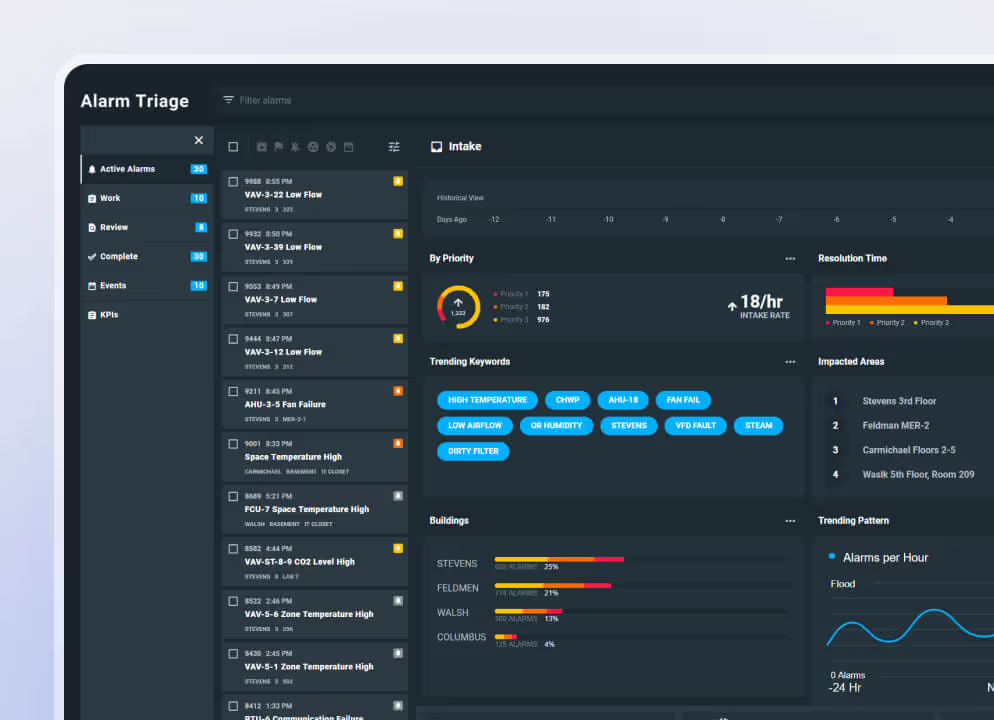

Building Automation System alarms play a central role in safe, reliable operations. The signal set should help teams respond quickly, keep equipment stable, and highlight issues that put the facility at risk. Many organizations face the opposite. Alarm lists grow louder every year, visibility across systems fragments, and operators struggle to identify the alerts that require action.
This guide breaks down the core principles of strong BAS alarm management. You’ll learn what qualifies as a true alarm, where most programs fall short, and how teams use alarm management software to clean up noise, support faster response, and improve reliability.
Principles of effective BAS alarm management
Effective alarm management starts with a clear definition of what an alarm is meant to do within a building management system. Modern smart buildings generate signals from HVAC equipment, sensors, lighting control, security systems, air handlers, and a wide range of automation points. Many of these signals contribute to comfort, safety, and energy efficiency, but only a limited set qualifies as true alarms that support timely operator action.
Thousands of BAS alarms may exist across equipment groups, yet only a smaller subset has a direct impact on building performance, energy consumption, or critical operations. Cleaner, better-defined alarms give operators a focused view of the conditions that require attention, especially during busy shifts or after-hours events when staffing is limited.
The state of BAS alarm management
Many teams have inherited alarm lists filled with thousands of unacknowledged signals across panels, equipment controllers, and centralized control interfaces. Operators often recall situations where a critical alarm slipped through the noise and led to downtime, unsafe conditions, or degraded system performance. These patterns reveal deeper configuration and workflow issues.
Because alarm systems are built into every BAS platform, teams often activate alarms without reviewing thresholds, operational value, or the connection to maintenance or energy management system workflows. This gap fills the list with low-value signals from lighting zones, fan statuses, temperature deviations, or security points that do not require action. Alarm overload, nuisance alarms, and alarm fatigue develop over time.
A stronger approach uses clear rules for what belongs in the alarm list and why. These practices create a cleaner signal set that operators can navigate quickly during urgent events involving major equipment, such as boilers, chillers, pumps, or air handlers.
Common alarm problems in facilities
Alarm issues typically develop gradually, especially in buildings with older BAS hardware or multiple generations of smart building technology. Common problems include:
- Alarm overload and alarm fatigue that hide critical issues
- Nuisance alarms that repeat without requiring any action
- Limited visibility across BAS panels, buildings, or centralized control screens
- Slow or inconsistent response because ownership is unclear
- Missed alarms that lead to safety risks, equipment failures, or increased energy consumption
- No integration between the BAS and a CMMS, which introduces gaps in follow-up
- High volumes of non-actionable alarms competing for operator attention
These conditions make quick response difficult and increase operational risk. Better alarm definitions and clearer routing help teams focus on events tied to equipment, safety, and building performance.
What is a facility alarm (or what should it be)?
A facility alarm is a signal that identifies an abnormal space condition, performance deviation, or equipment malfunction. The issue falls outside normal operation and requires timely operator action, such as creating a work order in the CMMS or adjusting a BAS setpoint. Many alarms originate from HVAC equipment, lighting control, environmental monitoring, or the energy management system, and those that qualify as true alarms relate to safety, asset protection, or reliability.
A consequence follows when the issue remains unaddressed. This can include equipment damage, safety exposure, increased energy consumption, or disruption to spaces that depend on stable conditions. This definition aligns with ANSI/ISA-18.2.
Consider a chilled-water pump that fails at 2 a.m. Flow drops, temperatures drift, and loads shift to other air handlers. A clear alarm routes to the right team with the context they need. Operators act on it, document the work in the CMMS, and stabilize the system. Ignoring the signal or acknowledging it without action leaves the failure in place and adds strain to the building’s energy management system.
What happens when alarms don’t follow the definition?
Poorly defined alarms create noise that slows operators down. Weak criteria lead to mixed priorities, repetitive alerts, and signals from equipment or environmental points that do not require action. Sorting through this noise delays response and limits the team’s ability to catch issues tied to safety, occupant comfort, or building performance. Volumes of low-value alarms also obscure conditions that affect major systems, including air handlers, chillers, boilers, and security systems.
Characteristics of a good alarm
A strong alarm supports clear, time-sensitive action. To deliver consistent value, each alarm should meet core criteria from EEMUA Publication 191:
- Relevant: Reflects an abnormal condition with operational impact, including changes that affect comfort, safety, or energy efficiency
- Unique: Avoids duplication across points or panels
- Timely: Fires close enough to the event that operators can respond
- Prioritized: Reflects severity and operational importance
- Understandable: Uses clear, direct language
- Diagnostic: Identifies the specific condition or equipment involved
- Advisory: Guides the operator toward the next step
- Focusing: Highlights issues that influence asset health or building performance
These traits help teams act quickly and reduce time spent interpreting unclear messages, especially on larger campuses or within smart buildings where HVAC, lighting, and security systems generate continuous data.
Alarm rationalization — Make your alarms meaningful & actionable
Alarm rationalization reviews each alarm across the building control system to confirm it meets defined operational requirements. The process helps teams distinguish between true alarms, notification-level signals, and conditions that should be retired. Stronger categorization reduces clutter in the user interface, supports better decisions across building energy management systems, and helps building operators act on faulty conditions without sorting through unnecessary alerts.
This work creates a more stable operating environment, limits unnecessary noise, and supports long-term improvements in facility efficiency.
How to apply rationalization in practice
Structured rationalization programs help teams cut through alarm noise and focus on events that require action. The process works well when operators and technicians review alarms with a consistent framework across HVAC, lighting, occupancy sensors, fire protection devices, water detection systems, and other automation points.
Key steps include:
- Review alarms based on priority, operational impact, and relevance to the automation solutions in place.
- Remove nuisance alarms that repeat without producing corrective work.
- Classify alarms using risk categories, including NFPA 99 for life-safety environments.
- Route alarms to the responsible team, whether facilities, controls, or safety.
- Evaluate support from fault detection and diagnostics tools that identify abnormal trends before alarms appear.
A simple Go / No-Go checklist helps determine whether a condition qualifies as a true alarm within the BAS or building management system:
- Does this condition require action?
- Does it indicate abnormal equipment behavior or another faulty condition?
- Does ignoring it create safety, performance, or energy-related risk?
- Is the alarm routed to the right team for response?
A “no” to any of these questions indicates the item belongs in a notification tier rather than the alarm list. Removing non-actionable signals reduces nuisance alarms and makes alarm patterns easier to spot across the BAS. This shift supports faster response and strengthens facility efficiency across heating, cooling, power, and life-safety systems.
Non-alarm notifications vs true alarms
Many BAS programs use alarms to communicate general system activity across lighting, HVAC, occupancy detection, fire alarm systems, and supporting equipment. This practice fills the alarm list with routine status updates that do not require operator action. A true alarm identifies an abnormal or unsafe condition that calls for timely response.
Notifications—including prompts, status changes, equipment mode updates, and informational notices—belong in a separate channel within the user interface. Operators can review them as workload allows without losing visibility into urgent events. This separation keeps critical alarms at the forefront and supports more reliable decisions across the full building control system.
Turning alarms into action: alarm-to-work integration
Directly linking BAS alarms to work orders creates a closed loop from detection through resolution. When alarms move into a work order management software environment, the system assigns responsibility, documents actions, and verifies results. This workflow spans across a CMMS software platform and can extend into an enterprise asset management software structure for long-term planning.
A clear flow supports consistent action: Alarm → Work order → Verification → Insight
This structure delivers several operational benefits:
- Faster response time
- Fewer repeated failures
- Clear accountability for each alarm
- Historical tracking of cause, actions taken, and results
Facilities that link alarms to work see fewer recurring problems because operators address underlying faulty conditions rather than acknowledging signals. This approach strengthens reliability across HVAC equipment, electrical systems, water infrastructure, and other components tied to building performance.
Final thoughts
Effective alarm management helps operators focus on the signals that matter. Clear definitions, cleaner lists, and reliable routing across HVAC equipment, lighting, water detection, and life-safety systems create a manageable workflow. Alarm-to-work connections push issues through a repeatable process that supports long-term reliability, safer buildings, and stronger facility efficiency across the entire building management system.
Teams pursuing better visibility and response often adopt tools that support structured alarm review and clean routing into corrective work. Many organizations use TMA’s alarm management software to organize incoming signals, guide operators through required actions, and strengthen performance across their building energy management systems and automation infrastructure.
FAQs about BAS alarm management for facilities


Related resources
Related resources
You’ve seen what’s possible—connect with us to learn how TMA Systems can support your goals beyond the event.
You’ve read the insights, now see how TMA Systems helps teams put them into practice.


From ideas to impact
You’ve read the insights, now see how TMA Systems helps teams put them into practice.
From screen to solution
You’ve watched what’s possible, now see how TMA Systems works for your organization.
From results to reality
You’ve seen the success, now discover how TMA Systems can deliver it for your team.
From insight to implementation
You’ve explored the strategies, now see how we can bring them to life across your real facilities.
From insight to implementation
You’ve explored the strategies, now see how we can bring them to life across your real facilities.