Resources
Blog
6 ways that AI makes your facility maintenance more efficient and scalable
Blog
February 3, 2026
5
 min read

6 ways that AI makes your facility maintenance more efficient and scalable

6 ways that AI makes your facility maintenance more efficient and scalable

In this post

1
AI helps facilities teams prioritize maintenance work and manage alarms more effectively, focusing attention where risk and impact are highest.
2
Real value comes from decision support inside CMMS, EAM, and alarm systems, not automation alone.
3
Teams scale more effectively when AI strengthens prioritization, consistency, and accountability across sites.
By the numbers

1

AI helps facilities teams prioritize maintenance work and manage alarms more effectively, focusing attention where risk and impact are highest.

2

Real value comes from decision support inside CMMS, EAM, and alarm systems, not automation alone.

3

Teams scale more effectively when AI strengthens prioritization, consistency, and accountability across sites.
Resources
eBooks & Whitepapers
6 ways that AI makes your facility maintenance more efficient and scalable
Blog
6 ways that AI makes your facility maintenance more efficient and scalable

AI in facilities management supports better prioritization without disrupting workflows. Learn six ways teams apply AI today to run maintenance efficiently.

Facilities teams are being asked to manage more with less. Asset counts keep growing, systems generate a steady stream of alerts, and compliance expectations leave little room for missed steps. Staffing has not kept pace with the workload, so supervisors and managers spend their days sorting signals from noise and making judgment calls under pressure. Most teams already rely on facility management software to keep work moving, but the challenge now is deciding what matters first and acting with confidence when everything feels urgent.

That pressure is why AI is showing up in facilities operations today. Not as a replacement for people or a leap toward autonomy, but as a practical way to support better decisions inside the workflows teams already trust. When applied correctly, AI helps reduce alert volume, highlight risks, and bring consistency to prioritization across sites and systems. This article focuses on real, in-production uses of AI that facilities teams are applying right now, building on how AI is shaping the future of facilities management without adding complexity or disrupting accountability.

How AI works in facilities management

AI in facilities management functions as a decision-support layer inside day-to-day operations. It reviews the information teams already generate from work orders, asset histories, alarms, schedules, and performance records, then looks for patterns that are hard to spot when everything comes in at once. The goal is not to automate decisions or take control away from the people responsible for outcomes. The goal is to reduce noise and surface clearer signals so teams can act with better context.

AI evaluates activity across maintenance workflows and highlights where attention is needed. It can flag assets showing early signs of trouble and recurring patterns that signal upcoming issues, which aligns closely with how teams already use preventive maintenance software to plan and adjust work before failures occur. AI can also identify conflicting alarms tied to the same root cause or suggest which work orders carry higher operational or compliance risk, supporting the way teams rely on work order management software to prioritize, assign, and document maintenance activity.

AI evaluates activity across maintenance workflows and highlights where attention is needed. It can flag assets showing early signs of trouble, identify conflicting alarms tied to the exact root cause, or suggest which work orders carry higher operational or compliance risk. These insights fit naturally alongside preventive maintenance software and work order management software, supporting the way facilities teams already plan, prioritize, and document work.

What AI produces is guidance, not direction. It helps teams see what matters now, what can wait, and where risk is building. Decisions about response, scheduling, and accountability remain firmly in human hands. That balance is what makes AI usable in real facilities environments where judgment, experience, and responsibility cannot be delegated.

What AI supports What facilities teams decide
Identifies patterns across work orders, alarms, and asset behavior Which issues require immediate action versus continued monitoring
Surfaces emerging issues, recurring failures, and conflicting alarm signals How alarms are acknowledged, escalated, or closed
Analyzes scheduling data to flag workload conflicts, overdue work, and rising backlog risk How work is scheduled, assigned, or deferred across teams and shifts
Suggests prioritization based on risk, impact, asset criticality, and timing Final accountability for outcomes, compliance, and response

When applied this way, AI brings more clarity and consistency to facilities work without replacing human judgment. It lays the foundation for the practical applications that follow, in which teams use AI to manage volume, prioritize effort, and scale operations without losing control.

The systems where AI supports facilities work

AI in facilities operations lives inside the systems teams already use to run the day. It does not introduce a new layer of tools or separate workflows. These AI systems strengthen decision-making within core operational systems where work is planned, tracked, and responded to, which helps teams improve operational efficiencies without changing how work flows across sites, shifts, and roles. 

Data from work orders, alarms, and building management systems provides the context needed to evaluate risk, performance, and energy consumption as part of normal operations.

The most effective applications show up where decisions already happen. Each system plays a specific role in facilities operations, and AI supports that role with clearer signals, better prioritization, and more consistent execution tied to real operating conditions and sensor data.

CMMS (Computerized Maintenance Management Systems)

Within a CMMS platform, AI helps teams manage volume and urgency inside daily maintenance work. It reviews work orders, schedules, and asset history to identify patterns that indicate rising risk or recurring issues, supporting predictive maintenance planning. 

That insight helps supervisors prioritize work, balance workloads, and improve operational efficiencies across teams without adding manual review. When teams evaluate or rely on the best CMMS software, the value comes from more apparent prioritization and steadier execution, not additional complexity.

Enterprise Asset Management (EAM) software

Enterprise asset management software carries the weight of scale. Large portfolios introduce more assets, more dependencies, and more long-term performance decisions. AI supports this environment by highlighting asset criticality, surfacing lifecycle performance trends, and enabling predictive maintenance strategies across portfolios. 

These insights also inform decisions around space utilization and long-term energy consumption, helping leaders manage scale while keeping decisions grounded in operational context.

Alarm monitoring systems

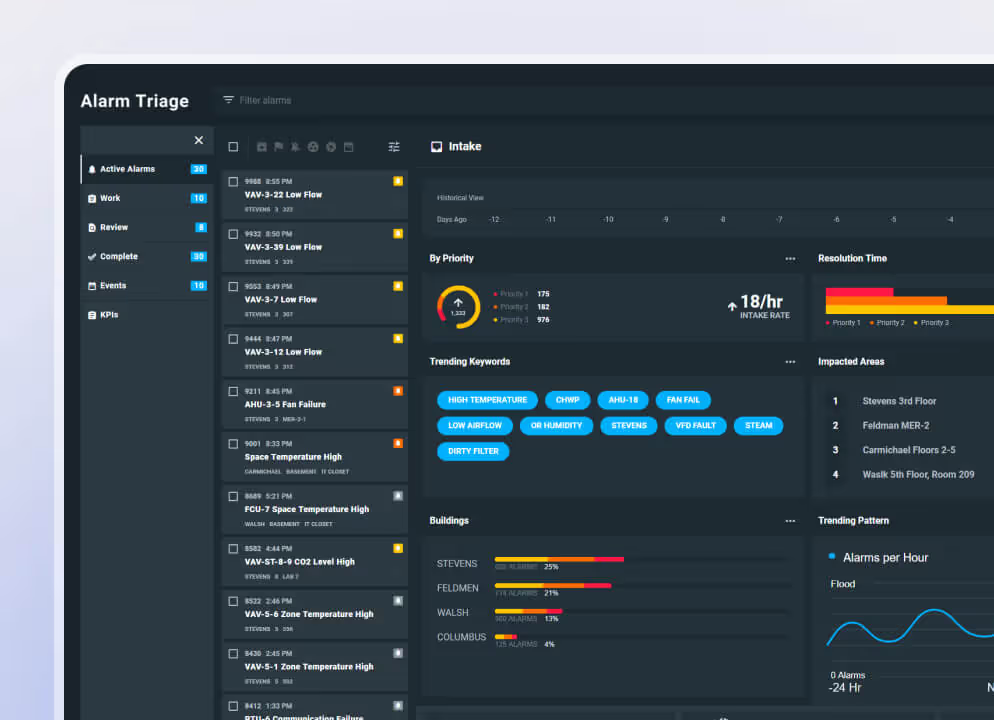
Alarm monitoring systems generate some of the highest decision pressure in facilities operations. AI systems help reduce noise by identifying related events, filtering nuisance alarms, and clarifying ownership when alerts cross systems or sites. 

That support allows teams to focus on events that require action instead of reacting to every signal, which improves operational efficiencies during high-volume periods. When applied within an alarm monitoring system, AI helps teams respond faster with more transparent accountability and less confusion.

Across these systems, AI strengthens the decisions facilities teams already make. That foundation lays the groundwork for how AI improves efficiency and scalability in daily operations.

6 ways that AI makes your facility maintenance more efficient and scalable 

Facilities teams recognize when work slows and risk increases. Alerts stack up, service requests arrive unevenly, and schedules shift as conditions change across buildings. Supervisors spend more time sorting information than directing work, even when teams follow established processes and use mature systems.

AI applications in use today address those pressure points inside active maintenance workflows. They focus on improving decision timing and clarity at moments when teams already pause to assess priorities, risks, and responses. That support creates operational efficiencies without changing who owns decisions or how work flows across sites.

One early signal that AI is delivering value appears quickly. Teams see fewer manual escalations, clearer prioritization during peak alert periods, and more consistent response patterns across shifts. Those improvements signal readiness to scale decision support further without adding layers of process.

1. Early issue detection through pattern recognition

AI reviews asset history, work orders, and performance data to identify changes often missed in daily reviews. Small shifts in failure frequency, repair timing, or condition trends surface earlier, strengthening predictive maintenance and reducing avoidable asset failures. Teams gain time to intervene while options still exist.

2. Smarter prioritization by reducing noise and false urgency

Alert volume continues to rise as systems become more connected. AI helps cut through that volume by grouping related events, filtering low-impact signals, and highlighting issues tied to higher operational or compliance risk. Supervisors spend less time sorting alerts and more time directing work where impact is highest.

3. Better planning and scheduling across teams

Planning breaks down when schedules rely on static rules or outdated assumptions. AI supports scheduling decisions by reviewing workload patterns, asset criticality, response history, and space utilization across sites. Schedules remain realistic and aligned with actual facility usage, improving execution across shifts.

4. Faster, more consistent triage of maintenance requests

Incoming requests vary widely in urgency and clarity. AI helps classify and route service tickets based on context, asset type, and historical outcomes. Requests reach the right team sooner, and response standards remain consistent across locations without adding review steps.

5. Reduced administrative effort in day-to-day maintenance work

Documentation often lags when teams are stretched thin. AI supports routine updates, notes, and status changes by identifying missing information and suggesting next steps based on past records. Technicians spend less time on data entry and more time on corrective work, while record quality improves over time.

6. Clearer operational and performance insight

AI turns maintenance activity into signals leaders can act on. Patterns across downtime, response times, asset performance, and energy consumption become easier to interpret. Leaders gain clearer visibility into HVAC systems and other critical assets while keeping day-to-day decisions grounded in operational reality.

Across these applications, AI strengthens decision-making within existing facilities operations. Efficiency and scalability follow when priorities stay clear, effort stays focused, and accountability remains with the people responsible for outcomes.

What AI does not replace in facilities operations

The examples above show where AI supports daily facilities work. They also make one thing clear. AI does not take ownership of outcomes.

Decisions tied to safety, compliance, uptime, and service levels still rest with people. When alarms conflict, data is incomplete, or conditions fall outside expected patterns, experienced teams decide how to respond. That judgment comes from familiarity with the facility, knowledge of operating constraints, and an understanding of what failure actually means in that environment.

Accountability stays with facilities leaders and frontline teams. Priorities, resource assignments, and documentation practices remain human-owned across facility management software and work order management software. AI surfaces risk and context. Teams decide how to act, coordinate, and follow through.

This boundary matters. It is what makes AI usable in real facilities environments where decisions must be defensible and traceable.

Why facilities operations are under more decision pressure

The pressure facilities teams face today explains why these AI use cases matter.

Portfolios have expanded. Systems are more connected. Data arrives faster and from more sources. At the same time, tolerance for missed steps continues to shrink. Decisions now affect uptime, safety, compliance, and cost in tighter windows and with clearer downstream impact.

That pressure shows up in daily work. Missed signals lead to downtime or audit findings. Inconsistent prioritization drives rework and delays. Manual review struggles to keep up as alerts, service tickets, and performance data arrive from systems that operate independently.

Industry data reflects this shift. According to Grand View Research, the facility management market continues to intersect with artificial intelligence, connected systems, and smart building technologies as organizations push toward more accountable and efficient operations. The driver is not technology adoption alone. Decision volume has outpaced the ability to review and act on information without support.

In this environment, AI earns its place when it helps teams interpret what already exists, clarify priorities, and act with better context inside the systems they rely on every day.

What facilities teams need in place before using AI effectively

AI delivers value once core operational foundations are stable. Teams do not need perfect data or fully mature processes to start, but consistency matters when decisions depend on shared information across buildings with different uses, occupancy patterns, and operational complexities. A practical readiness check helps teams avoid stalled adoption and unrealistic expectations, especially in environments where climate control, workspace utilization, and the occupant experience are closely tied to daily performance.

Several readiness factors matter most:

  • Consistent asset hierarchies and naming: Assets should follow a shared structure so activity links back to the correct equipment, space, or system across enterprise asset management software. This clarity supports early identification of asset failures, energy leaks, and issues affecting space optimization.
  • Reliable work order and maintenance history: AI draws patterns from existing records, including service tickets tied to comfort complaints, equipment faults, or access issues linked to surveillance systems. Gaps and inconsistencies inside work order management software limit how clearly predictive alerts surface.
  • Defined response priorities and ownership: Teams need agreement on what counts as urgent, who responds, and how escalation works. This is critical when issues affect safety, climate control, or productivity-sensitive spaces. AI supports those decisions but does not define them.
  • Alignment between operations, IT, and leadership: Shared standards for data, access, and decision-making authority keep AI use grounded in real workflows rather than creating friction, particularly when insights inform productivity optimization across sites.

When these elements are in place, teams can start using AI effectively without waiting for perfect conditions. The focus stays on clearer decisions, steadier execution, and accountability that holds up under operational pressure.

Challenges in implementing AI in facilities management (and how to overcome them)

Most challenges with AI in facilities management stem from process and ownership rather than technology. Adoption stalls when teams lack clarity on how insights should be reviewed, who should act on them, and how recommendations fit with existing controls tied to surveillance systems, safety protocols, or comfort standards. Addressing those issues early separates usable insight from background noise.

The most common barriers and practical ways to address them include:

Challenge Why it creates friction How facilities teams overcome it
Inconsistent or incomplete data AI insights lack context and confidence Standardize asset hierarchies, naming, and maintenance records across systems
Low trust in recommendations Teams dismiss or bypass insights Define where AI supports decisions and where people retain authority
Unclear ownership of responses Insights stall without action Assign responsibility for reviewing and acting on AI-supported signals
Siloed systems and teams Signals conflict or duplicate effort Align operations, IT, and leadership around shared workflows and data standards
Governance and audit concerns Regulated teams hesitate to act on AI insight Establish review workflows and retain decision logs inside existing systems

Facilities teams see progress when ownership, review processes, and accountability stay clear. AI works best when insights remain explainable, reviewable, and tied to existing workflows, especially when decisions affect safety, comfort, and operational continuity across diverse facilities.

Where TMA Systems fits into AI-driven facilities operations

TMA Systems applies artificial intelligence where facilities teams feel pressure every day. The focus stays on improving decision quality inside real workflows rather than chasing automation for its own sake. Within facility management, AI supports prioritization, reduces noise, and brings consistency to how work gets reviewed and acted on, while accountability stays with the people responsible for outcomes.

That approach shows up across the TMA portfolio. Intelligence is embedded directly into the products and facilities teams already rely on, creating a single source of truth across maintenance, assets, and alarms. 

These capabilities act as digital workers that support supervisors and managers by providing clearer signals from connected building systems, including data for energy management, without forcing teams into a single platform. In practice, this includes an AI assistant that provides decision support during work that is already planned and reviewed, using generative AI to surface relevant insights without changing established processes.

  • WebTMA: applies AI to maintenance planning and scheduling, helping teams balance workloads and focus effort where risk and impact are highest. The AI Smart Scheduler functions as an AI assistant within daily CMMS workflows, supporting digital workers in prioritization without changing how work orders or assets are handled.
  • MEX CMMS: MEX uses AI-driven maintenance scheduling to support faster, more consistent planning across teams. Here, digital workers support supervisors with timing and workload decisions, while the AI Assistant keeps execution grounded in familiar CMMS processes.
  • Virtual Facility: Virtual Facility applies AI specifically to alarm monitoring through OTTO. It analyzes incoming alarms across systems, reduces noise, and highlights which events require response or escalation. This AI assistant supports digital workers responsible for alarm management by clarifying risk and ownership without adding another layer of tools or manual triage.

TMA’s strength comes from configurability and consistency. Facilities teams can apply AI across maintenance, assets, and alarms in ways that align with their needs, scale, and regulatory environment, while keeping decisions clear and defensible.

TMA Systems applies AI where it delivers operational value. Tell us about your facilities management needs, and we’ll provide a solution designed to fit your workflows.

FAQs about AI in facilities management

Why is AI becoming a priority for facilities leaders now?

Facilities leaders face higher expectations around uptime, safety, and compliance while teams and budgets stay tight. Decisions increasingly depend on fast interpretation of data coming from assets, IoT sensors, and operational systems.

AI helps leaders manage that pressure by providing better visibility and decision support, enabling them to build operational efficiency without expanding headcount.

What business problems does AI in facilities management actually help solve?

AI helps facilities teams manage volume and variability. Common problems include sorting high volumes of maintenance requests, reducing alarm fatigue, improving schedule reliability, and identifying asset issues earlier through predictive maintenance.

These improvements help control downtime, manage maintenance costs, and support clearer reporting for audits and leadership reviews.

How does AI adoption differ across industries?

Adoption varies based on regulatory exposure, asset criticality, and operating scale. Healthcare and higher education focus on compliance, auditability, and documentation.

Manufacturing and logistics prioritize uptime and production impact. Across industries, AI supports different decision priorities while relying on the same operational foundations.

What should organizations evaluate before adopting AI in facilities operations?

Organizations should assess data consistency, asset structure, and decision ownership. Clear asset hierarchies, reliable work order history, and defined response priorities matter more than advanced features.

Teams should also confirm how AI insights are reviewed and approved in regulated environments, especially when used for real-time operational optimization.

How should facilities leaders measure success when adopting AI?

Success shows up in operational outcomes rather than technical metrics. Leaders should track response times, alert volume reduction, prioritization consistency, and improvements tied to energy management and energy consumption trends.

Fewer escalations and steadier execution across sites signal that AI is supporting decisions effectively.

How does TMA Systems approach AI differently in facilities management?

TMA applies AI where facilities teams already make decisions, not as a layer that sits outside daily work.

In WebTMA and MEX CMMS, AI supports maintenance scheduling by analyzing work order history, asset behavior, and workload patterns to help supervisors prioritize and sequence work more consistently. In Virtual Facility, AI focuses on alarm monitoring, reducing alert noise and clarifying which events require response, escalation, or review.

Across all three, AI functions as decision support inside established workflows, allowing teams to retain control while gaining clearer insight into risk, timing, and operational impact tied to predictive maintenance and long-term energy management planning.

Key Insights You'll Gain:
  • AI helps facilities teams prioritize maintenance work and manage alarms more effectively, focusing attention where risk and impact are highest.
  • Real value comes from decision support inside CMMS, EAM, and alarm systems, not automation alone.
  • Teams scale more effectively when AI strengthens prioritization, consistency, and accountability across sites.

Download the eBook now

You’re all set!

Your eBook is on its way to your inbox. We hope it brings fresh insights and practical takeaways to help you get more from your maintenance operations.

Explore related resources

Resources
Blog
6 ways that AI makes your facility maintenance more efficient and scalable
Resources
eBooks & Whitepapers
6 ways that AI makes your facility maintenance more efficient and scalable
Blog
6 ways that AI makes your facility maintenance more efficient and scalable

AI in facilities management supports better prioritization without disrupting workflows. Learn six ways teams apply AI today to run maintenance efficiently.

February 3, 2026

Facilities teams are being asked to manage more with less. Asset counts keep growing, systems generate a steady stream of alerts, and compliance expectations leave little room for missed steps. Staffing has not kept pace with the workload, so supervisors and managers spend their days sorting signals from noise and making judgment calls under pressure. Most teams already rely on facility management software to keep work moving, but the challenge now is deciding what matters first and acting with confidence when everything feels urgent.

That pressure is why AI is showing up in facilities operations today. Not as a replacement for people or a leap toward autonomy, but as a practical way to support better decisions inside the workflows teams already trust. When applied correctly, AI helps reduce alert volume, highlight risks, and bring consistency to prioritization across sites and systems. This article focuses on real, in-production uses of AI that facilities teams are applying right now, building on how AI is shaping the future of facilities management without adding complexity or disrupting accountability.

How AI works in facilities management

AI in facilities management functions as a decision-support layer inside day-to-day operations. It reviews the information teams already generate from work orders, asset histories, alarms, schedules, and performance records, then looks for patterns that are hard to spot when everything comes in at once. The goal is not to automate decisions or take control away from the people responsible for outcomes. The goal is to reduce noise and surface clearer signals so teams can act with better context.

AI evaluates activity across maintenance workflows and highlights where attention is needed. It can flag assets showing early signs of trouble and recurring patterns that signal upcoming issues, which aligns closely with how teams already use preventive maintenance software to plan and adjust work before failures occur. AI can also identify conflicting alarms tied to the same root cause or suggest which work orders carry higher operational or compliance risk, supporting the way teams rely on work order management software to prioritize, assign, and document maintenance activity.

AI evaluates activity across maintenance workflows and highlights where attention is needed. It can flag assets showing early signs of trouble, identify conflicting alarms tied to the exact root cause, or suggest which work orders carry higher operational or compliance risk. These insights fit naturally alongside preventive maintenance software and work order management software, supporting the way facilities teams already plan, prioritize, and document work.

What AI produces is guidance, not direction. It helps teams see what matters now, what can wait, and where risk is building. Decisions about response, scheduling, and accountability remain firmly in human hands. That balance is what makes AI usable in real facilities environments where judgment, experience, and responsibility cannot be delegated.

What AI supports What facilities teams decide
Identifies patterns across work orders, alarms, and asset behavior Which issues require immediate action versus continued monitoring
Surfaces emerging issues, recurring failures, and conflicting alarm signals How alarms are acknowledged, escalated, or closed
Analyzes scheduling data to flag workload conflicts, overdue work, and rising backlog risk How work is scheduled, assigned, or deferred across teams and shifts
Suggests prioritization based on risk, impact, asset criticality, and timing Final accountability for outcomes, compliance, and response

When applied this way, AI brings more clarity and consistency to facilities work without replacing human judgment. It lays the foundation for the practical applications that follow, in which teams use AI to manage volume, prioritize effort, and scale operations without losing control.

The systems where AI supports facilities work

AI in facilities operations lives inside the systems teams already use to run the day. It does not introduce a new layer of tools or separate workflows. These AI systems strengthen decision-making within core operational systems where work is planned, tracked, and responded to, which helps teams improve operational efficiencies without changing how work flows across sites, shifts, and roles. 

Data from work orders, alarms, and building management systems provides the context needed to evaluate risk, performance, and energy consumption as part of normal operations.

The most effective applications show up where decisions already happen. Each system plays a specific role in facilities operations, and AI supports that role with clearer signals, better prioritization, and more consistent execution tied to real operating conditions and sensor data.

CMMS (Computerized Maintenance Management Systems)

Within a CMMS platform, AI helps teams manage volume and urgency inside daily maintenance work. It reviews work orders, schedules, and asset history to identify patterns that indicate rising risk or recurring issues, supporting predictive maintenance planning. 

That insight helps supervisors prioritize work, balance workloads, and improve operational efficiencies across teams without adding manual review. When teams evaluate or rely on the best CMMS software, the value comes from more apparent prioritization and steadier execution, not additional complexity.

Enterprise Asset Management (EAM) software

Enterprise asset management software carries the weight of scale. Large portfolios introduce more assets, more dependencies, and more long-term performance decisions. AI supports this environment by highlighting asset criticality, surfacing lifecycle performance trends, and enabling predictive maintenance strategies across portfolios. 

These insights also inform decisions around space utilization and long-term energy consumption, helping leaders manage scale while keeping decisions grounded in operational context.

Alarm monitoring systems

Alarm monitoring systems generate some of the highest decision pressure in facilities operations. AI systems help reduce noise by identifying related events, filtering nuisance alarms, and clarifying ownership when alerts cross systems or sites. 

That support allows teams to focus on events that require action instead of reacting to every signal, which improves operational efficiencies during high-volume periods. When applied within an alarm monitoring system, AI helps teams respond faster with more transparent accountability and less confusion.

Across these systems, AI strengthens the decisions facilities teams already make. That foundation lays the groundwork for how AI improves efficiency and scalability in daily operations.

6 ways that AI makes your facility maintenance more efficient and scalable 

Facilities teams recognize when work slows and risk increases. Alerts stack up, service requests arrive unevenly, and schedules shift as conditions change across buildings. Supervisors spend more time sorting information than directing work, even when teams follow established processes and use mature systems.

AI applications in use today address those pressure points inside active maintenance workflows. They focus on improving decision timing and clarity at moments when teams already pause to assess priorities, risks, and responses. That support creates operational efficiencies without changing who owns decisions or how work flows across sites.

One early signal that AI is delivering value appears quickly. Teams see fewer manual escalations, clearer prioritization during peak alert periods, and more consistent response patterns across shifts. Those improvements signal readiness to scale decision support further without adding layers of process.

1. Early issue detection through pattern recognition

AI reviews asset history, work orders, and performance data to identify changes often missed in daily reviews. Small shifts in failure frequency, repair timing, or condition trends surface earlier, strengthening predictive maintenance and reducing avoidable asset failures. Teams gain time to intervene while options still exist.

2. Smarter prioritization by reducing noise and false urgency

Alert volume continues to rise as systems become more connected. AI helps cut through that volume by grouping related events, filtering low-impact signals, and highlighting issues tied to higher operational or compliance risk. Supervisors spend less time sorting alerts and more time directing work where impact is highest.

3. Better planning and scheduling across teams

Planning breaks down when schedules rely on static rules or outdated assumptions. AI supports scheduling decisions by reviewing workload patterns, asset criticality, response history, and space utilization across sites. Schedules remain realistic and aligned with actual facility usage, improving execution across shifts.

4. Faster, more consistent triage of maintenance requests

Incoming requests vary widely in urgency and clarity. AI helps classify and route service tickets based on context, asset type, and historical outcomes. Requests reach the right team sooner, and response standards remain consistent across locations without adding review steps.

5. Reduced administrative effort in day-to-day maintenance work

Documentation often lags when teams are stretched thin. AI supports routine updates, notes, and status changes by identifying missing information and suggesting next steps based on past records. Technicians spend less time on data entry and more time on corrective work, while record quality improves over time.

6. Clearer operational and performance insight

AI turns maintenance activity into signals leaders can act on. Patterns across downtime, response times, asset performance, and energy consumption become easier to interpret. Leaders gain clearer visibility into HVAC systems and other critical assets while keeping day-to-day decisions grounded in operational reality.

Across these applications, AI strengthens decision-making within existing facilities operations. Efficiency and scalability follow when priorities stay clear, effort stays focused, and accountability remains with the people responsible for outcomes.

What AI does not replace in facilities operations

The examples above show where AI supports daily facilities work. They also make one thing clear. AI does not take ownership of outcomes.

Decisions tied to safety, compliance, uptime, and service levels still rest with people. When alarms conflict, data is incomplete, or conditions fall outside expected patterns, experienced teams decide how to respond. That judgment comes from familiarity with the facility, knowledge of operating constraints, and an understanding of what failure actually means in that environment.

Accountability stays with facilities leaders and frontline teams. Priorities, resource assignments, and documentation practices remain human-owned across facility management software and work order management software. AI surfaces risk and context. Teams decide how to act, coordinate, and follow through.

This boundary matters. It is what makes AI usable in real facilities environments where decisions must be defensible and traceable.

Why facilities operations are under more decision pressure

The pressure facilities teams face today explains why these AI use cases matter.

Portfolios have expanded. Systems are more connected. Data arrives faster and from more sources. At the same time, tolerance for missed steps continues to shrink. Decisions now affect uptime, safety, compliance, and cost in tighter windows and with clearer downstream impact.

That pressure shows up in daily work. Missed signals lead to downtime or audit findings. Inconsistent prioritization drives rework and delays. Manual review struggles to keep up as alerts, service tickets, and performance data arrive from systems that operate independently.

Industry data reflects this shift. According to Grand View Research, the facility management market continues to intersect with artificial intelligence, connected systems, and smart building technologies as organizations push toward more accountable and efficient operations. The driver is not technology adoption alone. Decision volume has outpaced the ability to review and act on information without support.

In this environment, AI earns its place when it helps teams interpret what already exists, clarify priorities, and act with better context inside the systems they rely on every day.

What facilities teams need in place before using AI effectively

AI delivers value once core operational foundations are stable. Teams do not need perfect data or fully mature processes to start, but consistency matters when decisions depend on shared information across buildings with different uses, occupancy patterns, and operational complexities. A practical readiness check helps teams avoid stalled adoption and unrealistic expectations, especially in environments where climate control, workspace utilization, and the occupant experience are closely tied to daily performance.

Several readiness factors matter most:

  • Consistent asset hierarchies and naming: Assets should follow a shared structure so activity links back to the correct equipment, space, or system across enterprise asset management software. This clarity supports early identification of asset failures, energy leaks, and issues affecting space optimization.
  • Reliable work order and maintenance history: AI draws patterns from existing records, including service tickets tied to comfort complaints, equipment faults, or access issues linked to surveillance systems. Gaps and inconsistencies inside work order management software limit how clearly predictive alerts surface.
  • Defined response priorities and ownership: Teams need agreement on what counts as urgent, who responds, and how escalation works. This is critical when issues affect safety, climate control, or productivity-sensitive spaces. AI supports those decisions but does not define them.
  • Alignment between operations, IT, and leadership: Shared standards for data, access, and decision-making authority keep AI use grounded in real workflows rather than creating friction, particularly when insights inform productivity optimization across sites.

When these elements are in place, teams can start using AI effectively without waiting for perfect conditions. The focus stays on clearer decisions, steadier execution, and accountability that holds up under operational pressure.

Challenges in implementing AI in facilities management (and how to overcome them)

Most challenges with AI in facilities management stem from process and ownership rather than technology. Adoption stalls when teams lack clarity on how insights should be reviewed, who should act on them, and how recommendations fit with existing controls tied to surveillance systems, safety protocols, or comfort standards. Addressing those issues early separates usable insight from background noise.

The most common barriers and practical ways to address them include:

Challenge Why it creates friction How facilities teams overcome it
Inconsistent or incomplete data AI insights lack context and confidence Standardize asset hierarchies, naming, and maintenance records across systems
Low trust in recommendations Teams dismiss or bypass insights Define where AI supports decisions and where people retain authority
Unclear ownership of responses Insights stall without action Assign responsibility for reviewing and acting on AI-supported signals
Siloed systems and teams Signals conflict or duplicate effort Align operations, IT, and leadership around shared workflows and data standards
Governance and audit concerns Regulated teams hesitate to act on AI insight Establish review workflows and retain decision logs inside existing systems

Facilities teams see progress when ownership, review processes, and accountability stay clear. AI works best when insights remain explainable, reviewable, and tied to existing workflows, especially when decisions affect safety, comfort, and operational continuity across diverse facilities.

Where TMA Systems fits into AI-driven facilities operations

TMA Systems applies artificial intelligence where facilities teams feel pressure every day. The focus stays on improving decision quality inside real workflows rather than chasing automation for its own sake. Within facility management, AI supports prioritization, reduces noise, and brings consistency to how work gets reviewed and acted on, while accountability stays with the people responsible for outcomes.

That approach shows up across the TMA portfolio. Intelligence is embedded directly into the products and facilities teams already rely on, creating a single source of truth across maintenance, assets, and alarms. 

These capabilities act as digital workers that support supervisors and managers by providing clearer signals from connected building systems, including data for energy management, without forcing teams into a single platform. In practice, this includes an AI assistant that provides decision support during work that is already planned and reviewed, using generative AI to surface relevant insights without changing established processes.

  • WebTMA: applies AI to maintenance planning and scheduling, helping teams balance workloads and focus effort where risk and impact are highest. The AI Smart Scheduler functions as an AI assistant within daily CMMS workflows, supporting digital workers in prioritization without changing how work orders or assets are handled.
  • MEX CMMS: MEX uses AI-driven maintenance scheduling to support faster, more consistent planning across teams. Here, digital workers support supervisors with timing and workload decisions, while the AI Assistant keeps execution grounded in familiar CMMS processes.
  • Virtual Facility: Virtual Facility applies AI specifically to alarm monitoring through OTTO. It analyzes incoming alarms across systems, reduces noise, and highlights which events require response or escalation. This AI assistant supports digital workers responsible for alarm management by clarifying risk and ownership without adding another layer of tools or manual triage.

TMA’s strength comes from configurability and consistency. Facilities teams can apply AI across maintenance, assets, and alarms in ways that align with their needs, scale, and regulatory environment, while keeping decisions clear and defensible.

TMA Systems applies AI where it delivers operational value. Tell us about your facilities management needs, and we’ll provide a solution designed to fit your workflows.

FAQs about AI in facilities management

Why is AI becoming a priority for facilities leaders now?

Facilities leaders face higher expectations around uptime, safety, and compliance while teams and budgets stay tight. Decisions increasingly depend on fast interpretation of data coming from assets, IoT sensors, and operational systems.

AI helps leaders manage that pressure by providing better visibility and decision support, enabling them to build operational efficiency without expanding headcount.

What business problems does AI in facilities management actually help solve?

AI helps facilities teams manage volume and variability. Common problems include sorting high volumes of maintenance requests, reducing alarm fatigue, improving schedule reliability, and identifying asset issues earlier through predictive maintenance.

These improvements help control downtime, manage maintenance costs, and support clearer reporting for audits and leadership reviews.

How does AI adoption differ across industries?

Adoption varies based on regulatory exposure, asset criticality, and operating scale. Healthcare and higher education focus on compliance, auditability, and documentation.

Manufacturing and logistics prioritize uptime and production impact. Across industries, AI supports different decision priorities while relying on the same operational foundations.

What should organizations evaluate before adopting AI in facilities operations?

Organizations should assess data consistency, asset structure, and decision ownership. Clear asset hierarchies, reliable work order history, and defined response priorities matter more than advanced features.

Teams should also confirm how AI insights are reviewed and approved in regulated environments, especially when used for real-time operational optimization.

How should facilities leaders measure success when adopting AI?

Success shows up in operational outcomes rather than technical metrics. Leaders should track response times, alert volume reduction, prioritization consistency, and improvements tied to energy management and energy consumption trends.

Fewer escalations and steadier execution across sites signal that AI is supporting decisions effectively.

How does TMA Systems approach AI differently in facilities management?

TMA applies AI where facilities teams already make decisions, not as a layer that sits outside daily work.

In WebTMA and MEX CMMS, AI supports maintenance scheduling by analyzing work order history, asset behavior, and workload patterns to help supervisors prioritize and sequence work more consistently. In Virtual Facility, AI focuses on alarm monitoring, reducing alert noise and clarifying which events require response, escalation, or review.

Across all three, AI functions as decision support inside established workflows, allowing teams to retain control while gaining clearer insight into risk, timing, and operational impact tied to predictive maintenance and long-term energy management planning.

Key Insights You'll Gain:
  • AI helps facilities teams prioritize maintenance work and manage alarms more effectively, focusing attention where risk and impact are highest.
  • Real value comes from decision support inside CMMS, EAM, and alarm systems, not automation alone.
  • Teams scale more effectively when AI strengthens prioritization, consistency, and accountability across sites.

Register for your free webinar

You’re all set!

Your webinar is on its way to your inbox. We hope it brings fresh insights and practical takeaways to help you get more from your maintenance operations.

Explore related resources

Resources
Blog
6 ways that AI makes your facility maintenance more efficient and scalable
Resources
Blog
6 ways that AI makes your facility maintenance more efficient and scalable
Resources
Blog
6 ways that AI makes your facility maintenance more efficient and scalable
Blog
February 3, 2026
6 ways that AI makes your facility maintenance more efficient and scalable
Blog
February 3, 2026
6 ways that AI makes your facility maintenance more efficient and scalable
Blog
6 ways that AI makes your facility maintenance more efficient and scalable
Blog
February 3, 2026
6 ways that AI makes your facility maintenance more efficient and scalable
Blog
6 ways that AI makes your facility maintenance more efficient and scalable
February 3, 2026
Blog
February 3, 2026
6 ways that AI makes your facility maintenance more efficient and scalable

Industry
Corporate
Location
Size
Written by
Presenters
No items found.
Share

Facilities teams are being asked to manage more with less. Asset counts keep growing, systems generate a steady stream of alerts, and compliance expectations leave little room for missed steps. Staffing has not kept pace with the workload, so supervisors and managers spend their days sorting signals from noise and making judgment calls under pressure. Most teams already rely on facility management software to keep work moving, but the challenge now is deciding what matters first and acting with confidence when everything feels urgent.

That pressure is why AI is showing up in facilities operations today. Not as a replacement for people or a leap toward autonomy, but as a practical way to support better decisions inside the workflows teams already trust. When applied correctly, AI helps reduce alert volume, highlight risks, and bring consistency to prioritization across sites and systems. This article focuses on real, in-production uses of AI that facilities teams are applying right now, building on how AI is shaping the future of facilities management without adding complexity or disrupting accountability.

How AI works in facilities management

AI in facilities management functions as a decision-support layer inside day-to-day operations. It reviews the information teams already generate from work orders, asset histories, alarms, schedules, and performance records, then looks for patterns that are hard to spot when everything comes in at once. The goal is not to automate decisions or take control away from the people responsible for outcomes. The goal is to reduce noise and surface clearer signals so teams can act with better context.

AI evaluates activity across maintenance workflows and highlights where attention is needed. It can flag assets showing early signs of trouble and recurring patterns that signal upcoming issues, which aligns closely with how teams already use preventive maintenance software to plan and adjust work before failures occur. AI can also identify conflicting alarms tied to the same root cause or suggest which work orders carry higher operational or compliance risk, supporting the way teams rely on work order management software to prioritize, assign, and document maintenance activity.

AI evaluates activity across maintenance workflows and highlights where attention is needed. It can flag assets showing early signs of trouble, identify conflicting alarms tied to the exact root cause, or suggest which work orders carry higher operational or compliance risk. These insights fit naturally alongside preventive maintenance software and work order management software, supporting the way facilities teams already plan, prioritize, and document work.

What AI produces is guidance, not direction. It helps teams see what matters now, what can wait, and where risk is building. Decisions about response, scheduling, and accountability remain firmly in human hands. That balance is what makes AI usable in real facilities environments where judgment, experience, and responsibility cannot be delegated.

What AI supports What facilities teams decide
Identifies patterns across work orders, alarms, and asset behavior Which issues require immediate action versus continued monitoring
Surfaces emerging issues, recurring failures, and conflicting alarm signals How alarms are acknowledged, escalated, or closed
Analyzes scheduling data to flag workload conflicts, overdue work, and rising backlog risk How work is scheduled, assigned, or deferred across teams and shifts
Suggests prioritization based on risk, impact, asset criticality, and timing Final accountability for outcomes, compliance, and response

When applied this way, AI brings more clarity and consistency to facilities work without replacing human judgment. It lays the foundation for the practical applications that follow, in which teams use AI to manage volume, prioritize effort, and scale operations without losing control.

The systems where AI supports facilities work

AI in facilities operations lives inside the systems teams already use to run the day. It does not introduce a new layer of tools or separate workflows. These AI systems strengthen decision-making within core operational systems where work is planned, tracked, and responded to, which helps teams improve operational efficiencies without changing how work flows across sites, shifts, and roles. 

Data from work orders, alarms, and building management systems provides the context needed to evaluate risk, performance, and energy consumption as part of normal operations.

The most effective applications show up where decisions already happen. Each system plays a specific role in facilities operations, and AI supports that role with clearer signals, better prioritization, and more consistent execution tied to real operating conditions and sensor data.

CMMS (Computerized Maintenance Management Systems)

Within a CMMS platform, AI helps teams manage volume and urgency inside daily maintenance work. It reviews work orders, schedules, and asset history to identify patterns that indicate rising risk or recurring issues, supporting predictive maintenance planning. 

That insight helps supervisors prioritize work, balance workloads, and improve operational efficiencies across teams without adding manual review. When teams evaluate or rely on the best CMMS software, the value comes from more apparent prioritization and steadier execution, not additional complexity.

Enterprise Asset Management (EAM) software

Enterprise asset management software carries the weight of scale. Large portfolios introduce more assets, more dependencies, and more long-term performance decisions. AI supports this environment by highlighting asset criticality, surfacing lifecycle performance trends, and enabling predictive maintenance strategies across portfolios. 

These insights also inform decisions around space utilization and long-term energy consumption, helping leaders manage scale while keeping decisions grounded in operational context.

Alarm monitoring systems

Alarm monitoring systems generate some of the highest decision pressure in facilities operations. AI systems help reduce noise by identifying related events, filtering nuisance alarms, and clarifying ownership when alerts cross systems or sites. 

That support allows teams to focus on events that require action instead of reacting to every signal, which improves operational efficiencies during high-volume periods. When applied within an alarm monitoring system, AI helps teams respond faster with more transparent accountability and less confusion.

Across these systems, AI strengthens the decisions facilities teams already make. That foundation lays the groundwork for how AI improves efficiency and scalability in daily operations.

6 ways that AI makes your facility maintenance more efficient and scalable 

Facilities teams recognize when work slows and risk increases. Alerts stack up, service requests arrive unevenly, and schedules shift as conditions change across buildings. Supervisors spend more time sorting information than directing work, even when teams follow established processes and use mature systems.

AI applications in use today address those pressure points inside active maintenance workflows. They focus on improving decision timing and clarity at moments when teams already pause to assess priorities, risks, and responses. That support creates operational efficiencies without changing who owns decisions or how work flows across sites.

One early signal that AI is delivering value appears quickly. Teams see fewer manual escalations, clearer prioritization during peak alert periods, and more consistent response patterns across shifts. Those improvements signal readiness to scale decision support further without adding layers of process.

1. Early issue detection through pattern recognition

AI reviews asset history, work orders, and performance data to identify changes often missed in daily reviews. Small shifts in failure frequency, repair timing, or condition trends surface earlier, strengthening predictive maintenance and reducing avoidable asset failures. Teams gain time to intervene while options still exist.

2. Smarter prioritization by reducing noise and false urgency

Alert volume continues to rise as systems become more connected. AI helps cut through that volume by grouping related events, filtering low-impact signals, and highlighting issues tied to higher operational or compliance risk. Supervisors spend less time sorting alerts and more time directing work where impact is highest.

3. Better planning and scheduling across teams

Planning breaks down when schedules rely on static rules or outdated assumptions. AI supports scheduling decisions by reviewing workload patterns, asset criticality, response history, and space utilization across sites. Schedules remain realistic and aligned with actual facility usage, improving execution across shifts.

4. Faster, more consistent triage of maintenance requests

Incoming requests vary widely in urgency and clarity. AI helps classify and route service tickets based on context, asset type, and historical outcomes. Requests reach the right team sooner, and response standards remain consistent across locations without adding review steps.

5. Reduced administrative effort in day-to-day maintenance work

Documentation often lags when teams are stretched thin. AI supports routine updates, notes, and status changes by identifying missing information and suggesting next steps based on past records. Technicians spend less time on data entry and more time on corrective work, while record quality improves over time.

6. Clearer operational and performance insight

AI turns maintenance activity into signals leaders can act on. Patterns across downtime, response times, asset performance, and energy consumption become easier to interpret. Leaders gain clearer visibility into HVAC systems and other critical assets while keeping day-to-day decisions grounded in operational reality.

Across these applications, AI strengthens decision-making within existing facilities operations. Efficiency and scalability follow when priorities stay clear, effort stays focused, and accountability remains with the people responsible for outcomes.

What AI does not replace in facilities operations

The examples above show where AI supports daily facilities work. They also make one thing clear. AI does not take ownership of outcomes.

Decisions tied to safety, compliance, uptime, and service levels still rest with people. When alarms conflict, data is incomplete, or conditions fall outside expected patterns, experienced teams decide how to respond. That judgment comes from familiarity with the facility, knowledge of operating constraints, and an understanding of what failure actually means in that environment.

Accountability stays with facilities leaders and frontline teams. Priorities, resource assignments, and documentation practices remain human-owned across facility management software and work order management software. AI surfaces risk and context. Teams decide how to act, coordinate, and follow through.

This boundary matters. It is what makes AI usable in real facilities environments where decisions must be defensible and traceable.

Why facilities operations are under more decision pressure

The pressure facilities teams face today explains why these AI use cases matter.

Portfolios have expanded. Systems are more connected. Data arrives faster and from more sources. At the same time, tolerance for missed steps continues to shrink. Decisions now affect uptime, safety, compliance, and cost in tighter windows and with clearer downstream impact.

That pressure shows up in daily work. Missed signals lead to downtime or audit findings. Inconsistent prioritization drives rework and delays. Manual review struggles to keep up as alerts, service tickets, and performance data arrive from systems that operate independently.

Industry data reflects this shift. According to Grand View Research, the facility management market continues to intersect with artificial intelligence, connected systems, and smart building technologies as organizations push toward more accountable and efficient operations. The driver is not technology adoption alone. Decision volume has outpaced the ability to review and act on information without support.

In this environment, AI earns its place when it helps teams interpret what already exists, clarify priorities, and act with better context inside the systems they rely on every day.

What facilities teams need in place before using AI effectively

AI delivers value once core operational foundations are stable. Teams do not need perfect data or fully mature processes to start, but consistency matters when decisions depend on shared information across buildings with different uses, occupancy patterns, and operational complexities. A practical readiness check helps teams avoid stalled adoption and unrealistic expectations, especially in environments where climate control, workspace utilization, and the occupant experience are closely tied to daily performance.

Several readiness factors matter most:

  • Consistent asset hierarchies and naming: Assets should follow a shared structure so activity links back to the correct equipment, space, or system across enterprise asset management software. This clarity supports early identification of asset failures, energy leaks, and issues affecting space optimization.
  • Reliable work order and maintenance history: AI draws patterns from existing records, including service tickets tied to comfort complaints, equipment faults, or access issues linked to surveillance systems. Gaps and inconsistencies inside work order management software limit how clearly predictive alerts surface.
  • Defined response priorities and ownership: Teams need agreement on what counts as urgent, who responds, and how escalation works. This is critical when issues affect safety, climate control, or productivity-sensitive spaces. AI supports those decisions but does not define them.
  • Alignment between operations, IT, and leadership: Shared standards for data, access, and decision-making authority keep AI use grounded in real workflows rather than creating friction, particularly when insights inform productivity optimization across sites.

When these elements are in place, teams can start using AI effectively without waiting for perfect conditions. The focus stays on clearer decisions, steadier execution, and accountability that holds up under operational pressure.

Challenges in implementing AI in facilities management (and how to overcome them)

Most challenges with AI in facilities management stem from process and ownership rather than technology. Adoption stalls when teams lack clarity on how insights should be reviewed, who should act on them, and how recommendations fit with existing controls tied to surveillance systems, safety protocols, or comfort standards. Addressing those issues early separates usable insight from background noise.

The most common barriers and practical ways to address them include:

Challenge Why it creates friction How facilities teams overcome it
Inconsistent or incomplete data AI insights lack context and confidence Standardize asset hierarchies, naming, and maintenance records across systems
Low trust in recommendations Teams dismiss or bypass insights Define where AI supports decisions and where people retain authority
Unclear ownership of responses Insights stall without action Assign responsibility for reviewing and acting on AI-supported signals
Siloed systems and teams Signals conflict or duplicate effort Align operations, IT, and leadership around shared workflows and data standards
Governance and audit concerns Regulated teams hesitate to act on AI insight Establish review workflows and retain decision logs inside existing systems

Facilities teams see progress when ownership, review processes, and accountability stay clear. AI works best when insights remain explainable, reviewable, and tied to existing workflows, especially when decisions affect safety, comfort, and operational continuity across diverse facilities.

Where TMA Systems fits into AI-driven facilities operations

TMA Systems applies artificial intelligence where facilities teams feel pressure every day. The focus stays on improving decision quality inside real workflows rather than chasing automation for its own sake. Within facility management, AI supports prioritization, reduces noise, and brings consistency to how work gets reviewed and acted on, while accountability stays with the people responsible for outcomes.

That approach shows up across the TMA portfolio. Intelligence is embedded directly into the products and facilities teams already rely on, creating a single source of truth across maintenance, assets, and alarms. 

These capabilities act as digital workers that support supervisors and managers by providing clearer signals from connected building systems, including data for energy management, without forcing teams into a single platform. In practice, this includes an AI assistant that provides decision support during work that is already planned and reviewed, using generative AI to surface relevant insights without changing established processes.

  • WebTMA: applies AI to maintenance planning and scheduling, helping teams balance workloads and focus effort where risk and impact are highest. The AI Smart Scheduler functions as an AI assistant within daily CMMS workflows, supporting digital workers in prioritization without changing how work orders or assets are handled.
  • MEX CMMS: MEX uses AI-driven maintenance scheduling to support faster, more consistent planning across teams. Here, digital workers support supervisors with timing and workload decisions, while the AI Assistant keeps execution grounded in familiar CMMS processes.
  • Virtual Facility: Virtual Facility applies AI specifically to alarm monitoring through OTTO. It analyzes incoming alarms across systems, reduces noise, and highlights which events require response or escalation. This AI assistant supports digital workers responsible for alarm management by clarifying risk and ownership without adding another layer of tools or manual triage.

TMA’s strength comes from configurability and consistency. Facilities teams can apply AI across maintenance, assets, and alarms in ways that align with their needs, scale, and regulatory environment, while keeping decisions clear and defensible.

TMA Systems applies AI where it delivers operational value. Tell us about your facilities management needs, and we’ll provide a solution designed to fit your workflows.

FAQs about AI in facilities management

Why is AI becoming a priority for facilities leaders now?

Facilities leaders face higher expectations around uptime, safety, and compliance while teams and budgets stay tight. Decisions increasingly depend on fast interpretation of data coming from assets, IoT sensors, and operational systems.

AI helps leaders manage that pressure by providing better visibility and decision support, enabling them to build operational efficiency without expanding headcount.

What business problems does AI in facilities management actually help solve?

AI helps facilities teams manage volume and variability. Common problems include sorting high volumes of maintenance requests, reducing alarm fatigue, improving schedule reliability, and identifying asset issues earlier through predictive maintenance.

These improvements help control downtime, manage maintenance costs, and support clearer reporting for audits and leadership reviews.

How does AI adoption differ across industries?

Adoption varies based on regulatory exposure, asset criticality, and operating scale. Healthcare and higher education focus on compliance, auditability, and documentation.

Manufacturing and logistics prioritize uptime and production impact. Across industries, AI supports different decision priorities while relying on the same operational foundations.

What should organizations evaluate before adopting AI in facilities operations?

Organizations should assess data consistency, asset structure, and decision ownership. Clear asset hierarchies, reliable work order history, and defined response priorities matter more than advanced features.

Teams should also confirm how AI insights are reviewed and approved in regulated environments, especially when used for real-time operational optimization.

How should facilities leaders measure success when adopting AI?

Success shows up in operational outcomes rather than technical metrics. Leaders should track response times, alert volume reduction, prioritization consistency, and improvements tied to energy management and energy consumption trends.

Fewer escalations and steadier execution across sites signal that AI is supporting decisions effectively.

How does TMA Systems approach AI differently in facilities management?

TMA applies AI where facilities teams already make decisions, not as a layer that sits outside daily work.

In WebTMA and MEX CMMS, AI supports maintenance scheduling by analyzing work order history, asset behavior, and workload patterns to help supervisors prioritize and sequence work more consistently. In Virtual Facility, AI focuses on alarm monitoring, reducing alert noise and clarifying which events require response, escalation, or review.

Across all three, AI functions as decision support inside established workflows, allowing teams to retain control while gaining clearer insight into risk, timing, and operational impact tied to predictive maintenance and long-term energy management planning.

You’ve seen what’s possible—connect with us to learn how TMA Systems can support your goals beyond the event.

You’ve read the insights, now see how TMA Systems helps teams put them into practice.

From ideas to impact

You’ve read the insights, now see how TMA Systems helps teams put them into practice.

From screen to solution

You’ve watched what’s possible, now see how TMA Systems works for your organization.

From results to reality

You’ve seen the success, now discover how TMA Systems can deliver it for your team.

From insight to implementation

You’ve explored the strategies, now see how we can bring them to life across your real facilities.

From insight to implementation

You’ve explored the strategies, now see how we can bring them to life across your real facilities.

AI Maintenance

Facilities Management

Facilities Maintenance