
CMMS for Food and Beverage compliance: Building audit-ready maintenance
In this post
%20(1).avif)
.avif)
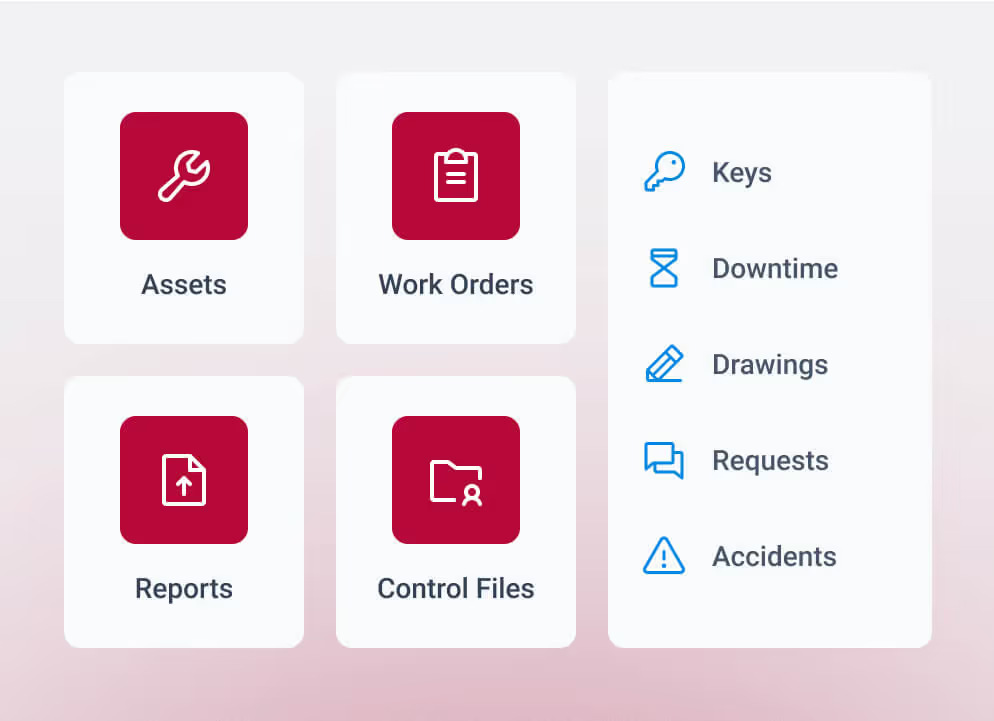


For food and beverage manufacturers, audit readiness depends on being able to show what happened on the plant floor. When was a critical asset last serviced? Was the required inspection completed? What did the technician find? If something was wrong, what corrective action followed? But retrieving that information for an audit often means piecing together work orders, inspection records, calibration documents, spreadsheets, and paper logs. Only 11% of manufacturers describe their compliance processes as streamlined and automated, according to Wherefour’s 2026 State of Manufacturing report.
CMMS software for food and beverage helps manufacturers organize required work, document findings and repairs, and retrieve equipment history when needed. In this guide, we’ll cover how a CMMS can support audit-ready maintenance, from preventive maintenance and inspections to corrective work, calibration, and documentation, plus common compliance risks to watch for.
How does a CMMS help with food and beverage compliance?
A CMMS can help food and beverage manufacturers turn day-to-day maintenance activities into consistent, traceable records. By connecting maintenance work to the right assets, teams can more easily show what was required, what was completed, what issues were found, and how they were resolved. While a CMMS supports compliance efforts by improving documentation, visibility, and recordkeeping, it does not guarantee compliance. The plant’s quality and food safety teams remain responsible for determining applicable requirements and ensuring maintenance records meet those standards.
Key maintenance workflows that can support food and beverage compliance include:
- Preventive maintenance: Teams can schedule required work, assign it to the right people, capture completion details and findings, and see overdue tasks.
- Pre-start inspections: Technicians can document equipment conditions before production and flag failed checks or defects that need attention.
- Corrective work: A failed inspection, abnormal reading, or defect can trigger a clear path to follow-up work. Connecting the original finding to the resulting work order creates audit trails that show how the issue was handled. This level of follow-through is one reason food and beverage manufacturers may need more than a basic CMMS software as maintenance and compliance requirements become more complex.
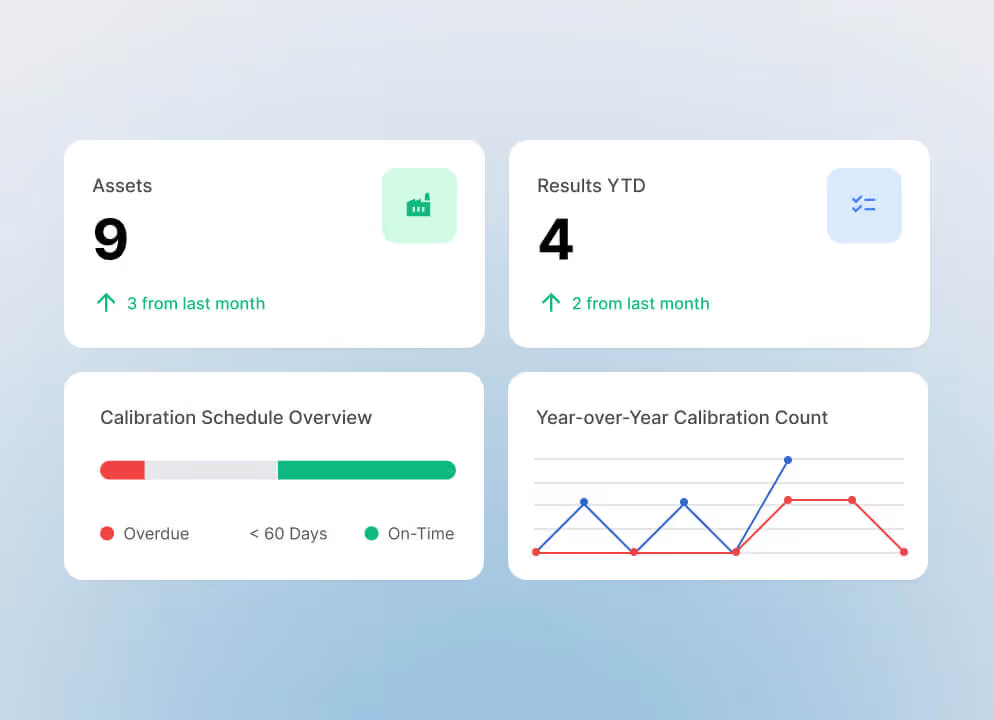
- Calibration: For equipment and instruments subject to calibration requirements, teams need visibility into schedules, results, certificates, and exceptions. MEX can integrate with ProCalX to support calibration and quality-compliance workflows alongside maintenance activity.
- Documentation and reporting: With records tied to the appropriate assets, maintenance, operations, and quality teams can review overdue work, open findings, recurring issues, and service history without piecing together information from separate sources. These are also important considerations when choosing a CMMS for food and beverage.
Together, these workflows create a clearer trail from maintenance requirements to completion and, when something goes wrong, from the original finding through corrective action and resolution. Making that traceability reliable starts with how maintenance work is structured in the CMMS, from defining requirements and responsibilities to documenting and resolving issues consistently.

How to use a CMMS to build compliance-ready food and beverage maintenance
Audit-ready maintenance starts long before an audit. It depends on how consistently teams identify critical equipment, schedule and complete required work, respond to findings, and document what happened. A CMMS can help teams manage these requirements through repeatable workflows with clear responsibilities, documentation standards, and follow-up when something goes wrong.
The table below outlines the key maintenance jobs a CMMS can help support, what teams should track, and how each can contribute to food and beverage compliance.
Supporting these maintenance jobs consistently depends on how the CMMS is configured and used. The following steps can help teams translate food safety, quality, and maintenance requirements into repeatable workflows and audit-ready records.
Identify equipment tied to food safety and quality
Start with the assets where maintenance conditions or failure could affect food safety, product quality, production, or a compliance requirement. Depending on the plant, that may include food processing equipment, packaging lines, refrigeration systems, conveyors, or instruments used to monitor temperature and other critical process conditions.
Consider the role each asset plays in production, known failure modes, applicable food safety or quality requirements, and the consequences of missed maintenance. Equipment involved in sanitation, temperature control, packaging integrity, or other plant-specific food safety controls may warrant tighter maintenance requirements and documentation. That assessment can guide asset management decisions, including which equipment requires specific PM procedures, pre-start checks, calibration activities, or more detailed records.
Define maintenance requirements and schedules
Once you identify critical equipment, translate its requirements into work the team can execute consistently. Define each planned maintenance task, its frequency or trigger, the required procedure, completion criteria, and any readings or findings technicians need to record. TMA Systems' preventive maintenance software can help teams schedule recurring work and maintain a record of completed maintenance.
Pre-start inspections need defined checks and response criteria based on the equipment and process. Instruments subject to calibration also need schedules and records appropriate to the organization's quality program, with connected ProCalX workflows available when calibration management is required. Plants that use condition monitoring can use those readings to inform maintenance decisions when the equipment and maintenance strategy call for it.
Assign ownership for compliance-related maintenance
A scheduled task needs clear ownership beyond the person completing the work. Decide who reviews failed inspections, who creates or approves follow-up work, and who handles overdue PMs or unresolved findings.
Maintenance and quality teams should also agree on where their responsibilities intersect. For example, a failed pre-start on production equipment, may send a repair to maintenance, while quality determines whether additional review is required before the equipment returns to service. Building those responsibilities into the workflow reduces ambiguity when an issue needs a quick response.
Set rules for escalating and resolving maintenance issues
Decide how the team should respond to a finding before technicians encounter one in the field. A failed pre-start might require the technician to record the defect, trigger corrective work, assign a priority, and route the issue to the appropriate owner. A defect discovered during PM may follow a similar path, while an out-of-tolerance calibration result may require a different escalation process.
MEX supports workflows that link inspections, identified issues, and corrective work so teams can track findings through resolution. When the work is closed, the record should show the original finding, the action taken, and the final status. That gives teams a clear history when they need to understand how an exception was handled.
Standardize maintenance documentation requirements
Technicians shouldn't have to decide from scratch what information belongs in a completed record. Define documentation requirements based on the type of work and the evidence the organization needs.
A PM record might require the asset, technician, completion date and time, work performed, readings, and any findings. An inspection may also need the result of each required check and details about defects found. Corrective work should capture the action taken and closure status, while calibration activities may require results, certificates, or other supporting documentation.
The exact fields will depend on the equipment, internal quality processes, and applicable regulatory requirements. Regulatory standards, certification programs, and internal food safety plans may require specific records. Supporting maintenance evidence can provide additional context about how equipment has been maintained. Defining those expectations with the appropriate quality or compliance stakeholders gives technicians clearer requirements for each type of work.
As a simple audit-readiness check, select a critical asset and try to retrieve its most recent scheduled PM, completed inspection, any defect that was identified, the related repair work, and any required follow-up actions. If those records cannot be easily located or connected, you've identified a documentation gap that should be addressed before an auditor does.
Review maintenance performance and compliance gaps regularly
Once these workflows are running, focus reviews on exceptions that require action. Overdue PMs on critical production equipment, missed pre-starts, unresolved findings, overdue calibration, and incomplete records can point to problems with execution or CMMS configuration.
Recurring failures on the same asset may call for changes to the maintenance strategy and can contribute to unplanned downtime and higher maintenance costs. Tracking those patterns alongside equipment uptime can help teams see how maintenance performance is affecting production. When work is repeatedly overdue, the schedule may be unrealistic or ownership may be unclear. Incomplete records can point to required fields or workflows that need to be simplified. These reviews also create a natural opportunity to reinforce facilities maintenance best practices for food safety when maintenance activities affect production or quality controls.
CMMS configuration should change as equipment, production processes, maintenance requirements, and compliance needs change. Regular reviews help teams catch gaps early and keep maintenance records ready for food safety audits.
Common food and beverage maintenance compliance risks to watch for
Maintenance issues can create compliance risks when required work, equipment conditions, or follow-up actions aren't properly documented and traceable. For food and beverage manufacturers, these gaps can make it harder to demonstrate that maintenance activities affecting food safety, quality, or critical equipment were completed and addressed appropriately.
Common maintenance compliance risks to watch for include:
- Incomplete maintenance records: A technician may complete the work but leave out readings, findings, completion details, or other required information. The asset is back in service, yet the record may not provide enough context to show what was done or what condition the technician found.
- Inspection findings without documented resolution: A failed check may be recorded without a clear indication of what happened next. When the resulting work isn't tied back to the finding, maintenance and quality teams may have trouble determining whether the issue was addressed and who approved the final disposition.
- Overdue maintenance on critical equipment: A missed due date can get buried among competing priorities. Pay particular attention when overdue work involves equipment tied to food safety or quality, especially if there isn't a clear escalation process for deciding what happens next.
- Calibration gaps: Calibration activity can become difficult to trace when schedules, results, certificates, and exceptions aren't clearly connected to the instruments and quality processes they support. Out-of-tolerance results also need a defined path for review and follow-up.
- Disconnected paper and digital records: The necessary evidence may exist, but retrieving it can become a project of its own when some records live in the CMMS, and others are stored in spreadsheets, binders, or separate systems.
- Inconsistent execution across technicians, shifts, or sites: Differences in how people complete the same task can lead to missing fields, uneven inspection practices, or different responses to similar findings. Those variations become harder to manage as operations expand across more assets and locations.
Identifying these risks can help maintenance and quality teams focus on the areas where stronger tracking, documentation, or follow-up may be needed. A CMMS can help by making overdue work, unresolved findings, calibration gaps, and incomplete maintenance records easier to identify and review.
How MEX supports F&B compliance with CMMS
For food and beverage manufacturers, maintenance compliance depends on both completing required work and keeping a clear record of what happened. MEX can help maintenance teams manage that work more consistently and maintain visibility into the assets and maintenance activity that support audit readiness.
Key MEX capabilities that can help include:
- Technician-first workflows: MEX uses an intuitive interface and streamlined workflows designed around how technicians work in plants,, and the field. Straightforward data entry supports consistent capture of work, findings, and completion details.
- Mobile and offline execution: Work orders, inspections, and pre-starts are available through the native mobile app, including in areas without connectivity. Technicians can enter information for an asset and keep the record with the work they completed.
- Connected inspections and corrective work: Inspection findings can feed into corrective work so teams can follow issues through resolution. Spare parts, inventory, and related maintenance activity can remain connected within the workflow, supporting inventory management alongside maintenance execution.
- Traceable asset and maintenance history: Asset-centric maintenance keeps activity tied to the equipment it affects, giving teams visibility into asset, maintenance, and lifecycle information when reviewing recurring problems or gathering maintenance evidence.
- ProCalX integration: For facilities that manage calibration activities, integration with ProCalX helps connect maintenance and calibration records. Teams can more easily access calibration histories, certificates, results, and related asset information alongside maintenance data, supporting the evidence trail often needed for audits, inspections, and compliance reviews.
- Reporting and maintenance visibility: Reporting can surface overdue work, unresolved findings, recurring equipment problems, and other maintenance trends that require attention.
For food and beverage manufacturers, these capabilities can help create a clearer, more traceable maintenance record, from required work and inspections to findings, follow-up, and asset history. That visibility can help teams identify gaps earlier and make relevant maintenance information easier to review when preparing for an audit.
To see how this could work for your operation, explore MEX, request a personalized demo based on your plant’s maintenance needs, or contact the TMA Systems team with questions.
FAQs about CMMS for food and beverage compliance
Related resources
From ideas to impact
You’ve read the insights, now see how TMA Systems helps teams put them into practice.