Resources
Blog
Medical Equipment Maintenance Software for Biomed
Blog
December 2, 2025
5
 min read

Medical Equipment Maintenance Software for Biomed

Medical Equipment Maintenance Software for Biomed

In this post

1
Biomed teams rely on medical equipment maintenance software to keep devices safe, compliant, and ready for patient care.
2
Purpose-built biomed CMMS systems improve uptime, documentation accuracy, and survey readiness.
3
A connected biomedical ecosystem strengthens safety, maintenance workflows, and lifecycle planning across the hospital.
By the numbers

1

Biomed teams rely on medical equipment maintenance software to keep devices safe, compliant, and ready for patient care.

2

Purpose-built biomed CMMS systems improve uptime, documentation accuracy, and survey readiness.

3

A connected biomedical ecosystem strengthens safety, maintenance workflows, and lifecycle planning across the hospital.
Resources
eBooks & Whitepapers
Medical Equipment Maintenance Software for Biomed
Blog

Medical Equipment Maintenance Software for Biomed

Learn what medical equipment maintenance software does, who uses it, and how to choose the right biomed CMMS to improve safety and efficiency.

Medical Equipment Maintenance Software for Biomed

Biomedical teams carry a heavy load. They manage regulated medical devices and keep maintenance activity accurate, traceable, and ready for inspection at any moment. Manual spreadsheets and generic tools create gaps that cause delays, missed tasks, and inconsistent documentation.

Hospitals face growing pressure to keep equipment in service longer, meet regulatory expectations with fewer disruptions, and manage larger device inventories across clinical areas. According to Grand View Research, healthcare maintenance software adoption continues to rise as hospitals prioritize stronger preventive maintenance, reduced downtime, and reliable audit support.

Digitized workflows give clinical engineering teams clearer visibility into device condition, testing schedules, risk, and service history. This improves uptime, strengthens inspection readiness, and reduces administrative overhead. A dedicated biomedical CMMS (Computerized Maintenance Management System) organizes maintenance, documentation, and reporting in one place, helping teams track required tasks and respond quickly during daily work.

TMA Systems supports this work with tools built for clinical engineering. Biomedical teams gain a stable foundation for managing device activity, maintaining accurate records, and staying ahead of equipment failures that impact patient care.

What is medical equipment maintenance software?

Medical equipment maintenance software helps biomedical teams plan, complete, and document work on regulated medical devices. It centralizes maintenance activity, tracks device history, and produces records that stay consistent and ready for inspection. The system replaces manual tools with workflows designed for clinical engineering, where accuracy and traceability are essential.

Core functions include:

Preventive maintenance scheduling

A scheduling engine organizes recurring tasks, testing intervals, and procedures based on manufacturer guidance and internal policies. Clear schedules and automated reminders help teams reduce missed preventive activities through preventive maintenance software designed for healthcare.

Corrective maintenance and repair tracking

Maintenance teams log repairs, labor time, parts, and follow-up actions in one system. This builds a reliable record for troubleshooting, spotting failure patterns, and understanding downtime events.

Device history and documentation

Each device carries a complete digital file, including PM activity, repairs, testing results, risk ratings, and asset details. This helps teams respond quickly during inspections and supports informed capital planning.

Calibration and safety testing management

Calibration work, electrical safety tests, and other regulated checks stay tied to individual devices and their required intervals. Centralized tracking improves accuracy and keeps clinical engineering aligned with testing schedules.

Recall and safety alert management

The system highlights affected devices and tracks corrective work through completion. Clear documentation reduces manual effort and protects device safety during recall events.

Mobile access for technicians

Technicians access work orders, procedures, checklists, and device histories on carts or handheld devices. This supports faster updates and improves documentation quality at the point of service.

Types of medical equipment maintenance software

Biomedical work requires accurate testing records, clear service histories, and workflows aligned with Joint Commission, CMS, FDA, and manufacturer standards. Several software categories support different parts of hospital operations. Clinical engineering teams often use a dedicated medical device maintenance platform alongside broader systems that provide enterprise context.

1. Biomed CMMS

A biomed CMMS focuses on device-level maintenance and clinical engineering workflows. It supports preventive maintenance, calibrations, electrical safety tests, work orders, device histories, and compliance reporting. This CMMS system aligns with the documentation and testing standards required in healthcare and keeps devices inspection-ready.

2. Healthcare Enterprise Asset Management software 

Healthcare organizations can use enterprise asset management software to manage assets across facilities, IT, and clinical departments. Leadership uses this enterprise layer to track lifecycle costs, equipment age, risk, and replacement needs. Clinical engineering depends on a biomed-focused system for regulated device work while using the enterprise asset management layer for broader planning and coordination.

3. Alarm and Condition platforms

Hospitals use alarm management software to surface real-time equipment and environmental signals. These insights highlight alerts and conditions that indicate risk. Biomedical teams use this information to prioritize work and act before failures interrupt patient care. These platforms strengthen situational awareness but do not handle maintenance tasks or documentation.

Who uses medical equipment maintenance software?

Medical equipment maintenance software supports every level of clinical engineering. Biomedical technicians, clinical engineers, and clinical engineering directors use the system daily to complete maintenance, document regulated tasks, and prepare for inspections. They rely on accurate work order management software, device histories, and testing records to work efficiently.

A wider group across the hospital depends on this data. Compliance and risk teams review documented testing, repairs, and service logs. IT and cybersecurity teams use the device inventory to monitor connected equipment. Nursing and clinical staff report issues and check device status to avoid delays at the point of care. Operations and finance leaders use maintenance reporting and analytics to guide capital planning and replacement decisions. These teams access device safety, downtime risk, and regulatory activity through compliance tracking software.

A strong platform supports daily activity and long-term decisions involving safety, staffing, and equipment lifecycles.

User Type Software Type(s) Key Benefits
Biomedical technicians Biomed CMMS Faster access to work orders and device histories, fewer missed preventive tasks, and accurate documentation of repairs and tests.
Clinical engineers Biomed CMMS, sometimes EAM Improved uptime, clearer risk patterns, stronger data for prioritizing high-risk equipment.
Clinical engineering directors Biomed CMMS + dashboards Visibility into compliance, aging fleets, and replacement needs; supports staffing and capital planning.
Compliance and risk teams Biomed CMMS Audit-ready records, traceability, and evidence that devices are maintained to standards.
IT and cybersecurity teams Biomed CMMS (device inventory) Better oversight of connected devices and security risks tied to maintenance.
Nursing and clinical teams Request portals (CMMS/EAM) Faster reporting and resolution of issues, and better availability of ready-to-use devices.
Operations and finance leaders EAM + CMMS reporting Data for repair-versus-replace decisions and long-term capital planning.
Discover how leading biomed teams use CMMS data to stay survey-ready, prevent documentation lapses, and protect patient safety in the guide How CMMS Simplifies Healthcare Survey Compliance.

How to evaluate medical equipment maintenance software

Medical equipment maintenance software shapes how clinical engineering teams manage regulated activity. These criteria highlight the features that matter most.

1. Regulatory and audit support

Look for software that produces trustworthy, inspection-ready records for preventive maintenance, calibrations, repairs, and testing. Accurate reporting helps teams respond quickly during surveys.

2. Depth of device-level workflows

Review how well the platform supports clinical engineering tasks. Workflows should match maintenance, calibration, electrical safety testing, and documentation needs without extra steps.

3. Accurate device inventory

A reliable system maintains current locations, statuses, risk levels, and asset details. Clean data supports daily work and long-term decision-making.

4. Handling of recalls and safety alerts

A reliable system maintains current locations, statuses, risk levels, and asset details. Clean data supports daily work and long-term decision-making.

5. Ease of use for technicians

Technicians need simple screens and fast navigation. Straightforward workflows reduce errors and support faster maintenance.

6. Mobile access at the point of service

Technicians should be able to view procedures, histories, and checklists on carts or handheld devices. Mobile access improves accuracy and speeds up documentation.

See how Los Angeles County DHS modernized medical equipment maintenance and improved system-wide visibility across six hospitals using EQ2 HEMS.

How TMA Systems supports biomedical asset management

TMA Systems provides an ecosystem built for regulated medical devices and the broader needs of healthcare operations. EQ2 HEMS and its integrated platforms support clinical engineering from routine service tasks to survey preparation and capital planning.

EQ2 HEMS

EQ2 HEMS is purpose-built for maintaining medical devices. The system manages preventive maintenance, calibrations, electrical safety tests, device histories, recalls, and compliance reporting aligned with Joint Commission, CMS, FDA, and manufacturer standards. Clinical engineering uses it to document work accurately and keep testing schedules current throughout the year.

“With EQ2 HEMS by TMA Systems, we’ve transformed how Los Angeles County manages assets. Bringing all hospitals together on one enterprise platform that improves visibility, standardization, and ultimately, quality of care.”

David Chambers
Los Angeles County Department of Health Services, Harbor-UCLA Medical Center
Director of Facilities Management

WebTMA

WebTMA connects clinical engineering with facilities, IT, and operations through enterprise asset management. This broader view strengthens lifecycle planning, risk identification, and cross-department coordination.

Virtual Facility

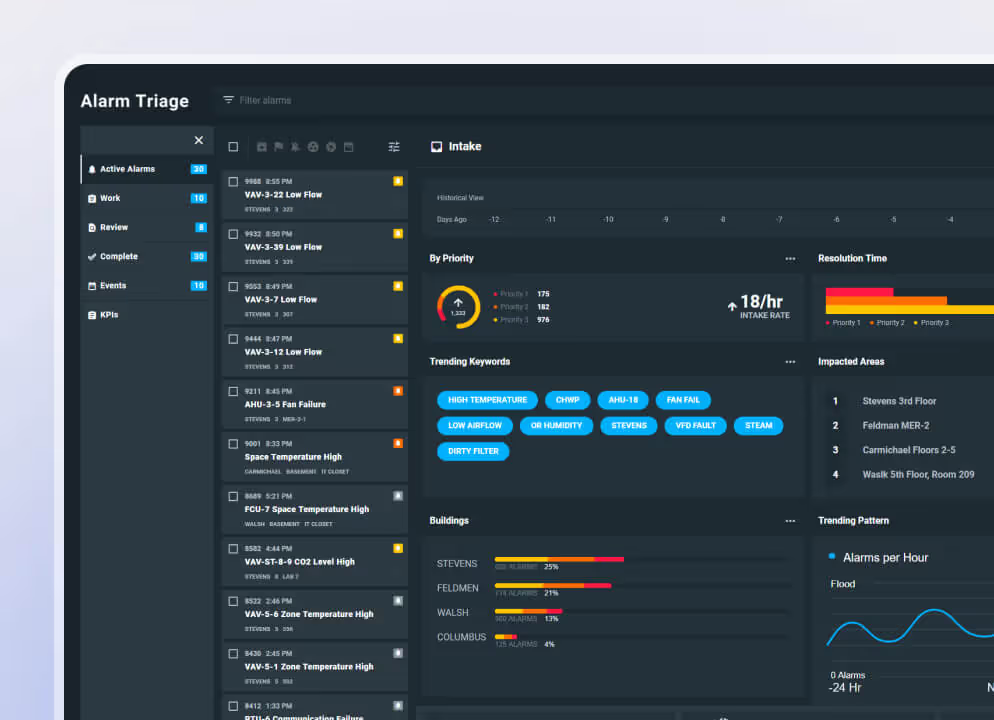
Virtual Facility works alongside your biomed CMMS, surfacing real-time alarms, conditions, and risk indicators from the hospital environment. Built to extend platforms like EQ2 HEMS, Virtual Facility turns CMMS data and live signals into prioritized actions so biomed teams can act on emerging problems before they disrupt patient care.

ProCal 

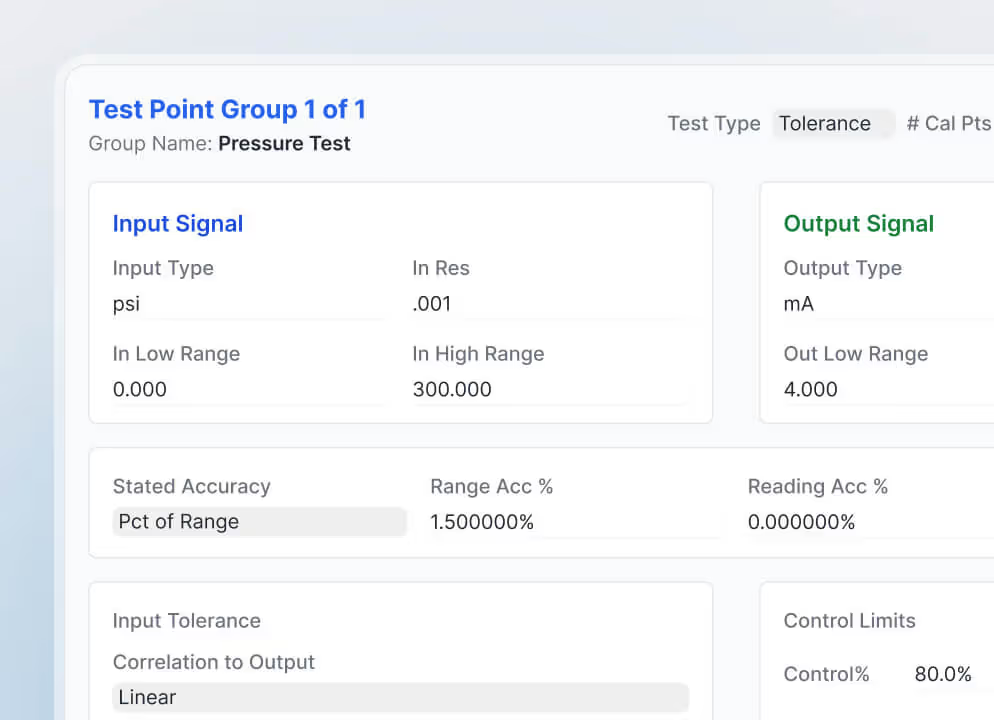
ProCal builds on the CMMS foundation for organizations with advanced calibration requirements. It adds deeper tracking, scheduling, and documentation for equipment that requires strict calibration procedures, while keeping all activity tied back to the core CMMS record.

Ultimately, these platforms come together to give healthcare teams a complete maintenance foundation.

EQ2 HEMS leads clinical engineering workflows, while WebTMA manages facility and operational assets. Virtual Facility and ProCal work as CMMS-dependent extensions, adding real-time alarm insight and precise calibration control. Together, they can form a connected ecosystem that supports daily maintenance, regulatory demands, and long-term planning.

See how TMA Systems supports biomedical teams with EQ2 HEMS and integrated solutions built for regulated medical devices. Find the solution that fits your maintenance needs.

FAQs about medical equipment maintenance software for biomed

What makes medical equipment maintenance software different from a general maintenance system?

Medical equipment maintenance software supports regulated medical devices with clinical engineering workflows that meet strict regulatory standards. It manages preventive maintenance, calibrations, electrical safety tests, recalls, and device histories in a way general maintenance management tools cannot. The system provides the level of accuracy needed to support Joint Commission, CMS, FDA, and manufacturer expectations while giving biomed teams structured equipment management and documentation required for regulated environments.

Which organizations benefit the most from medical equipment maintenance software?

Hospitals, health systems, outpatient clinics, surgical centers, and organizations with large biomedical fleets gain the most value. These settings depend on reliable equipment management, accurate inventory management, and maintenance services that follow regulated testing workflows. Teams in these environments need complete visibility into device condition, maintenance schedules, and compliance activity to keep equipment ready for patient care.

How does medical equipment maintenance software help hospitals stay compliant during audits?

The software organizes maintenance records, calibration results, safety test data, recall actions, and service histories in one system. This structure supports fast access to accurate documentation during survey activity and strengthens regulatory compliance.

Clear device histories and consistent maintenance management practices help teams uphold regulatory standards across all clinical areas.

What should biomedical teams look for when choosing medical equipment maintenance software?

Biomedical teams should focus on regulatory reporting, device-level workflows, inventory management accuracy, recall tracking, technician usability, and mobile access at the point of service.

Strong platforms support preventive maintenance, calibrations, electrical safety tests, and a maintenance schedule that aligns with regulatory standards. The system should support daily service activity without extra steps or manual workarounds.

How does medical equipment maintenance software fit into a hospital’s larger technology ecosystem?

A biomed-focused system manages regulated device activity and the maintenance services tied to each asset. Other systems—such as enterprise asset management, alarm monitoring, and IT platforms—support broader operational needs, capital planning, and risk insights.

Together, these tools create a connected view of equipment management, maintenance management workflows, inventory accuracy, and regulatory compliance across the hospital.

Does TMA Systems offer medical equipment maintenance software specifically for biomedical teams?

Yes. TMA Systems provides EQ2 HEMS, a platform built for regulated medical devices and clinical engineering workflows. It supports preventive maintenance, calibrations, electrical safety tests, device histories, recalls, and compliance reporting tied to regulatory standards.

WebTMA, Virtual Facility, and ProCal complement this work with enterprise context, real-time intelligence, and advanced calibration management for teams with deeper documentation needs.

Key Insights You'll Gain:
  • Biomed teams rely on medical equipment maintenance software to keep devices safe, compliant, and ready for patient care.
  • Purpose-built biomed CMMS systems improve uptime, documentation accuracy, and survey readiness.
  • A connected biomedical ecosystem strengthens safety, maintenance workflows, and lifecycle planning across the hospital.

Download the eBook now

You’re all set!

Your eBook is on its way to your inbox. We hope it brings fresh insights and practical takeaways to help you get more from your maintenance operations.

Explore related resources

Resources
Blog
Medical Equipment Maintenance Software for Biomed
Resources
eBooks & Whitepapers
Medical Equipment Maintenance Software for Biomed
Blog

Medical Equipment Maintenance Software for Biomed

Learn what medical equipment maintenance software does, who uses it, and how to choose the right biomed CMMS to improve safety and efficiency.

December 2, 2025

Medical Equipment Maintenance Software for Biomed

Biomedical teams carry a heavy load. They manage regulated medical devices and keep maintenance activity accurate, traceable, and ready for inspection at any moment. Manual spreadsheets and generic tools create gaps that cause delays, missed tasks, and inconsistent documentation.

Hospitals face growing pressure to keep equipment in service longer, meet regulatory expectations with fewer disruptions, and manage larger device inventories across clinical areas. According to Grand View Research, healthcare maintenance software adoption continues to rise as hospitals prioritize stronger preventive maintenance, reduced downtime, and reliable audit support.

Digitized workflows give clinical engineering teams clearer visibility into device condition, testing schedules, risk, and service history. This improves uptime, strengthens inspection readiness, and reduces administrative overhead. A dedicated biomedical CMMS (Computerized Maintenance Management System) organizes maintenance, documentation, and reporting in one place, helping teams track required tasks and respond quickly during daily work.

TMA Systems supports this work with tools built for clinical engineering. Biomedical teams gain a stable foundation for managing device activity, maintaining accurate records, and staying ahead of equipment failures that impact patient care.

What is medical equipment maintenance software?

Medical equipment maintenance software helps biomedical teams plan, complete, and document work on regulated medical devices. It centralizes maintenance activity, tracks device history, and produces records that stay consistent and ready for inspection. The system replaces manual tools with workflows designed for clinical engineering, where accuracy and traceability are essential.

Core functions include:

Preventive maintenance scheduling

A scheduling engine organizes recurring tasks, testing intervals, and procedures based on manufacturer guidance and internal policies. Clear schedules and automated reminders help teams reduce missed preventive activities through preventive maintenance software designed for healthcare.

Corrective maintenance and repair tracking

Maintenance teams log repairs, labor time, parts, and follow-up actions in one system. This builds a reliable record for troubleshooting, spotting failure patterns, and understanding downtime events.

Device history and documentation

Each device carries a complete digital file, including PM activity, repairs, testing results, risk ratings, and asset details. This helps teams respond quickly during inspections and supports informed capital planning.

Calibration and safety testing management

Calibration work, electrical safety tests, and other regulated checks stay tied to individual devices and their required intervals. Centralized tracking improves accuracy and keeps clinical engineering aligned with testing schedules.

Recall and safety alert management

The system highlights affected devices and tracks corrective work through completion. Clear documentation reduces manual effort and protects device safety during recall events.

Mobile access for technicians

Technicians access work orders, procedures, checklists, and device histories on carts or handheld devices. This supports faster updates and improves documentation quality at the point of service.

Types of medical equipment maintenance software

Biomedical work requires accurate testing records, clear service histories, and workflows aligned with Joint Commission, CMS, FDA, and manufacturer standards. Several software categories support different parts of hospital operations. Clinical engineering teams often use a dedicated medical device maintenance platform alongside broader systems that provide enterprise context.

1. Biomed CMMS

A biomed CMMS focuses on device-level maintenance and clinical engineering workflows. It supports preventive maintenance, calibrations, electrical safety tests, work orders, device histories, and compliance reporting. This CMMS system aligns with the documentation and testing standards required in healthcare and keeps devices inspection-ready.

2. Healthcare Enterprise Asset Management software 

Healthcare organizations can use enterprise asset management software to manage assets across facilities, IT, and clinical departments. Leadership uses this enterprise layer to track lifecycle costs, equipment age, risk, and replacement needs. Clinical engineering depends on a biomed-focused system for regulated device work while using the enterprise asset management layer for broader planning and coordination.

3. Alarm and Condition platforms

Hospitals use alarm management software to surface real-time equipment and environmental signals. These insights highlight alerts and conditions that indicate risk. Biomedical teams use this information to prioritize work and act before failures interrupt patient care. These platforms strengthen situational awareness but do not handle maintenance tasks or documentation.

Who uses medical equipment maintenance software?

Medical equipment maintenance software supports every level of clinical engineering. Biomedical technicians, clinical engineers, and clinical engineering directors use the system daily to complete maintenance, document regulated tasks, and prepare for inspections. They rely on accurate work order management software, device histories, and testing records to work efficiently.

A wider group across the hospital depends on this data. Compliance and risk teams review documented testing, repairs, and service logs. IT and cybersecurity teams use the device inventory to monitor connected equipment. Nursing and clinical staff report issues and check device status to avoid delays at the point of care. Operations and finance leaders use maintenance reporting and analytics to guide capital planning and replacement decisions. These teams access device safety, downtime risk, and regulatory activity through compliance tracking software.

A strong platform supports daily activity and long-term decisions involving safety, staffing, and equipment lifecycles.

User Type Software Type(s) Key Benefits
Biomedical technicians Biomed CMMS Faster access to work orders and device histories, fewer missed preventive tasks, and accurate documentation of repairs and tests.
Clinical engineers Biomed CMMS, sometimes EAM Improved uptime, clearer risk patterns, stronger data for prioritizing high-risk equipment.
Clinical engineering directors Biomed CMMS + dashboards Visibility into compliance, aging fleets, and replacement needs; supports staffing and capital planning.
Compliance and risk teams Biomed CMMS Audit-ready records, traceability, and evidence that devices are maintained to standards.
IT and cybersecurity teams Biomed CMMS (device inventory) Better oversight of connected devices and security risks tied to maintenance.
Nursing and clinical teams Request portals (CMMS/EAM) Faster reporting and resolution of issues, and better availability of ready-to-use devices.
Operations and finance leaders EAM + CMMS reporting Data for repair-versus-replace decisions and long-term capital planning.
Discover how leading biomed teams use CMMS data to stay survey-ready, prevent documentation lapses, and protect patient safety in the guide How CMMS Simplifies Healthcare Survey Compliance.

How to evaluate medical equipment maintenance software

Medical equipment maintenance software shapes how clinical engineering teams manage regulated activity. These criteria highlight the features that matter most.

1. Regulatory and audit support

Look for software that produces trustworthy, inspection-ready records for preventive maintenance, calibrations, repairs, and testing. Accurate reporting helps teams respond quickly during surveys.

2. Depth of device-level workflows

Review how well the platform supports clinical engineering tasks. Workflows should match maintenance, calibration, electrical safety testing, and documentation needs without extra steps.

3. Accurate device inventory

A reliable system maintains current locations, statuses, risk levels, and asset details. Clean data supports daily work and long-term decision-making.

4. Handling of recalls and safety alerts

A reliable system maintains current locations, statuses, risk levels, and asset details. Clean data supports daily work and long-term decision-making.

5. Ease of use for technicians

Technicians need simple screens and fast navigation. Straightforward workflows reduce errors and support faster maintenance.

6. Mobile access at the point of service

Technicians should be able to view procedures, histories, and checklists on carts or handheld devices. Mobile access improves accuracy and speeds up documentation.

See how Los Angeles County DHS modernized medical equipment maintenance and improved system-wide visibility across six hospitals using EQ2 HEMS.

How TMA Systems supports biomedical asset management

TMA Systems provides an ecosystem built for regulated medical devices and the broader needs of healthcare operations. EQ2 HEMS and its integrated platforms support clinical engineering from routine service tasks to survey preparation and capital planning.

EQ2 HEMS

EQ2 HEMS is purpose-built for maintaining medical devices. The system manages preventive maintenance, calibrations, electrical safety tests, device histories, recalls, and compliance reporting aligned with Joint Commission, CMS, FDA, and manufacturer standards. Clinical engineering uses it to document work accurately and keep testing schedules current throughout the year.

“With EQ2 HEMS by TMA Systems, we’ve transformed how Los Angeles County manages assets. Bringing all hospitals together on one enterprise platform that improves visibility, standardization, and ultimately, quality of care.”

David Chambers
Los Angeles County Department of Health Services, Harbor-UCLA Medical Center
Director of Facilities Management

WebTMA

WebTMA connects clinical engineering with facilities, IT, and operations through enterprise asset management. This broader view strengthens lifecycle planning, risk identification, and cross-department coordination.

Virtual Facility

Virtual Facility works alongside your biomed CMMS, surfacing real-time alarms, conditions, and risk indicators from the hospital environment. Built to extend platforms like EQ2 HEMS, Virtual Facility turns CMMS data and live signals into prioritized actions so biomed teams can act on emerging problems before they disrupt patient care.

ProCal 

ProCal builds on the CMMS foundation for organizations with advanced calibration requirements. It adds deeper tracking, scheduling, and documentation for equipment that requires strict calibration procedures, while keeping all activity tied back to the core CMMS record.

Ultimately, these platforms come together to give healthcare teams a complete maintenance foundation.

EQ2 HEMS leads clinical engineering workflows, while WebTMA manages facility and operational assets. Virtual Facility and ProCal work as CMMS-dependent extensions, adding real-time alarm insight and precise calibration control. Together, they can form a connected ecosystem that supports daily maintenance, regulatory demands, and long-term planning.

See how TMA Systems supports biomedical teams with EQ2 HEMS and integrated solutions built for regulated medical devices. Find the solution that fits your maintenance needs.

FAQs about medical equipment maintenance software for biomed

What makes medical equipment maintenance software different from a general maintenance system?

Medical equipment maintenance software supports regulated medical devices with clinical engineering workflows that meet strict regulatory standards. It manages preventive maintenance, calibrations, electrical safety tests, recalls, and device histories in a way general maintenance management tools cannot. The system provides the level of accuracy needed to support Joint Commission, CMS, FDA, and manufacturer expectations while giving biomed teams structured equipment management and documentation required for regulated environments.

Which organizations benefit the most from medical equipment maintenance software?

Hospitals, health systems, outpatient clinics, surgical centers, and organizations with large biomedical fleets gain the most value. These settings depend on reliable equipment management, accurate inventory management, and maintenance services that follow regulated testing workflows. Teams in these environments need complete visibility into device condition, maintenance schedules, and compliance activity to keep equipment ready for patient care.

How does medical equipment maintenance software help hospitals stay compliant during audits?

The software organizes maintenance records, calibration results, safety test data, recall actions, and service histories in one system. This structure supports fast access to accurate documentation during survey activity and strengthens regulatory compliance.

Clear device histories and consistent maintenance management practices help teams uphold regulatory standards across all clinical areas.

What should biomedical teams look for when choosing medical equipment maintenance software?

Biomedical teams should focus on regulatory reporting, device-level workflows, inventory management accuracy, recall tracking, technician usability, and mobile access at the point of service.

Strong platforms support preventive maintenance, calibrations, electrical safety tests, and a maintenance schedule that aligns with regulatory standards. The system should support daily service activity without extra steps or manual workarounds.

How does medical equipment maintenance software fit into a hospital’s larger technology ecosystem?

A biomed-focused system manages regulated device activity and the maintenance services tied to each asset. Other systems—such as enterprise asset management, alarm monitoring, and IT platforms—support broader operational needs, capital planning, and risk insights.

Together, these tools create a connected view of equipment management, maintenance management workflows, inventory accuracy, and regulatory compliance across the hospital.

Does TMA Systems offer medical equipment maintenance software specifically for biomedical teams?

Yes. TMA Systems provides EQ2 HEMS, a platform built for regulated medical devices and clinical engineering workflows. It supports preventive maintenance, calibrations, electrical safety tests, device histories, recalls, and compliance reporting tied to regulatory standards.

WebTMA, Virtual Facility, and ProCal complement this work with enterprise context, real-time intelligence, and advanced calibration management for teams with deeper documentation needs.

Key Insights You'll Gain:
  • Biomed teams rely on medical equipment maintenance software to keep devices safe, compliant, and ready for patient care.
  • Purpose-built biomed CMMS systems improve uptime, documentation accuracy, and survey readiness.
  • A connected biomedical ecosystem strengthens safety, maintenance workflows, and lifecycle planning across the hospital.

Register for your free webinar

You’re all set!

Your webinar is on its way to your inbox. We hope it brings fresh insights and practical takeaways to help you get more from your maintenance operations.

Explore related resources

Resources
Blog
Medical Equipment Maintenance Software for Biomed
Resources
Blog
Medical Equipment Maintenance Software for Biomed
Resources
Blog
Medical Equipment Maintenance Software for Biomed
Blog
December 2, 2025

Medical Equipment Maintenance Software for Biomed

Blog
December 2, 2025

Medical Equipment Maintenance Software for Biomed

Blog

Medical Equipment Maintenance Software for Biomed

Blog
December 2, 2025

Medical Equipment Maintenance Software for Biomed

Blog

Medical Equipment Maintenance Software for Biomed

December 2, 2025
Blog
December 2, 2025

Medical Equipment Maintenance Software for Biomed

Industry
Healthcare
Location
Size
Written by
Presenters
No items found.
Share

Medical Equipment Maintenance Software for Biomed

Biomedical teams carry a heavy load. They manage regulated medical devices and keep maintenance activity accurate, traceable, and ready for inspection at any moment. Manual spreadsheets and generic tools create gaps that cause delays, missed tasks, and inconsistent documentation.

Hospitals face growing pressure to keep equipment in service longer, meet regulatory expectations with fewer disruptions, and manage larger device inventories across clinical areas. According to Grand View Research, healthcare maintenance software adoption continues to rise as hospitals prioritize stronger preventive maintenance, reduced downtime, and reliable audit support.

Digitized workflows give clinical engineering teams clearer visibility into device condition, testing schedules, risk, and service history. This improves uptime, strengthens inspection readiness, and reduces administrative overhead. A dedicated biomedical CMMS (Computerized Maintenance Management System) organizes maintenance, documentation, and reporting in one place, helping teams track required tasks and respond quickly during daily work.

TMA Systems supports this work with tools built for clinical engineering. Biomedical teams gain a stable foundation for managing device activity, maintaining accurate records, and staying ahead of equipment failures that impact patient care.

What is medical equipment maintenance software?

Medical equipment maintenance software helps biomedical teams plan, complete, and document work on regulated medical devices. It centralizes maintenance activity, tracks device history, and produces records that stay consistent and ready for inspection. The system replaces manual tools with workflows designed for clinical engineering, where accuracy and traceability are essential.

Core functions include:

Preventive maintenance scheduling

A scheduling engine organizes recurring tasks, testing intervals, and procedures based on manufacturer guidance and internal policies. Clear schedules and automated reminders help teams reduce missed preventive activities through preventive maintenance software designed for healthcare.

Corrective maintenance and repair tracking

Maintenance teams log repairs, labor time, parts, and follow-up actions in one system. This builds a reliable record for troubleshooting, spotting failure patterns, and understanding downtime events.

Device history and documentation

Each device carries a complete digital file, including PM activity, repairs, testing results, risk ratings, and asset details. This helps teams respond quickly during inspections and supports informed capital planning.

Calibration and safety testing management

Calibration work, electrical safety tests, and other regulated checks stay tied to individual devices and their required intervals. Centralized tracking improves accuracy and keeps clinical engineering aligned with testing schedules.

Recall and safety alert management

The system highlights affected devices and tracks corrective work through completion. Clear documentation reduces manual effort and protects device safety during recall events.

Mobile access for technicians

Technicians access work orders, procedures, checklists, and device histories on carts or handheld devices. This supports faster updates and improves documentation quality at the point of service.

Types of medical equipment maintenance software

Biomedical work requires accurate testing records, clear service histories, and workflows aligned with Joint Commission, CMS, FDA, and manufacturer standards. Several software categories support different parts of hospital operations. Clinical engineering teams often use a dedicated medical device maintenance platform alongside broader systems that provide enterprise context.

1. Biomed CMMS

A biomed CMMS focuses on device-level maintenance and clinical engineering workflows. It supports preventive maintenance, calibrations, electrical safety tests, work orders, device histories, and compliance reporting. This CMMS system aligns with the documentation and testing standards required in healthcare and keeps devices inspection-ready.

2. Healthcare Enterprise Asset Management software 

Healthcare organizations can use enterprise asset management software to manage assets across facilities, IT, and clinical departments. Leadership uses this enterprise layer to track lifecycle costs, equipment age, risk, and replacement needs. Clinical engineering depends on a biomed-focused system for regulated device work while using the enterprise asset management layer for broader planning and coordination.

3. Alarm and Condition platforms

Hospitals use alarm management software to surface real-time equipment and environmental signals. These insights highlight alerts and conditions that indicate risk. Biomedical teams use this information to prioritize work and act before failures interrupt patient care. These platforms strengthen situational awareness but do not handle maintenance tasks or documentation.

Who uses medical equipment maintenance software?

Medical equipment maintenance software supports every level of clinical engineering. Biomedical technicians, clinical engineers, and clinical engineering directors use the system daily to complete maintenance, document regulated tasks, and prepare for inspections. They rely on accurate work order management software, device histories, and testing records to work efficiently.

A wider group across the hospital depends on this data. Compliance and risk teams review documented testing, repairs, and service logs. IT and cybersecurity teams use the device inventory to monitor connected equipment. Nursing and clinical staff report issues and check device status to avoid delays at the point of care. Operations and finance leaders use maintenance reporting and analytics to guide capital planning and replacement decisions. These teams access device safety, downtime risk, and regulatory activity through compliance tracking software.

A strong platform supports daily activity and long-term decisions involving safety, staffing, and equipment lifecycles.

User Type Software Type(s) Key Benefits
Biomedical technicians Biomed CMMS Faster access to work orders and device histories, fewer missed preventive tasks, and accurate documentation of repairs and tests.
Clinical engineers Biomed CMMS, sometimes EAM Improved uptime, clearer risk patterns, stronger data for prioritizing high-risk equipment.
Clinical engineering directors Biomed CMMS + dashboards Visibility into compliance, aging fleets, and replacement needs; supports staffing and capital planning.
Compliance and risk teams Biomed CMMS Audit-ready records, traceability, and evidence that devices are maintained to standards.
IT and cybersecurity teams Biomed CMMS (device inventory) Better oversight of connected devices and security risks tied to maintenance.
Nursing and clinical teams Request portals (CMMS/EAM) Faster reporting and resolution of issues, and better availability of ready-to-use devices.
Operations and finance leaders EAM + CMMS reporting Data for repair-versus-replace decisions and long-term capital planning.
Discover how leading biomed teams use CMMS data to stay survey-ready, prevent documentation lapses, and protect patient safety in the guide How CMMS Simplifies Healthcare Survey Compliance.

How to evaluate medical equipment maintenance software

Medical equipment maintenance software shapes how clinical engineering teams manage regulated activity. These criteria highlight the features that matter most.

1. Regulatory and audit support

Look for software that produces trustworthy, inspection-ready records for preventive maintenance, calibrations, repairs, and testing. Accurate reporting helps teams respond quickly during surveys.

2. Depth of device-level workflows

Review how well the platform supports clinical engineering tasks. Workflows should match maintenance, calibration, electrical safety testing, and documentation needs without extra steps.

3. Accurate device inventory

A reliable system maintains current locations, statuses, risk levels, and asset details. Clean data supports daily work and long-term decision-making.

4. Handling of recalls and safety alerts

A reliable system maintains current locations, statuses, risk levels, and asset details. Clean data supports daily work and long-term decision-making.

5. Ease of use for technicians

Technicians need simple screens and fast navigation. Straightforward workflows reduce errors and support faster maintenance.

6. Mobile access at the point of service

Technicians should be able to view procedures, histories, and checklists on carts or handheld devices. Mobile access improves accuracy and speeds up documentation.

See how Los Angeles County DHS modernized medical equipment maintenance and improved system-wide visibility across six hospitals using EQ2 HEMS.

How TMA Systems supports biomedical asset management

TMA Systems provides an ecosystem built for regulated medical devices and the broader needs of healthcare operations. EQ2 HEMS and its integrated platforms support clinical engineering from routine service tasks to survey preparation and capital planning.

EQ2 HEMS

EQ2 HEMS is purpose-built for maintaining medical devices. The system manages preventive maintenance, calibrations, electrical safety tests, device histories, recalls, and compliance reporting aligned with Joint Commission, CMS, FDA, and manufacturer standards. Clinical engineering uses it to document work accurately and keep testing schedules current throughout the year.

“With EQ2 HEMS by TMA Systems, we’ve transformed how Los Angeles County manages assets. Bringing all hospitals together on one enterprise platform that improves visibility, standardization, and ultimately, quality of care.”

David Chambers
Los Angeles County Department of Health Services, Harbor-UCLA Medical Center
Director of Facilities Management

WebTMA

WebTMA connects clinical engineering with facilities, IT, and operations through enterprise asset management. This broader view strengthens lifecycle planning, risk identification, and cross-department coordination.

Virtual Facility

Virtual Facility works alongside your biomed CMMS, surfacing real-time alarms, conditions, and risk indicators from the hospital environment. Built to extend platforms like EQ2 HEMS, Virtual Facility turns CMMS data and live signals into prioritized actions so biomed teams can act on emerging problems before they disrupt patient care.

ProCal 

ProCal builds on the CMMS foundation for organizations with advanced calibration requirements. It adds deeper tracking, scheduling, and documentation for equipment that requires strict calibration procedures, while keeping all activity tied back to the core CMMS record.

Ultimately, these platforms come together to give healthcare teams a complete maintenance foundation.

EQ2 HEMS leads clinical engineering workflows, while WebTMA manages facility and operational assets. Virtual Facility and ProCal work as CMMS-dependent extensions, adding real-time alarm insight and precise calibration control. Together, they can form a connected ecosystem that supports daily maintenance, regulatory demands, and long-term planning.

See how TMA Systems supports biomedical teams with EQ2 HEMS and integrated solutions built for regulated medical devices. Find the solution that fits your maintenance needs.

FAQs about medical equipment maintenance software for biomed

What makes medical equipment maintenance software different from a general maintenance system?

Medical equipment maintenance software supports regulated medical devices with clinical engineering workflows that meet strict regulatory standards. It manages preventive maintenance, calibrations, electrical safety tests, recalls, and device histories in a way general maintenance management tools cannot. The system provides the level of accuracy needed to support Joint Commission, CMS, FDA, and manufacturer expectations while giving biomed teams structured equipment management and documentation required for regulated environments.

Which organizations benefit the most from medical equipment maintenance software?

Hospitals, health systems, outpatient clinics, surgical centers, and organizations with large biomedical fleets gain the most value. These settings depend on reliable equipment management, accurate inventory management, and maintenance services that follow regulated testing workflows. Teams in these environments need complete visibility into device condition, maintenance schedules, and compliance activity to keep equipment ready for patient care.

How does medical equipment maintenance software help hospitals stay compliant during audits?

The software organizes maintenance records, calibration results, safety test data, recall actions, and service histories in one system. This structure supports fast access to accurate documentation during survey activity and strengthens regulatory compliance.

Clear device histories and consistent maintenance management practices help teams uphold regulatory standards across all clinical areas.

What should biomedical teams look for when choosing medical equipment maintenance software?

Biomedical teams should focus on regulatory reporting, device-level workflows, inventory management accuracy, recall tracking, technician usability, and mobile access at the point of service.

Strong platforms support preventive maintenance, calibrations, electrical safety tests, and a maintenance schedule that aligns with regulatory standards. The system should support daily service activity without extra steps or manual workarounds.

How does medical equipment maintenance software fit into a hospital’s larger technology ecosystem?

A biomed-focused system manages regulated device activity and the maintenance services tied to each asset. Other systems—such as enterprise asset management, alarm monitoring, and IT platforms—support broader operational needs, capital planning, and risk insights.

Together, these tools create a connected view of equipment management, maintenance management workflows, inventory accuracy, and regulatory compliance across the hospital.

Does TMA Systems offer medical equipment maintenance software specifically for biomedical teams?

Yes. TMA Systems provides EQ2 HEMS, a platform built for regulated medical devices and clinical engineering workflows. It supports preventive maintenance, calibrations, electrical safety tests, device histories, recalls, and compliance reporting tied to regulatory standards.

WebTMA, Virtual Facility, and ProCal complement this work with enterprise context, real-time intelligence, and advanced calibration management for teams with deeper documentation needs.

You’ve seen what’s possible—connect with us to learn how TMA Systems can support your goals beyond the event.

You’ve read the insights, now see how TMA Systems helps teams put them into practice.

From ideas to impact

You’ve read the insights, now see how TMA Systems helps teams put them into practice.

From screen to solution

You’ve watched what’s possible, now see how TMA Systems works for your organization.

From results to reality

You’ve seen the success, now discover how TMA Systems can deliver it for your team.

From insight to implementation

You’ve explored the strategies, now see how we can bring them to life across your real facilities.

From insight to implementation

You’ve explored the strategies, now see how we can bring them to life across your real facilities.

Asset Maintenance Management

CMMS