Resources
Blog
7 Best preventive maintenance software for 2026: A comparison guide
Blog
February 25, 2026
5
 min read

7 Best preventive maintenance software for 2026: A comparison guide

7 Best preventive maintenance software for 2026: A comparison guide

In this post

1
The best preventive maintenance software aligns with asset complexity, regulatory exposure, and operational scale.
2
Structured scheduling, asset visibility, and reporting discipline reduce downtime and audit risk.
3
Platform selection should reflect long-term growth, governance requirements, and executive reporting needs.
By the numbers

1

The best preventive maintenance software aligns with asset complexity, regulatory exposure, and operational scale.

2

Structured scheduling, asset visibility, and reporting discipline reduce downtime and audit risk.

3

Platform selection should reflect long-term growth, governance requirements, and executive reporting needs.
Resources
eBooks & Whitepapers
7 Best preventive maintenance software for 2026: A comparison guide
Blog
7 Best preventive maintenance software for 2026: A comparison guide

Compare the best preventive maintenance software for 2026. See features, pricing, industry fit, and scalability to choose the right solution.

Facilities teams evaluating the best preventive maintenance software are usually feeling the strain of missed service intervals, emergency repairs, and compliance requirements that leave little margin for error. When assets are spread across campuses, plants, or portfolios, reactive work drains labor hours and erodes confidence in maintenance data. 

A disciplined preventive maintenance program restores control, and well-implemented preventive maintenance software provides the structure to schedule recurring work, document inspections, and track asset performance in one connected system. According to a Market US report, the goal is to “reduce unplanned downtime, extend asset life, and improve operational efficiency.”

Selecting a preventive maintenance platform requires more than reviewing feature lists. Facilities leaders must weigh operational complexity, regulatory exposure, reporting expectations, and long-term scalability to determine which system truly fits their environment.

Preventive maintenance software use cases: Reactive vs. preventive approaches

Before comparing platforms, get clear on how work is triggered and tracked. The gap between reactive and preventive programs shows up in overtime, backlogs, inspection readiness, and how quickly you can pull a clean asset history. A structured preventive program, supported by disciplined scheduling and strong work order management software, shifts more work into planned cycles and gives supervisors cleaner visibility.

The comparison below shows how reactive programs create friction and risk, while preventive strategies build structure, visibility, and long-term control.

Category Includes Reactive Approach Preventive Approach
Maintenance Execution & Scheduling Preventive maintenance scheduling software; preventive maintenance work order management; CMMS preventive maintenance; enterprise asset management preventive maintenance Maintenance triggered after failure; technicians pulled from planned work; emergency overtime; inconsistent closeout notes; limited visibility into backlog Automated recurring schedules; digital work orders issued in advance; balanced labor allocation; real-time status tracking across shifts and sites
Asset-Level Preventive Maintenance Equipment preventive maintenance software; heavy equipment preventive maintenance; HVAC preventive maintenance software; facility preventive maintenance Asset history scattered across spreadsheets; missed service intervals; recurring breakdowns with limited root cause data Structured asset hierarchies; time- or usage-based triggers; complete maintenance history tied to each asset; clearer failure trend analysis
Asset Lifecycle & Capital Planning Asset management; preventive maintenance software; preventive maintenance analytics Replacement decisions driven by emergency failures; limited cost visibility; reactive capital requests Consolidated cost history; performance analytics; data supporting capital planning within broader enterprise asset management software strategies
Compliance & Risk Management Regulatory documentation; inspection tracking; audit reporting Paper inspection forms; incomplete documentation; difficulty producing audit trails Digital inspection checklists; corrective work orders generated from findings; centralized records within modern CMMS software platforms

Market demand reflects this shift. According to a Market US report, Asset Management and Work Order Scheduling accounted for 52.4% of total adoption, as organizations prioritize real-time asset tracking, preventive maintenance, and efficient task allocation to extend equipment lifespan.

When preventive maintenance software aligns scheduling, asset data, and documentation, teams gain predictability and cleaner reporting. That makes it easier to evaluate platforms against day-to-day workload and oversight requirements.

How we evaluated the best preventive maintenance software

Selecting a preventive maintenance platform carries real risk. If the CMMS/EAM system doesn’t align with how your team schedules work, closes orders, and reports performance, adoption slips, and the data gets noisy. The evaluation focuses on how preventive maintenance software performs under real operational conditions.

Each platform was reviewed against criteria that reflect how facilities teams actually manage work, document inspections, and report performance to leadership.

  • Industry requirements and documentation load: We assessed how well each system supports inspection trails, corrective follow-up, and audit-ready reporting in regulated environments such as healthcare, education, manufacturing, utilities, and others. Platforms were also evaluated on their ability to support uptime-driven operations where response speed and backlog control are priorities.
  • Operational footprint and team structure: Site count, shift coverage, and asset volume influence scheduling discipline and reporting complexity. Systems were examined for their ability to support multi-site standardization, centralized reporting, and scalable asset structures.
  • Scheduling controls supervisors can run with: Preventive maintenance lives or dies on execution. We reviewed recurring schedule logic, time- and usage-based triggers, work order assignment controls, and supervisor visibility into overdue work and corrective actions.
  • Data structure and migration readiness: Asset hierarchy design, PM template structure, parts management, labor tracking, and open work order handling were considered critical. Systems that depend heavily on manual cleanup or loose data structures were evaluated accordingly.
  • Implementation model and reporting depth: Rollout complexity, support structure, and reporting clarity were factored into the evaluation. Platforms were assessed on how reliably they produce defensible cost history, compliance reporting, backlog exposure, and asset performance trends.

This framework keeps the comparison grounded in operational performance rather than marketing claims. The table below summarizes how each platform aligns with these criteria.

Best preventive maintenance software: Comparison table

A structured preventive maintenance software evaluation keeps selection grounded and reduces rework later. With that framework in place, the comparison table below provides a practical starting point for shortlisting vendors.

Software Gartner Rating Core Features Pricing Model Best For
WebTMA 4.7 Automated recurring schedules, inspection-generated corrective work orders, AI SmartScheduler for workload balancing and dynamic rescheduling, executive dashboards, materials management, capital planning integration Configurable subscription based on modules, user count, and organizational scale Large or multi-site organizations with compliance requirements, structured governance, and capital planning oversight
IBM Maximo 4.5 Enterprise asset lifecycle management, advanced preventive scheduling, asset performance tracking, IoT integrations, compliance reporting Enterprise licensing model with implementation services Global enterprises managing complex infrastructure and large asset portfolios
Accruent Maintenance Connection 4.4 Preventive scheduling, asset tracking, work order management, reporting dashboards Tiered subscription pricing Mid to large organizations seeking configurable preventive programs
Brightly TheWorxHub 2.5 Preventive task automation, compliance documentation, asset tracking, reporting tools Subscription-based pricing by feature tier Healthcare and regulated facilities requiring structured inspection workflows
eMaint CMMS 4.6 Preventive maintenance scheduling, asset tracking, compliance reporting, analytics dashboards Tiered subscription based on users and functionality Asset-intensive industries needing configurable reporting and preventive oversight
Fiix 4.7 Preventive maintenance scheduling, work order automation, asset tracking, mobile access Subscription pricing based on user count and feature tier Mid-market operations formalizing preventive maintenance processes
UpKeep 4.5 Mobile-first preventive scheduling, work order management, asset tracking, reporting Tiered subscription with add-on modules Small to mid-sized teams prioritizing technician mobility and ease of use

This overview supports initial comparison and internal discussion. Final selection decisions depend on industry alignment, integration requirements, data migration effort, and how the platform performs under real workload pressure. The vendor summaries below add context to support shortlisting and internal review.

See how WebTMA supports enterprise preventive maintenance across complex, multi-site environments.
Explore capabilities and request a personalized walkthrough.

7 Best preventive maintenance software alternatives

The comparison table helps with initial sorting. Real selection decisions get made when the work hits the floor: how schedules hold up, how closeout gets captured, and how quickly leadership can trust the reporting. The summaries below reflect where each platform typically fits once deployed, including the level of internal ownership and the rollout effort that often accompanies it.

1. WebTMA

WebTMA is an enterprise asset management platform built for organizations managing multiple sites, complex asset hierarchies, and formal compliance requirements. It supports automated recurring schedules, inspections that generate corrective work orders, materials management, executive dashboards, and visibility into capital planning. AI SmartScheduler evaluates open work orders, asset criticality, technician availability, and historical completion trends to balance workload and adjust schedules when priorities shift.

Best for

Large healthcare systems, universities, manufacturers, utilities, public sector organizations, and other multi-site or regulated organizations that require centralized oversight, audit-ready documentation, and structured reporting across facilities.

Plans and pricing

Subscription-based pricing is structured around modules, user counts, asset volume, and deployment scale. Enterprise deployments typically follow phased rollouts, beginning with asset data validation and preventive schedule migration before expanding to additional sites.

Real customer insights

“The level of customer service provided by TMA far exceeds any other software vendor I have experience with. The functionality of the product has allowed us to expand the usage of the software beyond the original intended use to multiple departments, leading to better integration.” — Gartner Review

WebTMA delivers enterprise-grade preventive maintenance with scalable scheduling, visibility into compliance, and AI-driven workload balancing.
Request a demo to see how it fits your operational environment.

Additional TMA System’s solutions

Preventive maintenance programs evolve over time. Some teams need tighter control over daily work execution. Others require alarm intelligence, calibration oversight, or multi-site governance layered on top of existing CMMS processes.

  • MEX CMMS supports equipment-centric teams that prioritize technician adoption and field usability. It delivers time- and usage-based preventive triggers, AI-assisted technician assignment, mobile access, and integrated inventory management. Rollouts are typically faster than enterprise deployments, making them suitable for mid-sized operations building scheduling discipline. Teams evaluating fit can get a free MEX CMMS trial to test workflows in a live environment.
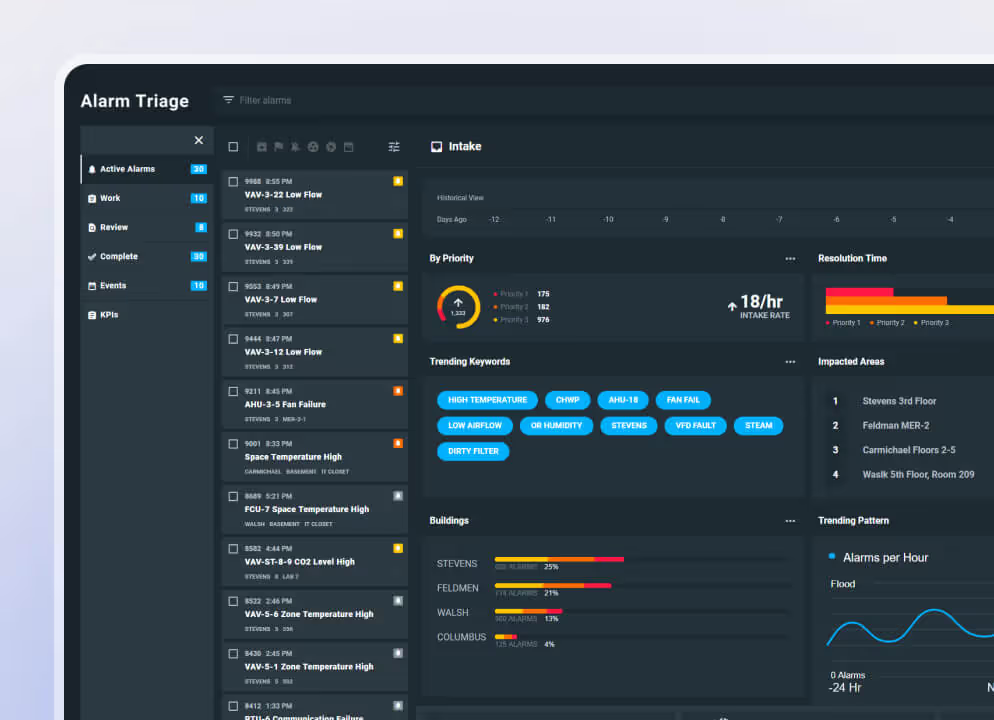
  • Virtual Facility strengthens preventive maintenance through structured alarm intelligence. It filters sensor noise, prioritizes alerts based on severity, and feeds validated signals into CMMS work orders. This approach supports condition monitoring without overwhelming technicians with non-actionable data. Otto AI highlights patterns in alarm activity that signal developing asset issues, helping teams convert alarm noise into clear maintenance actions.
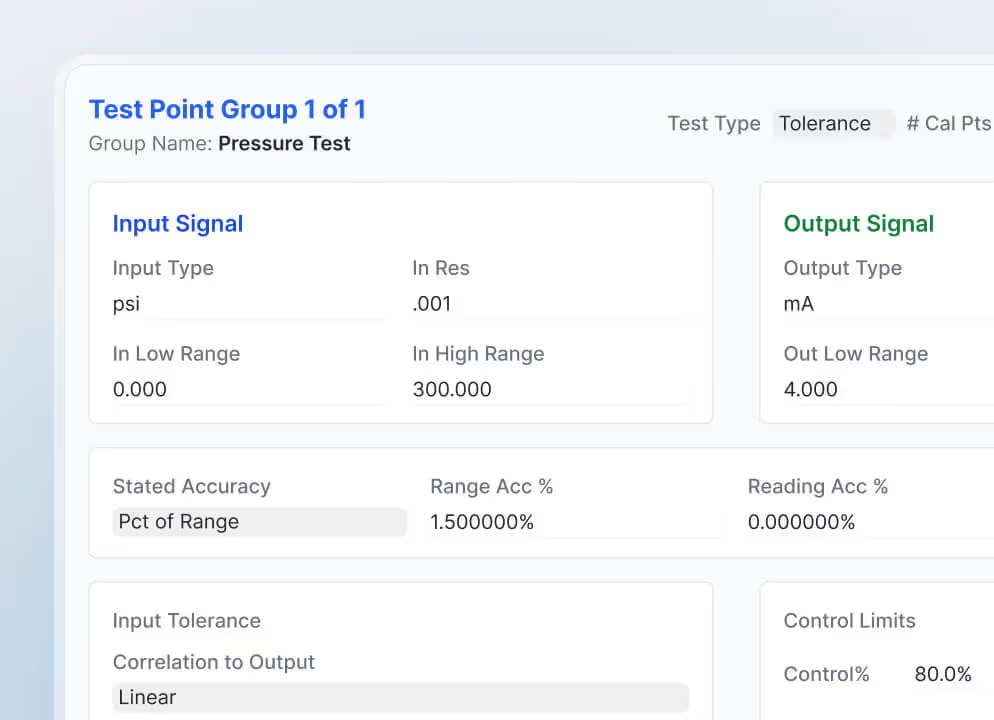
  • ProCal and ProCalX extend preventive programs into calibration-controlled environments. These tools maintain instrument traceability, inspection documentation, and regulatory audit readiness in healthcare, pharmaceutical, and utility settings.

Preventive maintenance capability grows as operational demands increase. TMA Systems provides platforms that scale with asset growth, compliance pressure, and reporting expectations without forcing teams into a single model.

Preventive maintenance maturity varies by organization. Whether you need streamlined execution or enterprise-level visibility, TMA Systems offers adaptable solutions designed to scale with you.

2. IBM Maximo

IBM Maximo is a comprehensive enterprise asset management platform with advanced preventive maintenance, asset performance tracking, and broad integration capability. It’s frequently deployed in large infrastructure environments with formal IT governance and defined asset lifecycle strategies. Implementations often require significant configuration planning and internal technical ownership. Smaller facilities teams may find the platform heavier than needed for day-to-day preventive execution.

Best for

Enterprises managing complex infrastructure portfolios, high asset counts, and centralized asset lifecycle management across regions.

Plans and pricing

Enterprise licensing is structured around modules and deployment scale. Implementations typically require structured project management, internal technical resources, and cross-departmental configuration planning.

Real customer insights

“It was nice using the Maximo Application Suite. It has always helped me a lot with asset management and maintenance operations, and it honestly feels like a system made for serious, large-scale environments. If it’s configured properly, it works really great.” — Gartner Review

3. Accruent Maintenance Connection

Accuent Maintenance Connection provides preventive scheduling, asset tracking, work order management, and reporting tools. It supports configurable workflows suited to facilities formalizing preventive maintenance programs. Organizations with highly complex, multi-site governance needs may require additional configuration to standardize reporting at scale. Advanced asset lifecycle and capital planning capabilities are more limited compared to full enterprise asset management platforms.

Best for

Mid-sized to large organizations seeking structured scheduling and centralized asset visibility without expanding into broader asset lifecycle governance platforms.

Plans and pricing

Subscription-based pricing aligned to user counts and selected functionality. Deployment scope influences configuration depth and rollout duration.

Real customer insights

“Accruent Maintenance Connection has been a huge help as a platform that has supported our work order tracking library, operation maintenance, inventory oversight management, and asset management of our critical distribution equipment portfolio.” — Gartner Review

4. Brightly TheWorxHub

TheWorxHub focuses on preventive task automation, compliance documentation, and inspection workflows. It’s widely used in healthcare and regulated facilities, where documentation discipline and life-safety readiness drive preventive maintenance programs. Organizations outside highly regulated environments may find some workflows tailored heavily toward compliance tracking. Multi-site operational standardization can require careful setup in larger portfolios.

Best for

Healthcare systems, senior living, and regulated environments that require detailed inspection tracking and compliance reporting tied to preventive schedules.

Plans and pricing

Subscription pricing based on features, site count, and organizational scale.

Real customer insights

“Works well to manage assets, for preventative maintenance, and repair work orders.” — Gartner Review

5. eMaint CMMS

eMaint offers preventive maintenance scheduling, asset tracking, configurable workflows, and reporting dashboards. It’s deployed in asset-intensive industries that require structured maintenance documentation and performance tracking. Broader enterprise governance and capital planning features may require integration with other systems. Larger deployments can demand disciplined configuration management to maintain reporting consistency across sites.

Best for

Manufacturing, energy, and industrial operations seeking preventive maintenance visibility supported by configurable reporting.

Plans and pricing

Tiered subscription pricing based on user access and reporting depth.

Real customer insights

“Good software, user-friendly, very good support. Configurations and such are very good to help end users be efficient and save time.”  — Gartner Review

6. Fiix

Fiix is a cloud-based CMMS platform centered on preventive maintenance scheduling, asset tracking, and standardized work order management. It’s commonly adopted by organizations transitioning from manual processes to more structured maintenance programs. Enterprises with complex compliance requirements or multi-site governance needs may require additional configuration to support advanced reporting structures. Capital planning depth is more limited than in full enterprise asset management platforms.

Best for

Mid-market teams are formalizing preventive programs and seeking improved visibility into asset performance and maintenance backlog.

Plans and pricing

Subscription pricing is structured around user counts and feature tiers.

Real customer insights

“It's easy to track, manage, and control inventories with Fiix CMMS. It's simple to organize, create, and manage work orders with this tool.” — Gartner Review

7. UpKeep

UpKeep emphasizes mobile-first preventive scheduling and work order management. It focuses on technician usability and real-time updates from the field. Organizations with complex asset hierarchies or strict compliance reporting requirements may need to evaluate reporting depth carefully. Large multi-site environments can require additional process controls to maintain standardized data across locations.

Best for

Small to mid-sized teams prioritizing technician mobility and faster documentation cycles within less complex asset environments.

Plans and pricing

Tiered subscription pricing with add-on modules for expanded functionality.

Real customer insights

“Upkeep has helped with our work to ensure maintenance and other equipment-related tasks are completed and tracked.” — Gartner Review

Preventive maintenance software selection depends on how your organization manages assets today and how it plans to manage them five years from now. Asset complexity, regulatory exposure, reporting depth, and internal governance all influence platform fit. A structured evaluation aligned to operational maturity helps narrow options before scheduling demos or initiating pilot programs.

Complex environments require more than basic scheduling tools. TMA Systems supports enterprise and regulated operations with adaptable preventive maintenance solutions.

Key features to consider in preventive maintenance software

Feature lists don’t tell you how a system will perform at 2 a.m. when a critical asset is down or when auditors request documentation on short notice. This section translates platform capabilities into operational outcomes. The focus is on what actually improves uptime, reporting credibility, and long-term asset control.

  • AI-driven scheduling and workload management: AI features should support practical supervision, not add noise. Tools such as intelligent schedulers and workload balancing help supervisors allocate labor based on asset criticality, technician skill sets, and backlog conditions. In environments using platforms like WebTMA or Virtual Facility, AI preventive maintenance functions highlight scheduling conflicts, analyze alarm patterns, and surface asset health signals that require action. The goal is disciplined execution with fewer missed intervals.
  • Scheduling discipline and work order control: Preventive maintenance software must support automated recurring schedules, time- and usage-based triggers, and structured digital workflows tied to work order management software. Supervisors need clear visibility into overdue tasks, open corrective work, and labor distribution across shifts. Weak scheduling controls lead to emergency overtime and incomplete documentation.
  • Asset visibility and hierarchy structure: Asset records should mirror how equipment is maintained in the field. Clean hierarchies enable teams to track failure history, parts usage, and component-level cost accumulation. Systems that align with broader CMMS software and enterprise asset management software strategies provide leadership with reliable lifecycle data for capital planning discussions.
  • Reporting and compliance documentation: Maintenance data must withstand internal review and regulatory audits. Preventive maintenance completion rates, inspection records, and corrective actions should be accessible in structured dashboards. Executives expect credible reporting that connects asset performance to operational risk and budget impact.
  • Scalability and configurability: Growth changes maintenance demands. New buildings, additional production lines, or expanded campuses increase asset counts and reporting expectations. A platform should accommodate expanded user roles, site additions, and deeper analytics without forcing structural redesign.
  • Integration and data flow: Preventive maintenance rarely operates in isolation. Data flows between purchasing, inventory, finance, and condition monitoring systems, influencing decision-making. Clean integration reduces duplicate entry, protects data integrity, and supports cross-department accountability.

Feature priorities shift depending on industry requirements and operational maturity. Healthcare facilities place heavy emphasis on compliance and inspection tracking, while manufacturers may prioritize asset reliability and condition monitoring. The next section breaks down how preventive maintenance software requirements vary across industries and why that alignment matters during selection.

Choosing the right preventive maintenance features depends on your operational goals.
Connect with our team for guidance tailored to your environment.

Preventive maintenance software by industry

Preventive maintenance doesn’t look the same in a hospital, a manufacturing plant, or a university campus. Asset types, compliance requirements, and operational risk shape the structure of maintenance programs. Industry alignment should guide software selection from the start, since it affects inspection workflows, reporting depth, and how preventive schedules get built and managed once the system is live.

Industry Primary Preventive Maintenance Focus Preventive Maintenance Software Capabilities Required
Preventive Maintenance Software for Healthcare Facilities Regulatory compliance and life safety readiness Automated recurring schedules, compliance tracking, inspection checklists, asset maintenance history, audit reporting
Preventive Maintenance Software for Manufacturing Reduce unplanned downtime through scheduled servicing Time and usage-based maintenance triggers, work order automation, parts inventory tracking, asset hierarchy management
Preventive Maintenance Software for Education Facilities Multi-building asset upkeep and budget control Multi-site scheduling, preventive task libraries, capital planning visibility, mobile technician workflows
Preventive Maintenance Software for Energy and Utilities Routine servicing of critical infrastructure Maintenance calendars, asset criticality ranking, regulatory documentation, standardized PM procedures
Preventive Maintenance Software for Commercial Real Estate HVAC and building system upkeep Automated seasonal scheduling, inspection templates, mobile work orders, vendor coordination
Preventive Maintenance Software for Transportation and Fleet Management Routine vehicle servicing and safety compliance Mileage-based PM triggers, maintenance logs, parts inventory management, compliance reporting
Preventive Maintenance Software for Heavy Equipment and Industrial Operations Extend equipment lifespan through routine servicing Scheduled lubrication cycles, maintenance checklists, downtime tracking, cost reporting

Healthcare environments often prioritize inspection tracking and compliance dashboards tied to accreditation standards. Manufacturing operations focus on uptime, asset hierarchy accuracy, and parts control, while educational institutions balance multi-building scheduling with capital planning constraints. This alignment helps teams avoid workflow gaps and reporting surprises during rollout.

From healthcare to higher education and beyond, TMA Systems supports large operational environments.
See how WebTMA helped Jefferson Health and Thomas Jefferson University scale preventive maintenance.

How to choose the right preventive maintenance software

After you narrow the shortlist, shift to validation. The goal is simple: confirm the system holds up under real workload conditions, with your data, your technicians, and your reporting requirements.

  • Start with a baseline your team agrees on: Pull a snapshot of preventive compliance, overdue work, backlog age, and the assets that drive most downtime or compliance exposure. A fuzzy baseline turns platform evaluation into opinion.
  • Walk the full workflow, end to end: Track how work requests come in, how PM work gets generated, how parts are issued, and how closeout notes get captured. Pay close attention to where steps are skipped today, since those gaps usually reappear after go-live.
  • Pressure-test mobile execution with technicians: Have technicians run live scenarios on a phone or tablet, including low-connectivity areas if that is part of your environment. Review offline capability, QR or barcode support (if you use it), and whether the closeout requirements fit a normal shift.
  • Validate reporting early with the people who rely on it: Identify the reports that finance, compliance, and operations already review. Test how the system produces them, since reporting gaps often surface after the first month-end close or an audit request.
  • Plan migration with real data fields, not a spreadsheet export: Inventory the fields that matter, including asset hierarchy and naming standards, PM templates, parts and storeroom structures, labor codes, failure codes, and open work orders. Decide what gets cleaned, what gets retired, and what must be carried forward.
  • Define rollout phases before you sign: Many teams do better with a pilot site or asset group, then expand after closeout habits and reporting definitions stabilize. Confirm who owns the configuration, who trains technicians, and who signs off on reporting before expansion.

A disciplined selection process prevents costly rework, poor adoption, and reporting gaps that show up after the first audit or budget cycle.

Executive and IT considerations when evaluating preventive maintenance software

In larger organizations, facilities don’t make this decision alone. Finance and IT will review the platform before approval, and their questions often determine whether rollout moves forward without delay.

  • Financial visibility and capital planning: Leadership expects maintenance data to translate into cost clarity. Look for reporting that ties labor, parts usage, contractor spend, backlog exposure, and repeat failures directly to specific assets. Lifecycle history should also support capital planning conversations with credible repair trends and replacement timing.
  • Data governance and system control: Asset standards, user permissions, and reporting definitions need clear ownership. Review role-based configuration limits, audit logging, and how changes are tracked once multiple departments rely on the system. Weak governance creates inconsistent reporting within months of go-live.
  • Security, integrations, and infrastructure fit: Confirm authentication standards, hosting model, and API maturity. Preventive maintenance software often connects to ERP, purchasing, inventory, and condition-monitoring systems. Stable integration reduces duplicate entry and protects reporting integrity across departments.
  • Implementation oversight and internal staffing: Enterprise rollouts require more than configuration. Data cleanup, training cycles, and dedicated internal ownership shape timeline and adoption. Clarify who manages migration, who controls configuration changes, and how user adoption is monitored after launch.

When finance, IT, and facilities align early, the approval cycle shortens, and the rollout carries less risk.

Have questions about selecting preventive maintenance software for your environment?
Connect with our team to discuss your operational needs and next steps.

Where TMA Systems fits in

Preventive maintenance maturity looks different across organizations. Some teams are formalizing schedules and work order discipline for the first time. Others manage multi-site portfolios with strict compliance oversight and executive reporting requirements. TMA Systems provides a configurable preventive maintenance ecosystem that aligns with asset volume, regulatory exposure, and operational complexity rather than forcing a single deployment model.

  • WebTMA: Supports enterprise preventive maintenance across complex, multi-site environments. It delivers automated recurring schedules, inspections that generate corrective work orders, materials management, executive dashboards, and capital planning visibility within a structured preventive maintenance software framework. AI SmartScheduler assists with workload balancing and dynamic rescheduling, giving supervisors tighter control when priorities shift or assets require immediate attention.
  • MEX CMMS: Serves equipment-centric teams that prioritize technician adoption and day-to-day execution. It supports time- and usage-based preventive maintenance triggers, AI technician assignment, mobile access, and integrated inventory management. The platform fits mid-sized operations that need disciplined preventive programs without the depth of enterprise-level configuration.
  • Virtual Facility and ProCal: Virtual Facility enhances preventive maintenance with structured alarm intelligence and multi-site monitoring. It filters and prioritizes sensor data, integrates with CMMS work orders, and surfaces asset health patterns that require action. ProCal extends preventive oversight into calibration-driven environments, maintaining instrument traceability, inspection documentation, and audit readiness for regulated industries.

Preventive maintenance performance depends on disciplined scheduling, reliable data, and executive visibility into asset risk. TMA Systems combines configurable technology with structured implementation and long-term support grounded in decades of field experience. If your organization is evaluating preventive maintenance software aligned to operational reality and future growth, connect with our team to discuss fit or request a demo tailored to your environment.

TMA Systems combines 30+ years of expertise with adaptable preventive maintenance platforms and dedicated support.
Request a demo to evaluate the right fit for your environment.

FAQs about preventive maintenance software

What is preventive maintenance software?

Preventive maintenance software schedules, tracks, and documents routine service tasks before equipment fails.

It manages recurring maintenance intervals, inspection checklists, asset histories, labor tracking, and parts usage in one platform. Teams use it to reduce emergency repairs and maintain clear visibility into asset performance over time.

Is preventive maintenance software the same as CMMS or enterprise asset management software?

Preventive maintenance software is often delivered through a CMMS or an enterprise asset management platform.

A CMMS focuses on work orders, asset records, and preventive schedules. Enterprise asset management software extends into capital planning, lifecycle cost tracking, and cross-site governance.

How do you know if your organization needs preventive maintenance software?

Organizations typically reach a tipping point when preventive schedules are tracked in spreadsheets, inspections are conducted on paper, or asset history cannot be retrieved quickly.

Frequent emergency repairs, inconsistent closeout notes, and unclear maintenance costs are strong indicators. Multi-site growth, audits, and capital planning cycles also increase the need for structured preventive maintenance software.

What is the best preventive maintenance software?

The best preventive maintenance software depends on asset volume, compliance requirements, reporting expectations, and internal governance.

Healthcare environments often require inspection, tracking, and audit-ready documentation. Manufacturing operations may prioritize uptime, asset hierarchy structure, and condition-based inputs.

What industries benefit most from preventive maintenance software?

Industries with high asset dependency and regulatory oversight see the most value, including healthcare, manufacturing, higher education, energy and utilities, transportation, and commercial real estate.

Any environment where asset failure disrupts operations or creates compliance exposure benefits from disciplined scheduling and documented maintenance history.

What should buyers evaluate when comparing preventive maintenance software?

Review preventive scheduling flexibility, asset hierarchy structure, reporting depth, integration capability, and data governance controls.

Include real scenarios in the evaluation process, such as overdue PM backlogs, inspection follow-ups, and month-end reporting needs.

When should you switch preventive maintenance software?

Switching becomes necessary when reporting gaps create audit risk, asset histories are incomplete, or system limitations block growth.

Organizations expanding to additional sites often outgrow basic tools. Persistent manual workarounds and inconsistent preventive compliance indicate structural limitations that will keep showing up in performance and reporting.

How does TMA Systems support preventive maintenance at scale?

TMA Systems supports preventive maintenance through configurable platforms aligned to operational needs.

WebTMA provides enterprise scheduling, compliance visibility, and integration with capital planning. MEX CMMS supports technician-focused execution in equipment-centric environments. Virtual Facility and ProCal extend preventive programs into alarm intelligence and calibration-driven operations, supported by implementation services, training, and long-term support.

Key Insights You'll Gain:
  • The best preventive maintenance software aligns with asset complexity, regulatory exposure, and operational scale.
  • Structured scheduling, asset visibility, and reporting discipline reduce downtime and audit risk.
  • Platform selection should reflect long-term growth, governance requirements, and executive reporting needs.

Download the eBook now

You’re all set!

Your eBook is on its way to your inbox. We hope it brings fresh insights and practical takeaways to help you get more from your maintenance operations.

Explore related resources

Resources
Blog
7 Best preventive maintenance software for 2026: A comparison guide
Resources
eBooks & Whitepapers
7 Best preventive maintenance software for 2026: A comparison guide
Blog
7 Best preventive maintenance software for 2026: A comparison guide

Compare the best preventive maintenance software for 2026. See features, pricing, industry fit, and scalability to choose the right solution.

February 25, 2026

Facilities teams evaluating the best preventive maintenance software are usually feeling the strain of missed service intervals, emergency repairs, and compliance requirements that leave little margin for error. When assets are spread across campuses, plants, or portfolios, reactive work drains labor hours and erodes confidence in maintenance data. 

A disciplined preventive maintenance program restores control, and well-implemented preventive maintenance software provides the structure to schedule recurring work, document inspections, and track asset performance in one connected system. According to a Market US report, the goal is to “reduce unplanned downtime, extend asset life, and improve operational efficiency.”

Selecting a preventive maintenance platform requires more than reviewing feature lists. Facilities leaders must weigh operational complexity, regulatory exposure, reporting expectations, and long-term scalability to determine which system truly fits their environment.

Preventive maintenance software use cases: Reactive vs. preventive approaches

Before comparing platforms, get clear on how work is triggered and tracked. The gap between reactive and preventive programs shows up in overtime, backlogs, inspection readiness, and how quickly you can pull a clean asset history. A structured preventive program, supported by disciplined scheduling and strong work order management software, shifts more work into planned cycles and gives supervisors cleaner visibility.

The comparison below shows how reactive programs create friction and risk, while preventive strategies build structure, visibility, and long-term control.

Category Includes Reactive Approach Preventive Approach
Maintenance Execution & Scheduling Preventive maintenance scheduling software; preventive maintenance work order management; CMMS preventive maintenance; enterprise asset management preventive maintenance Maintenance triggered after failure; technicians pulled from planned work; emergency overtime; inconsistent closeout notes; limited visibility into backlog Automated recurring schedules; digital work orders issued in advance; balanced labor allocation; real-time status tracking across shifts and sites
Asset-Level Preventive Maintenance Equipment preventive maintenance software; heavy equipment preventive maintenance; HVAC preventive maintenance software; facility preventive maintenance Asset history scattered across spreadsheets; missed service intervals; recurring breakdowns with limited root cause data Structured asset hierarchies; time- or usage-based triggers; complete maintenance history tied to each asset; clearer failure trend analysis
Asset Lifecycle & Capital Planning Asset management; preventive maintenance software; preventive maintenance analytics Replacement decisions driven by emergency failures; limited cost visibility; reactive capital requests Consolidated cost history; performance analytics; data supporting capital planning within broader enterprise asset management software strategies
Compliance & Risk Management Regulatory documentation; inspection tracking; audit reporting Paper inspection forms; incomplete documentation; difficulty producing audit trails Digital inspection checklists; corrective work orders generated from findings; centralized records within modern CMMS software platforms

Market demand reflects this shift. According to a Market US report, Asset Management and Work Order Scheduling accounted for 52.4% of total adoption, as organizations prioritize real-time asset tracking, preventive maintenance, and efficient task allocation to extend equipment lifespan.

When preventive maintenance software aligns scheduling, asset data, and documentation, teams gain predictability and cleaner reporting. That makes it easier to evaluate platforms against day-to-day workload and oversight requirements.

How we evaluated the best preventive maintenance software

Selecting a preventive maintenance platform carries real risk. If the CMMS/EAM system doesn’t align with how your team schedules work, closes orders, and reports performance, adoption slips, and the data gets noisy. The evaluation focuses on how preventive maintenance software performs under real operational conditions.

Each platform was reviewed against criteria that reflect how facilities teams actually manage work, document inspections, and report performance to leadership.

  • Industry requirements and documentation load: We assessed how well each system supports inspection trails, corrective follow-up, and audit-ready reporting in regulated environments such as healthcare, education, manufacturing, utilities, and others. Platforms were also evaluated on their ability to support uptime-driven operations where response speed and backlog control are priorities.
  • Operational footprint and team structure: Site count, shift coverage, and asset volume influence scheduling discipline and reporting complexity. Systems were examined for their ability to support multi-site standardization, centralized reporting, and scalable asset structures.
  • Scheduling controls supervisors can run with: Preventive maintenance lives or dies on execution. We reviewed recurring schedule logic, time- and usage-based triggers, work order assignment controls, and supervisor visibility into overdue work and corrective actions.
  • Data structure and migration readiness: Asset hierarchy design, PM template structure, parts management, labor tracking, and open work order handling were considered critical. Systems that depend heavily on manual cleanup or loose data structures were evaluated accordingly.
  • Implementation model and reporting depth: Rollout complexity, support structure, and reporting clarity were factored into the evaluation. Platforms were assessed on how reliably they produce defensible cost history, compliance reporting, backlog exposure, and asset performance trends.

This framework keeps the comparison grounded in operational performance rather than marketing claims. The table below summarizes how each platform aligns with these criteria.

Best preventive maintenance software: Comparison table

A structured preventive maintenance software evaluation keeps selection grounded and reduces rework later. With that framework in place, the comparison table below provides a practical starting point for shortlisting vendors.

Software Gartner Rating Core Features Pricing Model Best For
WebTMA 4.7 Automated recurring schedules, inspection-generated corrective work orders, AI SmartScheduler for workload balancing and dynamic rescheduling, executive dashboards, materials management, capital planning integration Configurable subscription based on modules, user count, and organizational scale Large or multi-site organizations with compliance requirements, structured governance, and capital planning oversight
IBM Maximo 4.5 Enterprise asset lifecycle management, advanced preventive scheduling, asset performance tracking, IoT integrations, compliance reporting Enterprise licensing model with implementation services Global enterprises managing complex infrastructure and large asset portfolios
Accruent Maintenance Connection 4.4 Preventive scheduling, asset tracking, work order management, reporting dashboards Tiered subscription pricing Mid to large organizations seeking configurable preventive programs
Brightly TheWorxHub 2.5 Preventive task automation, compliance documentation, asset tracking, reporting tools Subscription-based pricing by feature tier Healthcare and regulated facilities requiring structured inspection workflows
eMaint CMMS 4.6 Preventive maintenance scheduling, asset tracking, compliance reporting, analytics dashboards Tiered subscription based on users and functionality Asset-intensive industries needing configurable reporting and preventive oversight
Fiix 4.7 Preventive maintenance scheduling, work order automation, asset tracking, mobile access Subscription pricing based on user count and feature tier Mid-market operations formalizing preventive maintenance processes
UpKeep 4.5 Mobile-first preventive scheduling, work order management, asset tracking, reporting Tiered subscription with add-on modules Small to mid-sized teams prioritizing technician mobility and ease of use

This overview supports initial comparison and internal discussion. Final selection decisions depend on industry alignment, integration requirements, data migration effort, and how the platform performs under real workload pressure. The vendor summaries below add context to support shortlisting and internal review.

See how WebTMA supports enterprise preventive maintenance across complex, multi-site environments.
Explore capabilities and request a personalized walkthrough.

7 Best preventive maintenance software alternatives

The comparison table helps with initial sorting. Real selection decisions get made when the work hits the floor: how schedules hold up, how closeout gets captured, and how quickly leadership can trust the reporting. The summaries below reflect where each platform typically fits once deployed, including the level of internal ownership and the rollout effort that often accompanies it.

1. WebTMA

WebTMA is an enterprise asset management platform built for organizations managing multiple sites, complex asset hierarchies, and formal compliance requirements. It supports automated recurring schedules, inspections that generate corrective work orders, materials management, executive dashboards, and visibility into capital planning. AI SmartScheduler evaluates open work orders, asset criticality, technician availability, and historical completion trends to balance workload and adjust schedules when priorities shift.

Best for

Large healthcare systems, universities, manufacturers, utilities, public sector organizations, and other multi-site or regulated organizations that require centralized oversight, audit-ready documentation, and structured reporting across facilities.

Plans and pricing

Subscription-based pricing is structured around modules, user counts, asset volume, and deployment scale. Enterprise deployments typically follow phased rollouts, beginning with asset data validation and preventive schedule migration before expanding to additional sites.

Real customer insights

“The level of customer service provided by TMA far exceeds any other software vendor I have experience with. The functionality of the product has allowed us to expand the usage of the software beyond the original intended use to multiple departments, leading to better integration.” — Gartner Review

WebTMA delivers enterprise-grade preventive maintenance with scalable scheduling, visibility into compliance, and AI-driven workload balancing.
Request a demo to see how it fits your operational environment.

Additional TMA System’s solutions

Preventive maintenance programs evolve over time. Some teams need tighter control over daily work execution. Others require alarm intelligence, calibration oversight, or multi-site governance layered on top of existing CMMS processes.

  • MEX CMMS supports equipment-centric teams that prioritize technician adoption and field usability. It delivers time- and usage-based preventive triggers, AI-assisted technician assignment, mobile access, and integrated inventory management. Rollouts are typically faster than enterprise deployments, making them suitable for mid-sized operations building scheduling discipline. Teams evaluating fit can get a free MEX CMMS trial to test workflows in a live environment.
  • Virtual Facility strengthens preventive maintenance through structured alarm intelligence. It filters sensor noise, prioritizes alerts based on severity, and feeds validated signals into CMMS work orders. This approach supports condition monitoring without overwhelming technicians with non-actionable data. Otto AI highlights patterns in alarm activity that signal developing asset issues, helping teams convert alarm noise into clear maintenance actions.
  • ProCal and ProCalX extend preventive programs into calibration-controlled environments. These tools maintain instrument traceability, inspection documentation, and regulatory audit readiness in healthcare, pharmaceutical, and utility settings.

Preventive maintenance capability grows as operational demands increase. TMA Systems provides platforms that scale with asset growth, compliance pressure, and reporting expectations without forcing teams into a single model.

Preventive maintenance maturity varies by organization. Whether you need streamlined execution or enterprise-level visibility, TMA Systems offers adaptable solutions designed to scale with you.

2. IBM Maximo

IBM Maximo is a comprehensive enterprise asset management platform with advanced preventive maintenance, asset performance tracking, and broad integration capability. It’s frequently deployed in large infrastructure environments with formal IT governance and defined asset lifecycle strategies. Implementations often require significant configuration planning and internal technical ownership. Smaller facilities teams may find the platform heavier than needed for day-to-day preventive execution.

Best for

Enterprises managing complex infrastructure portfolios, high asset counts, and centralized asset lifecycle management across regions.

Plans and pricing

Enterprise licensing is structured around modules and deployment scale. Implementations typically require structured project management, internal technical resources, and cross-departmental configuration planning.

Real customer insights

“It was nice using the Maximo Application Suite. It has always helped me a lot with asset management and maintenance operations, and it honestly feels like a system made for serious, large-scale environments. If it’s configured properly, it works really great.” — Gartner Review

3. Accruent Maintenance Connection

Accuent Maintenance Connection provides preventive scheduling, asset tracking, work order management, and reporting tools. It supports configurable workflows suited to facilities formalizing preventive maintenance programs. Organizations with highly complex, multi-site governance needs may require additional configuration to standardize reporting at scale. Advanced asset lifecycle and capital planning capabilities are more limited compared to full enterprise asset management platforms.

Best for

Mid-sized to large organizations seeking structured scheduling and centralized asset visibility without expanding into broader asset lifecycle governance platforms.

Plans and pricing

Subscription-based pricing aligned to user counts and selected functionality. Deployment scope influences configuration depth and rollout duration.

Real customer insights

“Accruent Maintenance Connection has been a huge help as a platform that has supported our work order tracking library, operation maintenance, inventory oversight management, and asset management of our critical distribution equipment portfolio.” — Gartner Review

4. Brightly TheWorxHub

TheWorxHub focuses on preventive task automation, compliance documentation, and inspection workflows. It’s widely used in healthcare and regulated facilities, where documentation discipline and life-safety readiness drive preventive maintenance programs. Organizations outside highly regulated environments may find some workflows tailored heavily toward compliance tracking. Multi-site operational standardization can require careful setup in larger portfolios.

Best for

Healthcare systems, senior living, and regulated environments that require detailed inspection tracking and compliance reporting tied to preventive schedules.

Plans and pricing

Subscription pricing based on features, site count, and organizational scale.

Real customer insights

“Works well to manage assets, for preventative maintenance, and repair work orders.” — Gartner Review

5. eMaint CMMS

eMaint offers preventive maintenance scheduling, asset tracking, configurable workflows, and reporting dashboards. It’s deployed in asset-intensive industries that require structured maintenance documentation and performance tracking. Broader enterprise governance and capital planning features may require integration with other systems. Larger deployments can demand disciplined configuration management to maintain reporting consistency across sites.

Best for

Manufacturing, energy, and industrial operations seeking preventive maintenance visibility supported by configurable reporting.

Plans and pricing

Tiered subscription pricing based on user access and reporting depth.

Real customer insights

“Good software, user-friendly, very good support. Configurations and such are very good to help end users be efficient and save time.”  — Gartner Review

6. Fiix

Fiix is a cloud-based CMMS platform centered on preventive maintenance scheduling, asset tracking, and standardized work order management. It’s commonly adopted by organizations transitioning from manual processes to more structured maintenance programs. Enterprises with complex compliance requirements or multi-site governance needs may require additional configuration to support advanced reporting structures. Capital planning depth is more limited than in full enterprise asset management platforms.

Best for

Mid-market teams are formalizing preventive programs and seeking improved visibility into asset performance and maintenance backlog.

Plans and pricing

Subscription pricing is structured around user counts and feature tiers.

Real customer insights

“It's easy to track, manage, and control inventories with Fiix CMMS. It's simple to organize, create, and manage work orders with this tool.” — Gartner Review

7. UpKeep

UpKeep emphasizes mobile-first preventive scheduling and work order management. It focuses on technician usability and real-time updates from the field. Organizations with complex asset hierarchies or strict compliance reporting requirements may need to evaluate reporting depth carefully. Large multi-site environments can require additional process controls to maintain standardized data across locations.

Best for

Small to mid-sized teams prioritizing technician mobility and faster documentation cycles within less complex asset environments.

Plans and pricing

Tiered subscription pricing with add-on modules for expanded functionality.

Real customer insights

“Upkeep has helped with our work to ensure maintenance and other equipment-related tasks are completed and tracked.” — Gartner Review

Preventive maintenance software selection depends on how your organization manages assets today and how it plans to manage them five years from now. Asset complexity, regulatory exposure, reporting depth, and internal governance all influence platform fit. A structured evaluation aligned to operational maturity helps narrow options before scheduling demos or initiating pilot programs.

Complex environments require more than basic scheduling tools. TMA Systems supports enterprise and regulated operations with adaptable preventive maintenance solutions.

Key features to consider in preventive maintenance software

Feature lists don’t tell you how a system will perform at 2 a.m. when a critical asset is down or when auditors request documentation on short notice. This section translates platform capabilities into operational outcomes. The focus is on what actually improves uptime, reporting credibility, and long-term asset control.

  • AI-driven scheduling and workload management: AI features should support practical supervision, not add noise. Tools such as intelligent schedulers and workload balancing help supervisors allocate labor based on asset criticality, technician skill sets, and backlog conditions. In environments using platforms like WebTMA or Virtual Facility, AI preventive maintenance functions highlight scheduling conflicts, analyze alarm patterns, and surface asset health signals that require action. The goal is disciplined execution with fewer missed intervals.
  • Scheduling discipline and work order control: Preventive maintenance software must support automated recurring schedules, time- and usage-based triggers, and structured digital workflows tied to work order management software. Supervisors need clear visibility into overdue tasks, open corrective work, and labor distribution across shifts. Weak scheduling controls lead to emergency overtime and incomplete documentation.
  • Asset visibility and hierarchy structure: Asset records should mirror how equipment is maintained in the field. Clean hierarchies enable teams to track failure history, parts usage, and component-level cost accumulation. Systems that align with broader CMMS software and enterprise asset management software strategies provide leadership with reliable lifecycle data for capital planning discussions.
  • Reporting and compliance documentation: Maintenance data must withstand internal review and regulatory audits. Preventive maintenance completion rates, inspection records, and corrective actions should be accessible in structured dashboards. Executives expect credible reporting that connects asset performance to operational risk and budget impact.
  • Scalability and configurability: Growth changes maintenance demands. New buildings, additional production lines, or expanded campuses increase asset counts and reporting expectations. A platform should accommodate expanded user roles, site additions, and deeper analytics without forcing structural redesign.
  • Integration and data flow: Preventive maintenance rarely operates in isolation. Data flows between purchasing, inventory, finance, and condition monitoring systems, influencing decision-making. Clean integration reduces duplicate entry, protects data integrity, and supports cross-department accountability.

Feature priorities shift depending on industry requirements and operational maturity. Healthcare facilities place heavy emphasis on compliance and inspection tracking, while manufacturers may prioritize asset reliability and condition monitoring. The next section breaks down how preventive maintenance software requirements vary across industries and why that alignment matters during selection.

Choosing the right preventive maintenance features depends on your operational goals.
Connect with our team for guidance tailored to your environment.

Preventive maintenance software by industry

Preventive maintenance doesn’t look the same in a hospital, a manufacturing plant, or a university campus. Asset types, compliance requirements, and operational risk shape the structure of maintenance programs. Industry alignment should guide software selection from the start, since it affects inspection workflows, reporting depth, and how preventive schedules get built and managed once the system is live.

Industry Primary Preventive Maintenance Focus Preventive Maintenance Software Capabilities Required
Preventive Maintenance Software for Healthcare Facilities Regulatory compliance and life safety readiness Automated recurring schedules, compliance tracking, inspection checklists, asset maintenance history, audit reporting
Preventive Maintenance Software for Manufacturing Reduce unplanned downtime through scheduled servicing Time and usage-based maintenance triggers, work order automation, parts inventory tracking, asset hierarchy management
Preventive Maintenance Software for Education Facilities Multi-building asset upkeep and budget control Multi-site scheduling, preventive task libraries, capital planning visibility, mobile technician workflows
Preventive Maintenance Software for Energy and Utilities Routine servicing of critical infrastructure Maintenance calendars, asset criticality ranking, regulatory documentation, standardized PM procedures
Preventive Maintenance Software for Commercial Real Estate HVAC and building system upkeep Automated seasonal scheduling, inspection templates, mobile work orders, vendor coordination
Preventive Maintenance Software for Transportation and Fleet Management Routine vehicle servicing and safety compliance Mileage-based PM triggers, maintenance logs, parts inventory management, compliance reporting
Preventive Maintenance Software for Heavy Equipment and Industrial Operations Extend equipment lifespan through routine servicing Scheduled lubrication cycles, maintenance checklists, downtime tracking, cost reporting

Healthcare environments often prioritize inspection tracking and compliance dashboards tied to accreditation standards. Manufacturing operations focus on uptime, asset hierarchy accuracy, and parts control, while educational institutions balance multi-building scheduling with capital planning constraints. This alignment helps teams avoid workflow gaps and reporting surprises during rollout.

From healthcare to higher education and beyond, TMA Systems supports large operational environments.
See how WebTMA helped Jefferson Health and Thomas Jefferson University scale preventive maintenance.

How to choose the right preventive maintenance software

After you narrow the shortlist, shift to validation. The goal is simple: confirm the system holds up under real workload conditions, with your data, your technicians, and your reporting requirements.

  • Start with a baseline your team agrees on: Pull a snapshot of preventive compliance, overdue work, backlog age, and the assets that drive most downtime or compliance exposure. A fuzzy baseline turns platform evaluation into opinion.
  • Walk the full workflow, end to end: Track how work requests come in, how PM work gets generated, how parts are issued, and how closeout notes get captured. Pay close attention to where steps are skipped today, since those gaps usually reappear after go-live.
  • Pressure-test mobile execution with technicians: Have technicians run live scenarios on a phone or tablet, including low-connectivity areas if that is part of your environment. Review offline capability, QR or barcode support (if you use it), and whether the closeout requirements fit a normal shift.
  • Validate reporting early with the people who rely on it: Identify the reports that finance, compliance, and operations already review. Test how the system produces them, since reporting gaps often surface after the first month-end close or an audit request.
  • Plan migration with real data fields, not a spreadsheet export: Inventory the fields that matter, including asset hierarchy and naming standards, PM templates, parts and storeroom structures, labor codes, failure codes, and open work orders. Decide what gets cleaned, what gets retired, and what must be carried forward.
  • Define rollout phases before you sign: Many teams do better with a pilot site or asset group, then expand after closeout habits and reporting definitions stabilize. Confirm who owns the configuration, who trains technicians, and who signs off on reporting before expansion.

A disciplined selection process prevents costly rework, poor adoption, and reporting gaps that show up after the first audit or budget cycle.

Executive and IT considerations when evaluating preventive maintenance software

In larger organizations, facilities don’t make this decision alone. Finance and IT will review the platform before approval, and their questions often determine whether rollout moves forward without delay.

  • Financial visibility and capital planning: Leadership expects maintenance data to translate into cost clarity. Look for reporting that ties labor, parts usage, contractor spend, backlog exposure, and repeat failures directly to specific assets. Lifecycle history should also support capital planning conversations with credible repair trends and replacement timing.
  • Data governance and system control: Asset standards, user permissions, and reporting definitions need clear ownership. Review role-based configuration limits, audit logging, and how changes are tracked once multiple departments rely on the system. Weak governance creates inconsistent reporting within months of go-live.
  • Security, integrations, and infrastructure fit: Confirm authentication standards, hosting model, and API maturity. Preventive maintenance software often connects to ERP, purchasing, inventory, and condition-monitoring systems. Stable integration reduces duplicate entry and protects reporting integrity across departments.
  • Implementation oversight and internal staffing: Enterprise rollouts require more than configuration. Data cleanup, training cycles, and dedicated internal ownership shape timeline and adoption. Clarify who manages migration, who controls configuration changes, and how user adoption is monitored after launch.

When finance, IT, and facilities align early, the approval cycle shortens, and the rollout carries less risk.

Have questions about selecting preventive maintenance software for your environment?
Connect with our team to discuss your operational needs and next steps.

Where TMA Systems fits in

Preventive maintenance maturity looks different across organizations. Some teams are formalizing schedules and work order discipline for the first time. Others manage multi-site portfolios with strict compliance oversight and executive reporting requirements. TMA Systems provides a configurable preventive maintenance ecosystem that aligns with asset volume, regulatory exposure, and operational complexity rather than forcing a single deployment model.

  • WebTMA: Supports enterprise preventive maintenance across complex, multi-site environments. It delivers automated recurring schedules, inspections that generate corrective work orders, materials management, executive dashboards, and capital planning visibility within a structured preventive maintenance software framework. AI SmartScheduler assists with workload balancing and dynamic rescheduling, giving supervisors tighter control when priorities shift or assets require immediate attention.
  • MEX CMMS: Serves equipment-centric teams that prioritize technician adoption and day-to-day execution. It supports time- and usage-based preventive maintenance triggers, AI technician assignment, mobile access, and integrated inventory management. The platform fits mid-sized operations that need disciplined preventive programs without the depth of enterprise-level configuration.
  • Virtual Facility and ProCal: Virtual Facility enhances preventive maintenance with structured alarm intelligence and multi-site monitoring. It filters and prioritizes sensor data, integrates with CMMS work orders, and surfaces asset health patterns that require action. ProCal extends preventive oversight into calibration-driven environments, maintaining instrument traceability, inspection documentation, and audit readiness for regulated industries.

Preventive maintenance performance depends on disciplined scheduling, reliable data, and executive visibility into asset risk. TMA Systems combines configurable technology with structured implementation and long-term support grounded in decades of field experience. If your organization is evaluating preventive maintenance software aligned to operational reality and future growth, connect with our team to discuss fit or request a demo tailored to your environment.

TMA Systems combines 30+ years of expertise with adaptable preventive maintenance platforms and dedicated support.
Request a demo to evaluate the right fit for your environment.

FAQs about preventive maintenance software

What is preventive maintenance software?

Preventive maintenance software schedules, tracks, and documents routine service tasks before equipment fails.

It manages recurring maintenance intervals, inspection checklists, asset histories, labor tracking, and parts usage in one platform. Teams use it to reduce emergency repairs and maintain clear visibility into asset performance over time.

Is preventive maintenance software the same as CMMS or enterprise asset management software?

Preventive maintenance software is often delivered through a CMMS or an enterprise asset management platform.

A CMMS focuses on work orders, asset records, and preventive schedules. Enterprise asset management software extends into capital planning, lifecycle cost tracking, and cross-site governance.

How do you know if your organization needs preventive maintenance software?

Organizations typically reach a tipping point when preventive schedules are tracked in spreadsheets, inspections are conducted on paper, or asset history cannot be retrieved quickly.

Frequent emergency repairs, inconsistent closeout notes, and unclear maintenance costs are strong indicators. Multi-site growth, audits, and capital planning cycles also increase the need for structured preventive maintenance software.

What is the best preventive maintenance software?

The best preventive maintenance software depends on asset volume, compliance requirements, reporting expectations, and internal governance.

Healthcare environments often require inspection, tracking, and audit-ready documentation. Manufacturing operations may prioritize uptime, asset hierarchy structure, and condition-based inputs.

What industries benefit most from preventive maintenance software?

Industries with high asset dependency and regulatory oversight see the most value, including healthcare, manufacturing, higher education, energy and utilities, transportation, and commercial real estate.

Any environment where asset failure disrupts operations or creates compliance exposure benefits from disciplined scheduling and documented maintenance history.

What should buyers evaluate when comparing preventive maintenance software?

Review preventive scheduling flexibility, asset hierarchy structure, reporting depth, integration capability, and data governance controls.

Include real scenarios in the evaluation process, such as overdue PM backlogs, inspection follow-ups, and month-end reporting needs.

When should you switch preventive maintenance software?

Switching becomes necessary when reporting gaps create audit risk, asset histories are incomplete, or system limitations block growth.

Organizations expanding to additional sites often outgrow basic tools. Persistent manual workarounds and inconsistent preventive compliance indicate structural limitations that will keep showing up in performance and reporting.

How does TMA Systems support preventive maintenance at scale?

TMA Systems supports preventive maintenance through configurable platforms aligned to operational needs.

WebTMA provides enterprise scheduling, compliance visibility, and integration with capital planning. MEX CMMS supports technician-focused execution in equipment-centric environments. Virtual Facility and ProCal extend preventive programs into alarm intelligence and calibration-driven operations, supported by implementation services, training, and long-term support.

Key Insights You'll Gain:
  • The best preventive maintenance software aligns with asset complexity, regulatory exposure, and operational scale.
  • Structured scheduling, asset visibility, and reporting discipline reduce downtime and audit risk.
  • Platform selection should reflect long-term growth, governance requirements, and executive reporting needs.

Register for your free webinar

You’re all set!

Your webinar is on its way to your inbox. We hope it brings fresh insights and practical takeaways to help you get more from your maintenance operations.

Explore related resources

Resources
Blog
7 Best preventive maintenance software for 2026: A comparison guide
Resources
Blog
7 Best preventive maintenance software for 2026: A comparison guide
Resources
Blog
7 Best preventive maintenance software for 2026: A comparison guide
Blog
February 25, 2026
7 Best preventive maintenance software for 2026: A comparison guide
Blog
February 25, 2026
7 Best preventive maintenance software for 2026: A comparison guide
Blog
7 Best preventive maintenance software for 2026: A comparison guide
Blog
February 25, 2026
7 Best preventive maintenance software for 2026: A comparison guide
Blog
7 Best preventive maintenance software for 2026: A comparison guide
February 25, 2026
Blog
February 25, 2026
7 Best preventive maintenance software for 2026: A comparison guide

Industry
Corporate
Location
Size
Written by
Presenters
No items found.
Share

Facilities teams evaluating the best preventive maintenance software are usually feeling the strain of missed service intervals, emergency repairs, and compliance requirements that leave little margin for error. When assets are spread across campuses, plants, or portfolios, reactive work drains labor hours and erodes confidence in maintenance data. 

A disciplined preventive maintenance program restores control, and well-implemented preventive maintenance software provides the structure to schedule recurring work, document inspections, and track asset performance in one connected system. According to a Market US report, the goal is to “reduce unplanned downtime, extend asset life, and improve operational efficiency.”

Selecting a preventive maintenance platform requires more than reviewing feature lists. Facilities leaders must weigh operational complexity, regulatory exposure, reporting expectations, and long-term scalability to determine which system truly fits their environment.

Preventive maintenance software use cases: Reactive vs. preventive approaches

Before comparing platforms, get clear on how work is triggered and tracked. The gap between reactive and preventive programs shows up in overtime, backlogs, inspection readiness, and how quickly you can pull a clean asset history. A structured preventive program, supported by disciplined scheduling and strong work order management software, shifts more work into planned cycles and gives supervisors cleaner visibility.

The comparison below shows how reactive programs create friction and risk, while preventive strategies build structure, visibility, and long-term control.

Category Includes Reactive Approach Preventive Approach
Maintenance Execution & Scheduling Preventive maintenance scheduling software; preventive maintenance work order management; CMMS preventive maintenance; enterprise asset management preventive maintenance Maintenance triggered after failure; technicians pulled from planned work; emergency overtime; inconsistent closeout notes; limited visibility into backlog Automated recurring schedules; digital work orders issued in advance; balanced labor allocation; real-time status tracking across shifts and sites
Asset-Level Preventive Maintenance Equipment preventive maintenance software; heavy equipment preventive maintenance; HVAC preventive maintenance software; facility preventive maintenance Asset history scattered across spreadsheets; missed service intervals; recurring breakdowns with limited root cause data Structured asset hierarchies; time- or usage-based triggers; complete maintenance history tied to each asset; clearer failure trend analysis
Asset Lifecycle & Capital Planning Asset management; preventive maintenance software; preventive maintenance analytics Replacement decisions driven by emergency failures; limited cost visibility; reactive capital requests Consolidated cost history; performance analytics; data supporting capital planning within broader enterprise asset management software strategies
Compliance & Risk Management Regulatory documentation; inspection tracking; audit reporting Paper inspection forms; incomplete documentation; difficulty producing audit trails Digital inspection checklists; corrective work orders generated from findings; centralized records within modern CMMS software platforms

Market demand reflects this shift. According to a Market US report, Asset Management and Work Order Scheduling accounted for 52.4% of total adoption, as organizations prioritize real-time asset tracking, preventive maintenance, and efficient task allocation to extend equipment lifespan.

When preventive maintenance software aligns scheduling, asset data, and documentation, teams gain predictability and cleaner reporting. That makes it easier to evaluate platforms against day-to-day workload and oversight requirements.

How we evaluated the best preventive maintenance software

Selecting a preventive maintenance platform carries real risk. If the CMMS/EAM system doesn’t align with how your team schedules work, closes orders, and reports performance, adoption slips, and the data gets noisy. The evaluation focuses on how preventive maintenance software performs under real operational conditions.

Each platform was reviewed against criteria that reflect how facilities teams actually manage work, document inspections, and report performance to leadership.

  • Industry requirements and documentation load: We assessed how well each system supports inspection trails, corrective follow-up, and audit-ready reporting in regulated environments such as healthcare, education, manufacturing, utilities, and others. Platforms were also evaluated on their ability to support uptime-driven operations where response speed and backlog control are priorities.
  • Operational footprint and team structure: Site count, shift coverage, and asset volume influence scheduling discipline and reporting complexity. Systems were examined for their ability to support multi-site standardization, centralized reporting, and scalable asset structures.
  • Scheduling controls supervisors can run with: Preventive maintenance lives or dies on execution. We reviewed recurring schedule logic, time- and usage-based triggers, work order assignment controls, and supervisor visibility into overdue work and corrective actions.
  • Data structure and migration readiness: Asset hierarchy design, PM template structure, parts management, labor tracking, and open work order handling were considered critical. Systems that depend heavily on manual cleanup or loose data structures were evaluated accordingly.
  • Implementation model and reporting depth: Rollout complexity, support structure, and reporting clarity were factored into the evaluation. Platforms were assessed on how reliably they produce defensible cost history, compliance reporting, backlog exposure, and asset performance trends.

This framework keeps the comparison grounded in operational performance rather than marketing claims. The table below summarizes how each platform aligns with these criteria.

Best preventive maintenance software: Comparison table

A structured preventive maintenance software evaluation keeps selection grounded and reduces rework later. With that framework in place, the comparison table below provides a practical starting point for shortlisting vendors.

Software Gartner Rating Core Features Pricing Model Best For
WebTMA 4.7 Automated recurring schedules, inspection-generated corrective work orders, AI SmartScheduler for workload balancing and dynamic rescheduling, executive dashboards, materials management, capital planning integration Configurable subscription based on modules, user count, and organizational scale Large or multi-site organizations with compliance requirements, structured governance, and capital planning oversight
IBM Maximo 4.5 Enterprise asset lifecycle management, advanced preventive scheduling, asset performance tracking, IoT integrations, compliance reporting Enterprise licensing model with implementation services Global enterprises managing complex infrastructure and large asset portfolios
Accruent Maintenance Connection 4.4 Preventive scheduling, asset tracking, work order management, reporting dashboards Tiered subscription pricing Mid to large organizations seeking configurable preventive programs
Brightly TheWorxHub 2.5 Preventive task automation, compliance documentation, asset tracking, reporting tools Subscription-based pricing by feature tier Healthcare and regulated facilities requiring structured inspection workflows
eMaint CMMS 4.6 Preventive maintenance scheduling, asset tracking, compliance reporting, analytics dashboards Tiered subscription based on users and functionality Asset-intensive industries needing configurable reporting and preventive oversight
Fiix 4.7 Preventive maintenance scheduling, work order automation, asset tracking, mobile access Subscription pricing based on user count and feature tier Mid-market operations formalizing preventive maintenance processes
UpKeep 4.5 Mobile-first preventive scheduling, work order management, asset tracking, reporting Tiered subscription with add-on modules Small to mid-sized teams prioritizing technician mobility and ease of use

This overview supports initial comparison and internal discussion. Final selection decisions depend on industry alignment, integration requirements, data migration effort, and how the platform performs under real workload pressure. The vendor summaries below add context to support shortlisting and internal review.

See how WebTMA supports enterprise preventive maintenance across complex, multi-site environments.
Explore capabilities and request a personalized walkthrough.

7 Best preventive maintenance software alternatives

The comparison table helps with initial sorting. Real selection decisions get made when the work hits the floor: how schedules hold up, how closeout gets captured, and how quickly leadership can trust the reporting. The summaries below reflect where each platform typically fits once deployed, including the level of internal ownership and the rollout effort that often accompanies it.

1. WebTMA

WebTMA is an enterprise asset management platform built for organizations managing multiple sites, complex asset hierarchies, and formal compliance requirements. It supports automated recurring schedules, inspections that generate corrective work orders, materials management, executive dashboards, and visibility into capital planning. AI SmartScheduler evaluates open work orders, asset criticality, technician availability, and historical completion trends to balance workload and adjust schedules when priorities shift.

Best for

Large healthcare systems, universities, manufacturers, utilities, public sector organizations, and other multi-site or regulated organizations that require centralized oversight, audit-ready documentation, and structured reporting across facilities.

Plans and pricing

Subscription-based pricing is structured around modules, user counts, asset volume, and deployment scale. Enterprise deployments typically follow phased rollouts, beginning with asset data validation and preventive schedule migration before expanding to additional sites.

Real customer insights

“The level of customer service provided by TMA far exceeds any other software vendor I have experience with. The functionality of the product has allowed us to expand the usage of the software beyond the original intended use to multiple departments, leading to better integration.” — Gartner Review

WebTMA delivers enterprise-grade preventive maintenance with scalable scheduling, visibility into compliance, and AI-driven workload balancing.
Request a demo to see how it fits your operational environment.

Additional TMA System’s solutions

Preventive maintenance programs evolve over time. Some teams need tighter control over daily work execution. Others require alarm intelligence, calibration oversight, or multi-site governance layered on top of existing CMMS processes.

  • MEX CMMS supports equipment-centric teams that prioritize technician adoption and field usability. It delivers time- and usage-based preventive triggers, AI-assisted technician assignment, mobile access, and integrated inventory management. Rollouts are typically faster than enterprise deployments, making them suitable for mid-sized operations building scheduling discipline. Teams evaluating fit can get a free MEX CMMS trial to test workflows in a live environment.
  • Virtual Facility strengthens preventive maintenance through structured alarm intelligence. It filters sensor noise, prioritizes alerts based on severity, and feeds validated signals into CMMS work orders. This approach supports condition monitoring without overwhelming technicians with non-actionable data. Otto AI highlights patterns in alarm activity that signal developing asset issues, helping teams convert alarm noise into clear maintenance actions.
  • ProCal and ProCalX extend preventive programs into calibration-controlled environments. These tools maintain instrument traceability, inspection documentation, and regulatory audit readiness in healthcare, pharmaceutical, and utility settings.

Preventive maintenance capability grows as operational demands increase. TMA Systems provides platforms that scale with asset growth, compliance pressure, and reporting expectations without forcing teams into a single model.

Preventive maintenance maturity varies by organization. Whether you need streamlined execution or enterprise-level visibility, TMA Systems offers adaptable solutions designed to scale with you.

2. IBM Maximo

IBM Maximo is a comprehensive enterprise asset management platform with advanced preventive maintenance, asset performance tracking, and broad integration capability. It’s frequently deployed in large infrastructure environments with formal IT governance and defined asset lifecycle strategies. Implementations often require significant configuration planning and internal technical ownership. Smaller facilities teams may find the platform heavier than needed for day-to-day preventive execution.

Best for

Enterprises managing complex infrastructure portfolios, high asset counts, and centralized asset lifecycle management across regions.

Plans and pricing

Enterprise licensing is structured around modules and deployment scale. Implementations typically require structured project management, internal technical resources, and cross-departmental configuration planning.

Real customer insights

“It was nice using the Maximo Application Suite. It has always helped me a lot with asset management and maintenance operations, and it honestly feels like a system made for serious, large-scale environments. If it’s configured properly, it works really great.” — Gartner Review

3. Accruent Maintenance Connection

Accuent Maintenance Connection provides preventive scheduling, asset tracking, work order management, and reporting tools. It supports configurable workflows suited to facilities formalizing preventive maintenance programs. Organizations with highly complex, multi-site governance needs may require additional configuration to standardize reporting at scale. Advanced asset lifecycle and capital planning capabilities are more limited compared to full enterprise asset management platforms.

Best for

Mid-sized to large organizations seeking structured scheduling and centralized asset visibility without expanding into broader asset lifecycle governance platforms.

Plans and pricing

Subscription-based pricing aligned to user counts and selected functionality. Deployment scope influences configuration depth and rollout duration.

Real customer insights

“Accruent Maintenance Connection has been a huge help as a platform that has supported our work order tracking library, operation maintenance, inventory oversight management, and asset management of our critical distribution equipment portfolio.” — Gartner Review

4. Brightly TheWorxHub

TheWorxHub focuses on preventive task automation, compliance documentation, and inspection workflows. It’s widely used in healthcare and regulated facilities, where documentation discipline and life-safety readiness drive preventive maintenance programs. Organizations outside highly regulated environments may find some workflows tailored heavily toward compliance tracking. Multi-site operational standardization can require careful setup in larger portfolios.

Best for

Healthcare systems, senior living, and regulated environments that require detailed inspection tracking and compliance reporting tied to preventive schedules.

Plans and pricing

Subscription pricing based on features, site count, and organizational scale.

Real customer insights

“Works well to manage assets, for preventative maintenance, and repair work orders.” — Gartner Review

5. eMaint CMMS

eMaint offers preventive maintenance scheduling, asset tracking, configurable workflows, and reporting dashboards. It’s deployed in asset-intensive industries that require structured maintenance documentation and performance tracking. Broader enterprise governance and capital planning features may require integration with other systems. Larger deployments can demand disciplined configuration management to maintain reporting consistency across sites.

Best for

Manufacturing, energy, and industrial operations seeking preventive maintenance visibility supported by configurable reporting.

Plans and pricing

Tiered subscription pricing based on user access and reporting depth.

Real customer insights

“Good software, user-friendly, very good support. Configurations and such are very good to help end users be efficient and save time.”  — Gartner Review

6. Fiix

Fiix is a cloud-based CMMS platform centered on preventive maintenance scheduling, asset tracking, and standardized work order management. It’s commonly adopted by organizations transitioning from manual processes to more structured maintenance programs. Enterprises with complex compliance requirements or multi-site governance needs may require additional configuration to support advanced reporting structures. Capital planning depth is more limited than in full enterprise asset management platforms.

Best for

Mid-market teams are formalizing preventive programs and seeking improved visibility into asset performance and maintenance backlog.

Plans and pricing

Subscription pricing is structured around user counts and feature tiers.

Real customer insights

“It's easy to track, manage, and control inventories with Fiix CMMS. It's simple to organize, create, and manage work orders with this tool.” — Gartner Review

7. UpKeep

UpKeep emphasizes mobile-first preventive scheduling and work order management. It focuses on technician usability and real-time updates from the field. Organizations with complex asset hierarchies or strict compliance reporting requirements may need to evaluate reporting depth carefully. Large multi-site environments can require additional process controls to maintain standardized data across locations.

Best for

Small to mid-sized teams prioritizing technician mobility and faster documentation cycles within less complex asset environments.

Plans and pricing

Tiered subscription pricing with add-on modules for expanded functionality.

Real customer insights

“Upkeep has helped with our work to ensure maintenance and other equipment-related tasks are completed and tracked.” — Gartner Review

Preventive maintenance software selection depends on how your organization manages assets today and how it plans to manage them five years from now. Asset complexity, regulatory exposure, reporting depth, and internal governance all influence platform fit. A structured evaluation aligned to operational maturity helps narrow options before scheduling demos or initiating pilot programs.

Complex environments require more than basic scheduling tools. TMA Systems supports enterprise and regulated operations with adaptable preventive maintenance solutions.

Key features to consider in preventive maintenance software

Feature lists don’t tell you how a system will perform at 2 a.m. when a critical asset is down or when auditors request documentation on short notice. This section translates platform capabilities into operational outcomes. The focus is on what actually improves uptime, reporting credibility, and long-term asset control.

  • AI-driven scheduling and workload management: AI features should support practical supervision, not add noise. Tools such as intelligent schedulers and workload balancing help supervisors allocate labor based on asset criticality, technician skill sets, and backlog conditions. In environments using platforms like WebTMA or Virtual Facility, AI preventive maintenance functions highlight scheduling conflicts, analyze alarm patterns, and surface asset health signals that require action. The goal is disciplined execution with fewer missed intervals.
  • Scheduling discipline and work order control: Preventive maintenance software must support automated recurring schedules, time- and usage-based triggers, and structured digital workflows tied to work order management software. Supervisors need clear visibility into overdue tasks, open corrective work, and labor distribution across shifts. Weak scheduling controls lead to emergency overtime and incomplete documentation.
  • Asset visibility and hierarchy structure: Asset records should mirror how equipment is maintained in the field. Clean hierarchies enable teams to track failure history, parts usage, and component-level cost accumulation. Systems that align with broader CMMS software and enterprise asset management software strategies provide leadership with reliable lifecycle data for capital planning discussions.
  • Reporting and compliance documentation: Maintenance data must withstand internal review and regulatory audits. Preventive maintenance completion rates, inspection records, and corrective actions should be accessible in structured dashboards. Executives expect credible reporting that connects asset performance to operational risk and budget impact.
  • Scalability and configurability: Growth changes maintenance demands. New buildings, additional production lines, or expanded campuses increase asset counts and reporting expectations. A platform should accommodate expanded user roles, site additions, and deeper analytics without forcing structural redesign.
  • Integration and data flow: Preventive maintenance rarely operates in isolation. Data flows between purchasing, inventory, finance, and condition monitoring systems, influencing decision-making. Clean integration reduces duplicate entry, protects data integrity, and supports cross-department accountability.

Feature priorities shift depending on industry requirements and operational maturity. Healthcare facilities place heavy emphasis on compliance and inspection tracking, while manufacturers may prioritize asset reliability and condition monitoring. The next section breaks down how preventive maintenance software requirements vary across industries and why that alignment matters during selection.

Choosing the right preventive maintenance features depends on your operational goals.
Connect with our team for guidance tailored to your environment.

Preventive maintenance software by industry

Preventive maintenance doesn’t look the same in a hospital, a manufacturing plant, or a university campus. Asset types, compliance requirements, and operational risk shape the structure of maintenance programs. Industry alignment should guide software selection from the start, since it affects inspection workflows, reporting depth, and how preventive schedules get built and managed once the system is live.

Industry Primary Preventive Maintenance Focus Preventive Maintenance Software Capabilities Required
Preventive Maintenance Software for Healthcare Facilities Regulatory compliance and life safety readiness Automated recurring schedules, compliance tracking, inspection checklists, asset maintenance history, audit reporting
Preventive Maintenance Software for Manufacturing Reduce unplanned downtime through scheduled servicing Time and usage-based maintenance triggers, work order automation, parts inventory tracking, asset hierarchy management
Preventive Maintenance Software for Education Facilities Multi-building asset upkeep and budget control Multi-site scheduling, preventive task libraries, capital planning visibility, mobile technician workflows
Preventive Maintenance Software for Energy and Utilities Routine servicing of critical infrastructure Maintenance calendars, asset criticality ranking, regulatory documentation, standardized PM procedures
Preventive Maintenance Software for Commercial Real Estate HVAC and building system upkeep Automated seasonal scheduling, inspection templates, mobile work orders, vendor coordination
Preventive Maintenance Software for Transportation and Fleet Management Routine vehicle servicing and safety compliance Mileage-based PM triggers, maintenance logs, parts inventory management, compliance reporting
Preventive Maintenance Software for Heavy Equipment and Industrial Operations Extend equipment lifespan through routine servicing Scheduled lubrication cycles, maintenance checklists, downtime tracking, cost reporting

Healthcare environments often prioritize inspection tracking and compliance dashboards tied to accreditation standards. Manufacturing operations focus on uptime, asset hierarchy accuracy, and parts control, while educational institutions balance multi-building scheduling with capital planning constraints. This alignment helps teams avoid workflow gaps and reporting surprises during rollout.

From healthcare to higher education and beyond, TMA Systems supports large operational environments.
See how WebTMA helped Jefferson Health and Thomas Jefferson University scale preventive maintenance.

How to choose the right preventive maintenance software

After you narrow the shortlist, shift to validation. The goal is simple: confirm the system holds up under real workload conditions, with your data, your technicians, and your reporting requirements.

  • Start with a baseline your team agrees on: Pull a snapshot of preventive compliance, overdue work, backlog age, and the assets that drive most downtime or compliance exposure. A fuzzy baseline turns platform evaluation into opinion.
  • Walk the full workflow, end to end: Track how work requests come in, how PM work gets generated, how parts are issued, and how closeout notes get captured. Pay close attention to where steps are skipped today, since those gaps usually reappear after go-live.
  • Pressure-test mobile execution with technicians: Have technicians run live scenarios on a phone or tablet, including low-connectivity areas if that is part of your environment. Review offline capability, QR or barcode support (if you use it), and whether the closeout requirements fit a normal shift.
  • Validate reporting early with the people who rely on it: Identify the reports that finance, compliance, and operations already review. Test how the system produces them, since reporting gaps often surface after the first month-end close or an audit request.
  • Plan migration with real data fields, not a spreadsheet export: Inventory the fields that matter, including asset hierarchy and naming standards, PM templates, parts and storeroom structures, labor codes, failure codes, and open work orders. Decide what gets cleaned, what gets retired, and what must be carried forward.
  • Define rollout phases before you sign: Many teams do better with a pilot site or asset group, then expand after closeout habits and reporting definitions stabilize. Confirm who owns the configuration, who trains technicians, and who signs off on reporting before expansion.

A disciplined selection process prevents costly rework, poor adoption, and reporting gaps that show up after the first audit or budget cycle.

Executive and IT considerations when evaluating preventive maintenance software

In larger organizations, facilities don’t make this decision alone. Finance and IT will review the platform before approval, and their questions often determine whether rollout moves forward without delay.

  • Financial visibility and capital planning: Leadership expects maintenance data to translate into cost clarity. Look for reporting that ties labor, parts usage, contractor spend, backlog exposure, and repeat failures directly to specific assets. Lifecycle history should also support capital planning conversations with credible repair trends and replacement timing.
  • Data governance and system control: Asset standards, user permissions, and reporting definitions need clear ownership. Review role-based configuration limits, audit logging, and how changes are tracked once multiple departments rely on the system. Weak governance creates inconsistent reporting within months of go-live.
  • Security, integrations, and infrastructure fit: Confirm authentication standards, hosting model, and API maturity. Preventive maintenance software often connects to ERP, purchasing, inventory, and condition-monitoring systems. Stable integration reduces duplicate entry and protects reporting integrity across departments.
  • Implementation oversight and internal staffing: Enterprise rollouts require more than configuration. Data cleanup, training cycles, and dedicated internal ownership shape timeline and adoption. Clarify who manages migration, who controls configuration changes, and how user adoption is monitored after launch.

When finance, IT, and facilities align early, the approval cycle shortens, and the rollout carries less risk.

Have questions about selecting preventive maintenance software for your environment?
Connect with our team to discuss your operational needs and next steps.

Where TMA Systems fits in

Preventive maintenance maturity looks different across organizations. Some teams are formalizing schedules and work order discipline for the first time. Others manage multi-site portfolios with strict compliance oversight and executive reporting requirements. TMA Systems provides a configurable preventive maintenance ecosystem that aligns with asset volume, regulatory exposure, and operational complexity rather than forcing a single deployment model.

  • WebTMA: Supports enterprise preventive maintenance across complex, multi-site environments. It delivers automated recurring schedules, inspections that generate corrective work orders, materials management, executive dashboards, and capital planning visibility within a structured preventive maintenance software framework. AI SmartScheduler assists with workload balancing and dynamic rescheduling, giving supervisors tighter control when priorities shift or assets require immediate attention.
  • MEX CMMS: Serves equipment-centric teams that prioritize technician adoption and day-to-day execution. It supports time- and usage-based preventive maintenance triggers, AI technician assignment, mobile access, and integrated inventory management. The platform fits mid-sized operations that need disciplined preventive programs without the depth of enterprise-level configuration.
  • Virtual Facility and ProCal: Virtual Facility enhances preventive maintenance with structured alarm intelligence and multi-site monitoring. It filters and prioritizes sensor data, integrates with CMMS work orders, and surfaces asset health patterns that require action. ProCal extends preventive oversight into calibration-driven environments, maintaining instrument traceability, inspection documentation, and audit readiness for regulated industries.

Preventive maintenance performance depends on disciplined scheduling, reliable data, and executive visibility into asset risk. TMA Systems combines configurable technology with structured implementation and long-term support grounded in decades of field experience. If your organization is evaluating preventive maintenance software aligned to operational reality and future growth, connect with our team to discuss fit or request a demo tailored to your environment.

TMA Systems combines 30+ years of expertise with adaptable preventive maintenance platforms and dedicated support.
Request a demo to evaluate the right fit for your environment.

FAQs about preventive maintenance software

What is preventive maintenance software?

Preventive maintenance software schedules, tracks, and documents routine service tasks before equipment fails.

It manages recurring maintenance intervals, inspection checklists, asset histories, labor tracking, and parts usage in one platform. Teams use it to reduce emergency repairs and maintain clear visibility into asset performance over time.

Is preventive maintenance software the same as CMMS or enterprise asset management software?

Preventive maintenance software is often delivered through a CMMS or an enterprise asset management platform.

A CMMS focuses on work orders, asset records, and preventive schedules. Enterprise asset management software extends into capital planning, lifecycle cost tracking, and cross-site governance.

How do you know if your organization needs preventive maintenance software?

Organizations typically reach a tipping point when preventive schedules are tracked in spreadsheets, inspections are conducted on paper, or asset history cannot be retrieved quickly.

Frequent emergency repairs, inconsistent closeout notes, and unclear maintenance costs are strong indicators. Multi-site growth, audits, and capital planning cycles also increase the need for structured preventive maintenance software.

What is the best preventive maintenance software?

The best preventive maintenance software depends on asset volume, compliance requirements, reporting expectations, and internal governance.

Healthcare environments often require inspection, tracking, and audit-ready documentation. Manufacturing operations may prioritize uptime, asset hierarchy structure, and condition-based inputs.

What industries benefit most from preventive maintenance software?

Industries with high asset dependency and regulatory oversight see the most value, including healthcare, manufacturing, higher education, energy and utilities, transportation, and commercial real estate.

Any environment where asset failure disrupts operations or creates compliance exposure benefits from disciplined scheduling and documented maintenance history.

What should buyers evaluate when comparing preventive maintenance software?

Review preventive scheduling flexibility, asset hierarchy structure, reporting depth, integration capability, and data governance controls.

Include real scenarios in the evaluation process, such as overdue PM backlogs, inspection follow-ups, and month-end reporting needs.

When should you switch preventive maintenance software?

Switching becomes necessary when reporting gaps create audit risk, asset histories are incomplete, or system limitations block growth.

Organizations expanding to additional sites often outgrow basic tools. Persistent manual workarounds and inconsistent preventive compliance indicate structural limitations that will keep showing up in performance and reporting.

How does TMA Systems support preventive maintenance at scale?

TMA Systems supports preventive maintenance through configurable platforms aligned to operational needs.

WebTMA provides enterprise scheduling, compliance visibility, and integration with capital planning. MEX CMMS supports technician-focused execution in equipment-centric environments. Virtual Facility and ProCal extend preventive programs into alarm intelligence and calibration-driven operations, supported by implementation services, training, and long-term support.

You’ve seen what’s possible—connect with us to learn how TMA Systems can support your goals beyond the event.

You’ve read the insights, now see how TMA Systems helps teams put them into practice.

From ideas to impact

You’ve read the insights, now see how TMA Systems helps teams put them into practice.

From screen to solution

You’ve watched what’s possible, now see how TMA Systems works for your organization.

From results to reality

You’ve seen the success, now discover how TMA Systems can deliver it for your team.

From insight to implementation

You’ve explored the strategies, now see how we can bring them to life across your real facilities.

From insight to implementation

You’ve explored the strategies, now see how we can bring them to life across your real facilities.

Preventive Maintenance