
The future of calibration management: Exploring trends and innovations
In this post
%20(1).avif)
.avif)
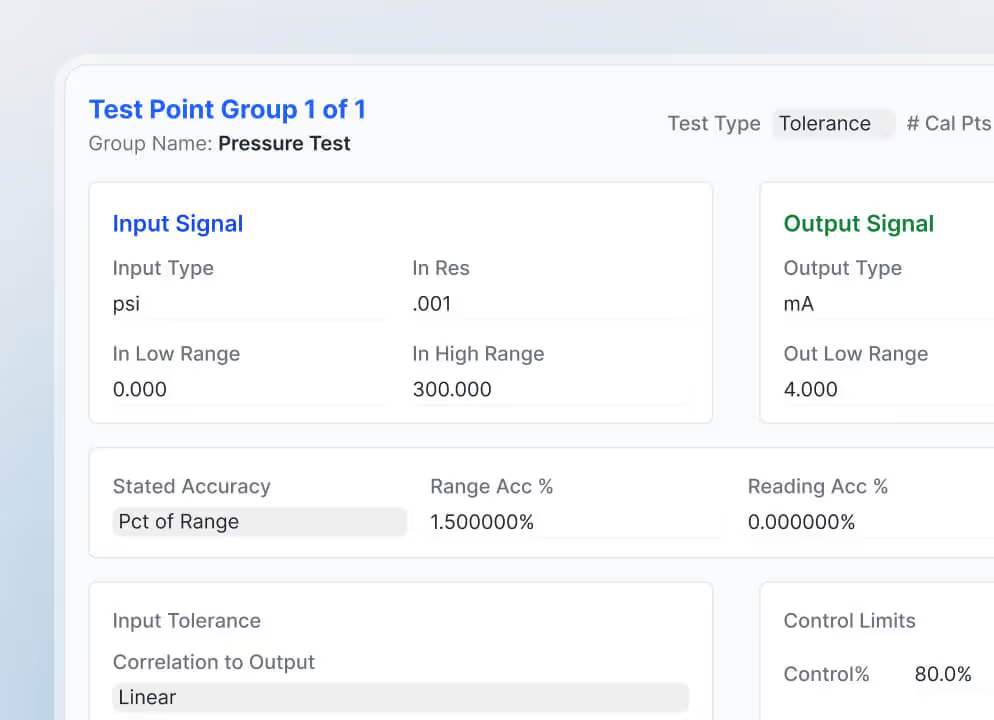

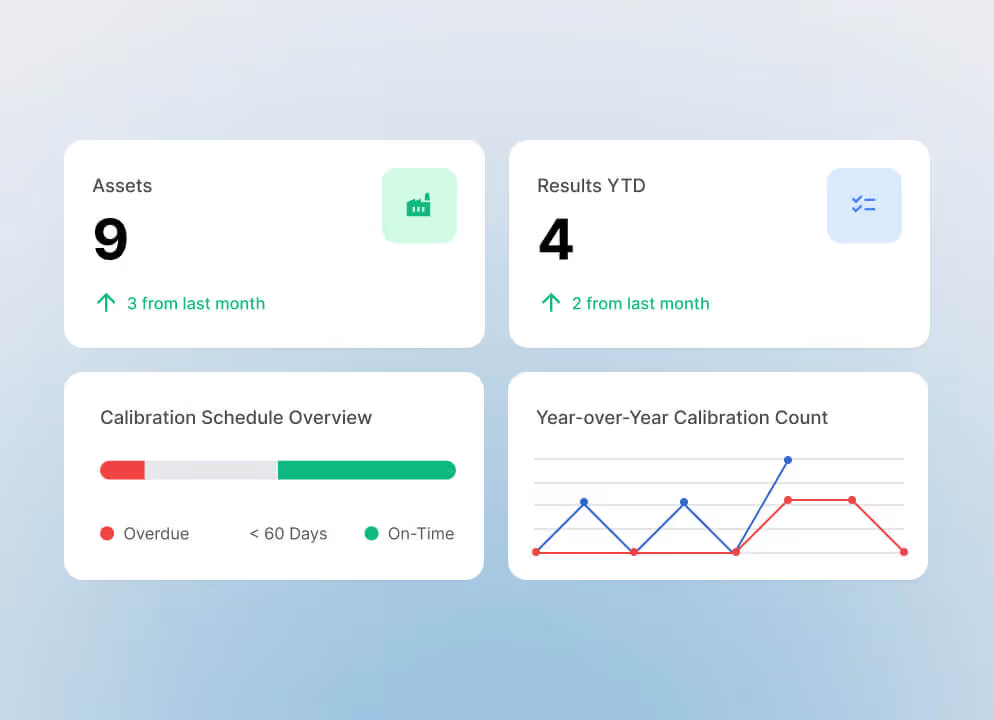

Various industries rely on calibration management to ensure the accuracy, reliability, and performance of critical equipment. From maintaining the quality of manufactured products to supporting the safety of medical devices, effective calibration practices are essential for facility managers and maintenance professionals alike.
As technology continues to evolve, calibration management is changing as well. New tools and approaches are helping organizations improve efficiency, strengthen compliance, and gain greater visibility into asset performance. Let's explore some of the emerging trends shaping the future of calibration management.
The growing role of automation and integration
The rise of Internet of Things (IoT) devices and connected sensors is transforming calibration management. Automated data collection and real-time monitoring provide organizations with greater visibility into equipment health and calibration status.
With automated systems, organizations can:
- Receive reminders for upcoming calibrations
- Monitor instrument performance in real time
- Reduce manual data entry
- Improve decision-making with centralized data
When integrated with maintenance management, quality management, and enterprise systems, automation can further improve operational efficiency and asset reliability.
The importance of digital calibration certificates (DCCs)
Traditional paper-based calibration certificates can be difficult to manage and may be susceptible to loss, damage, or unauthorized modification.
Digital Calibration Certificates (DCCs) offer a more secure and accessible alternative by enabling organizations to:
- Store calibration records electronically
- Share certificates securely with stakeholders
- Improve audit readiness
- Strengthen data integrity
- Eliminate paper-based recordkeeping challenges
As digital transformation continues, DCC adoption is expected to grow across regulated industries.
Cloud-based calibration management
Cloud-based calibration management solutions are becoming increasingly popular due to their flexibility and accessibility.
Benefits of cloud-based systems include:
- Access to calibration information from any location
- Support for remote teams and technicians
- Improved collaboration between departments
- Automatic data backup and recovery
- Reduced infrastructure requirements
With cloud technology, calibration records, procedures, and certificates are available whenever and wherever they are needed.
Calibration as a preventive maintenance strategy
Calibration is often viewed as a quality assurance activity, but it also plays an important role in preventive maintenance.
Effective calibration programs help organizations:
- Detect equipment problems early
- Reduce unexpected breakdowns
- Improve equipment reliability
- Extend asset life
- Minimize downtime
By identifying performance issues before they become major failures, organizations can lower maintenance costs and improve operational continuity.
Evolving regulatory requirements
Regulatory standards continue to evolve as industries place greater emphasis on product quality, safety, and traceability.
Organizations must stay current with changing requirements and ensure their calibration programs support applicable standards and regulations. Modern calibration software can help by:
- Automating compliance workflows
- Maintaining audit trails
- Managing documentation
- Supporting record retention requirements
Built-in compliance tools make it easier to adapt to new and changing regulations.
Increased focus on training and competency
The effectiveness of any calibration program depends on the knowledge and skills of the personnel performing calibration activities.
As calibration processes become more sophisticated, organizations are placing greater emphasis on:
- Technical training
- Certification programs
- Standardized procedures
- Ongoing competency assessments
Well-trained technicians help ensure calibrations are performed consistently, accurately, and in accordance with industry best practices.
Predictive maintenance and risk-based calibration
The future of calibration management is moving beyond fixed schedules and toward data-driven decision-making.
Predictive analytics allows organizations to:
- Monitor equipment performance trends
- Identify developing issues earlier
- Prioritize critical assets
- Optimize calibration schedules
Rather than calibrating equipment strictly according to a calendar, risk-based approaches focus resources where they provide the greatest value.
For example, historical performance data and sensor information can help predict when a component is likely to drift out of tolerance, allowing calibration activities to be scheduled proactively.
Artificial intelligence and calibration management
Artificial intelligence (AI) is creating new opportunities for improving calibration programs.
AI-powered systems can help organizations:
- Analyze large volumes of calibration data
- Identify trends and anomalies
- Predict potential equipment failures
- Optimize calibration frequencies
- Improve maintenance planning
These insights support a more proactive approach to equipment management and measurement reliability.
Blockchain and calibration traceability
Blockchain technology is emerging as a potential solution for improving calibration traceability and data integrity.
By creating secure, tamper-resistant records, blockchain can help organizations:
- Maintain trustworthy calibration histories
- Verify calibration certificate authenticity
- Improve audit readiness
- Strengthen chain-of-custody records
Although adoption is still developing, blockchain has the potential to enhance confidence in calibration records and compliance documentation.
Sustainability in calibration practices
Sustainability is becoming an increasingly important consideration across all areas of business operations, including calibration management.
Organizations are exploring ways to:
- Reduce paper consumption
- Minimize waste generated during calibration activities
- Improve energy efficiency
- Extend the life of calibration equipment
- Support environmental initiatives through digital workflows
Modern calibration management systems can help reduce administrative overhead while supporting broader sustainability goals.
The future of calibration management
The future of calibration management will be defined by greater connectivity, automation, data intelligence, and compliance visibility. Organizations that embrace technologies such as cloud platforms, digital calibration certificates, predictive analytics, and AI will be better positioned to improve accuracy, reduce risk, and optimize operational performance.
As calibration requirements continue to evolve, investing in modern calibration management solutions can help organizations maintain compliance, improve efficiency, and build a stronger foundation for long-term success.
Related resources
From ideas to impact
You’ve read the insights, now see how TMA Systems helps teams put them into practice.