
How to Choose the Right Calibration Management Software
In this post
%20(1).avif)
.avif)
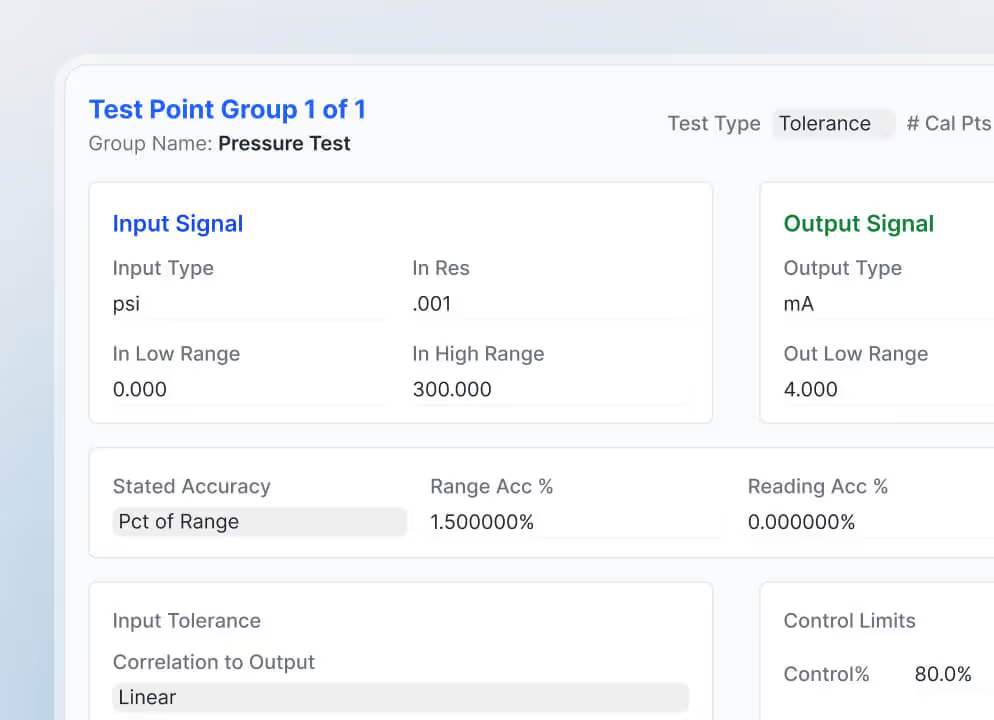

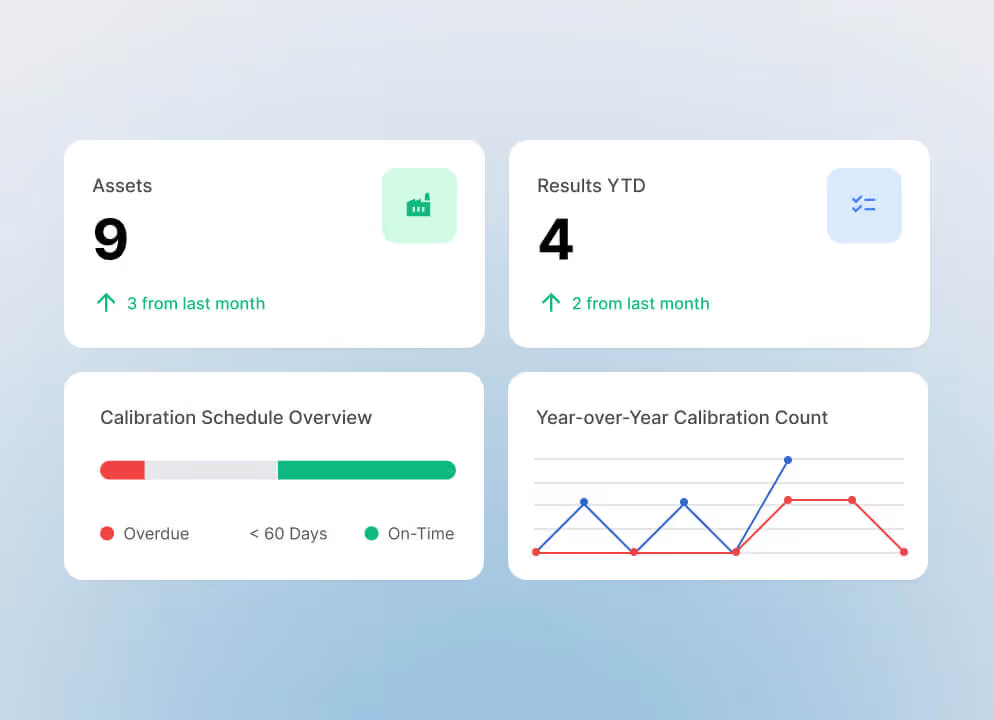

Calibration management software (CMS) is essential for maintaining the accuracy and reliability of enterprise equipment and devices. From reducing downtime to improving efficiency and increasing overall profitability, CMS has become a critical technology component across many industries.
Due to its growing importance, it is no surprise that the global calibration management software market continues to expand and expected to reach $489.47 million by 2027. As the market grows, organizations have more options than ever before, making it increasingly important to choose a solution that aligns with their specific operational requirements.
What should organizations look for in a calibration management system?
Ease of use
The most important consideration for any software solution is usability.
When evaluating a CMS, look for a solution that is:
- Intuitive and user-friendly
- Easy to navigate
- Simple to learn
- Accessible for users across different departments
A system that is easy to use helps accelerate adoption and improves productivity from day one.
Compatibility
Even the most feature-rich software may provide limited value if it does not fit within your existing technology environment.
Choose a CMS that is compatible with the hardware and software already used within your organization. Compatibility ensures the solution complements existing systems, fills operational gaps, and contributes to a more connected IT and operational technology (OT) ecosystem.
Integration
A CMS should integrate seamlessly with other enterprise systems, including:
- ERP systems
- CMMS platforms
- Asset management solutions
- Quality management software
Integration helps ensure data flows automatically between systems, reducing duplicate data entry, improving accuracy, and minimizing errors.
Features and functionality
A CMS should provide the tools necessary to effectively manage calibration activities throughout the equipment lifecycle.
Key capabilities may include:
- Calibration scheduling
- Calibration history tracking
- Calibration certificate management
- Reporting and analytics
- Audit trails
- Automated alerts and notifications
The right solution should support both operational requirements and compliance needs.
Configurability
Every organization manages calibration differently.
A CMS should be configurable to support your:
- Calibration processes
- Workflows
- Business requirements
- Compliance procedures
This flexibility enables organizations to tailor the platform to their specific needs and achieve greater value from their investment.
Scalability
As an organization grows, so do its calibration requirements.
A scalable CMS should be capable of supporting:
- More assets
- Additional facilities
- Increased data volumes
- More users
- Expanded compliance requirements
Choosing a scalable platform helps ensure the system can support future growth without requiring a complete replacement.
Data security
Data security should be a top priority when selecting any enterprise software, including calibration management solutions.
A CMS should provide strong security controls to protect sensitive information such as:
- Calibration records
- Equipment data
- Certificates
- Compliance documentation
Look for features such as user permissions, audit trails, electronic signatures, and secure data storage.
Support and training
Software implementation is only part of the journey.
Organizations should select a provider that offers:
- User training
- Implementation support
- Technical assistance
- Product documentation
- Ongoing customer support
Proper training helps users take full advantage of the software's capabilities, while reliable support ensures issues can be resolved quickly.
The importance of choosing the right provider
With so many calibration management software options available, selecting the right technology is only part of the decision. Choosing an experienced and reputable provider is equally important.
A knowledgeable provider can help organizations:
- Implement software successfully
- Optimize calibration workflows
- Improve compliance readiness
- Integrate calibration processes with broader maintenance strategies
- Maximize return on investment
Calibration management software plays a vital role in helping organizations improve equipment reliability, maintain compliance, reduce downtime, and increase operational efficiency.
When evaluating CMS solutions, organizations should carefully consider factors such as usability, compatibility, integration capabilities, functionality, configurability, scalability, security, and vendor support. By selecting a solution that aligns with both current requirements and future growth plans, organizations can create a more efficient and sustainable calibration management program.
A well-implemented calibration management system not only simplifies calibration activities but also provides the visibility, control, and data needed to support long-term operational excellence.
Related resources
From ideas to impact
You’ve read the insights, now see how TMA Systems helps teams put them into practice.