
Common challenges in calibration management and how software can help
In this post
%20(1).avif)
.avif)
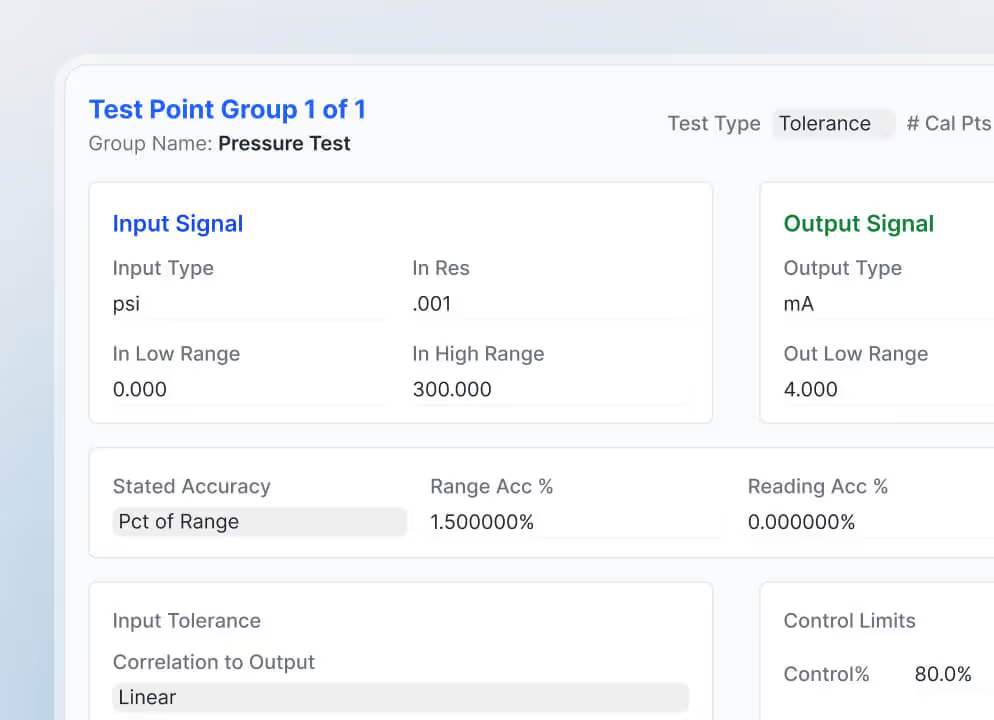

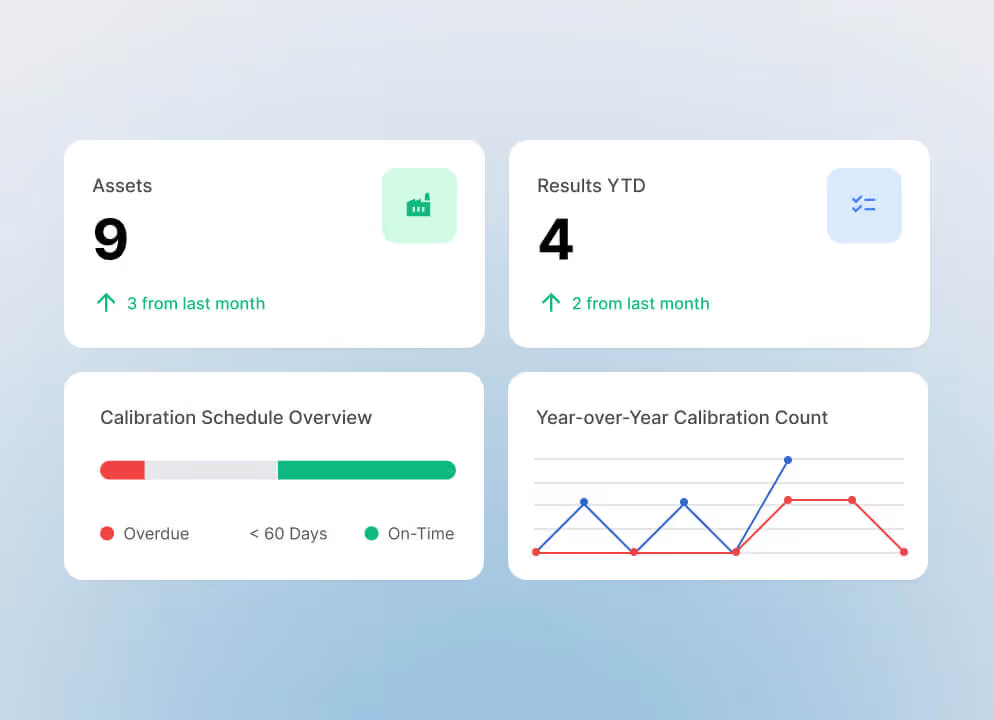

Calibration management plays a pivotal role in ensuring the precision and reliability of measurement instruments across a wide range of industries. Managing calibration activities manually can create numerous challenges, from tracking calibration schedules to maintaining accurate records. Calibration management software has emerged as a powerful solution to address these issues.
By automating and streamlining calibration workflows, calibration software helps organizations improve compliance, simplify documentation, optimize resources, and maintain measurement accuracy. This article explores some of the most common calibration management challenges and how calibration software helps solve them.
Scheduling and tracking calibrations
Challenge: Coordinating the calibration schedules of numerous instruments manually can lead to oversights, missed deadlines, and potential disruptions in operations.
Solution: Calibration management software automates the scheduling process, sending timely notifications for upcoming calibrations. It provides a centralized platform for real-time tracking, ensuring that instruments are calibrated promptly and minimizes the risk of inaccuracies.
Documentation and record-keeping
Challenge: Maintaining meticulous records, including calibration certificates and historical data, can be time-consuming and error-prone when relying on manual methods.
Solution: Calibration software establishes a centralized repository for comprehensive documentation. This not only ensures the completeness of records but also facilitates easy retrieval, version control, and electronic signatures, thereby enhancing data integrity.
Compliance and audit trail
Challenge: Adhering to industry regulations and maintaining a reliable audit trail without a systematic approach can pose compliance risks and hinder the organization’s reputation.
Solution: Calibration management software incorporates features designed to meet regulatory standards. It maintains a detailed audit trail, allowing organizations to demonstrate compliance during audits and ensuring that calibration processes align with industry requirements.
Calibration intervals and tolerance management
Challenge: Establishing appropriate calibration intervals and managing tolerance limits manually may result in inconsistencies and compromise the reliability of measurements.
Solution: Calibration software employs data-driven algorithms to assist in determining optimal calibration intervals. It also helps manage tolerance limits, ensuring that instruments are calibrated within acceptable ranges, thus enhancing the accuracy of measurements.
Resource allocation and workload balancing
Challenge: Allocating resources efficiently and balancing the workload across the calibration team can be challenging without visibility into the overall calibration schedule.
Solution: Calibration management software provides a comprehensive view of the calibration schedule, enabling organizations to allocate resources effectively. This visibility helps avoid bottlenecks, optimize workload distribution, and enhance the overall efficiency of the calibration process.
Equipment status monitoring
Challenge: Monitoring the status of instruments and identifying those due for calibration can be challenging without automated tools.
Solution: Calibration software offers dashboards and reports that provide visibility into the status of equipment. This enables proactive management of calibration activities, reducing downtime and enhancing overall equipment reliability.
Mobile accessibility and remote calibration
Challenge: Conducting calibration activities in remote locations or field environments can be challenging without the ability to access calibration data and tools remotely.
Solution: Many calibration management systems offer mobile accessibility, allowing technicians to access calibration information, record results, and update data in real-time, even in the field. This enhances flexibility and ensures the accuracy of calibration processes beyond traditional manufacturing settings.
Benefits of calibration management software
Organizations that implement calibration software often achieve benefits such as:
- Automated scheduling and reminders
- Improved record management
- Greater regulatory compliance
- Enhanced audit readiness
- Better resource utilization
- Reduced administrative workload
- Improved equipment reliability
- Increased visibility into calibration activities
Managing calibration activities manually can create challenges related to scheduling, documentation, compliance, resource planning, and equipment visibility. Calibration management software addresses these challenges by providing automation, centralized recordkeeping, real-time tracking, and compliance support.
By implementing a modern calibration management solution, organizations can improve measurement accuracy, increase operational efficiency, strengthen compliance efforts, and gain greater confidence in the reliability of their calibration processes.
Related resources
From ideas to impact
You’ve read the insights, now see how TMA Systems helps teams put them into practice.