
Calibration services for measurement and testing equipment
In this post
%20(1).avif)
.avif)
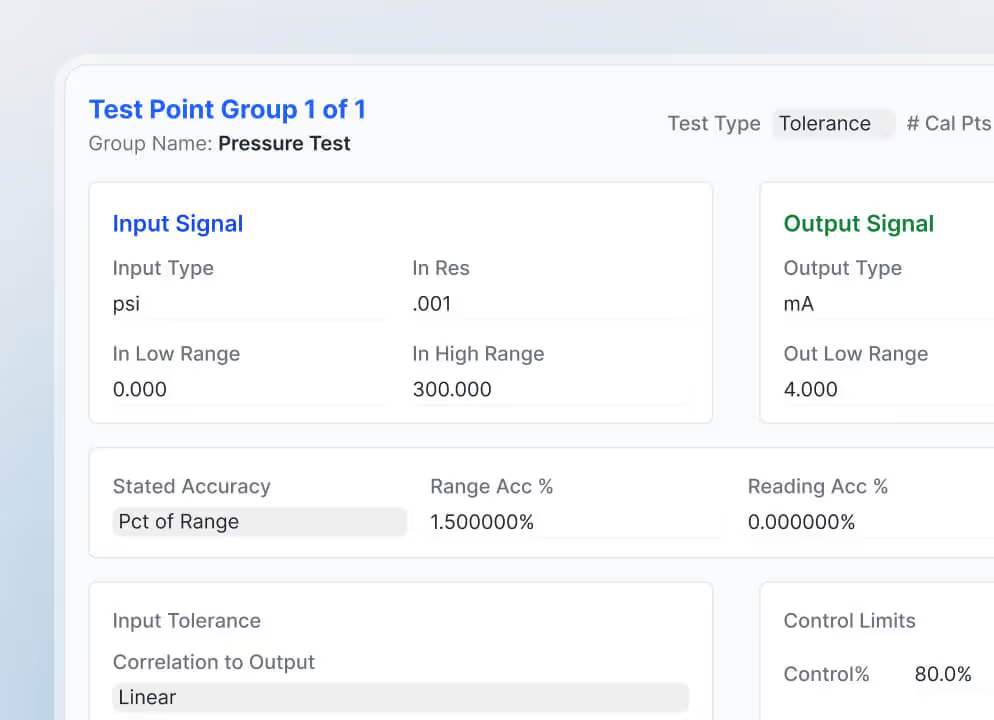

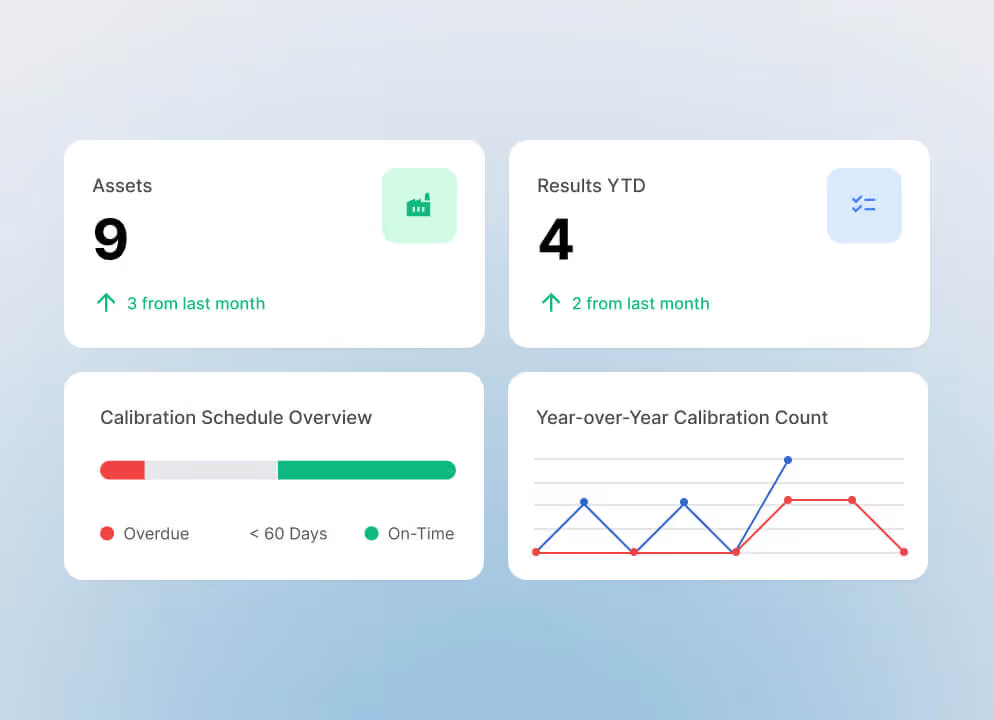

A calibration service is the process of adjusting or verifying an instrument or measuring device to ensure it provides accurate and reliable results. Calibration is typically performed by comparing the output of the instrument being calibrated against a reference instrument with known accuracy. The calibration process may involve adjusting the instrument to align with the reference standard or documenting any differences between the two readings.
Calibration services are essential for confirming that measurement instruments and devices operate accurately and consistently. This is especially important in industries where precise measurements are required, such as scientific research, manufacturing, and healthcare. Calibration services are often performed by specialized accredited providers. The frequency of calibration depends on the type of instrument, its intended application, and applicable industry standards.
Types of calibration services
Several different types of calibration services may be required depending on the instrument being calibrated and the industry in which it is used.
Electrical calibration
Electrical calibration involves testing and calibrating electrical measurement equipment, including:
- Multimeters
- Oscilloscopes
- Signal generators
This process helps ensure electrical measurements remain accurate and traceable.
Temperature calibration
Temperature calibration focuses on equipment used to measure and control temperature, such as:
- Thermocouples
- Resistance Temperature Detectors (RTDs)
- Temperature controllers
Accurate temperature measurements are critical in many manufacturing, laboratory, and healthcare environments.
Pressure calibration
Pressure calibration is performed on devices that measure pressure, including:
- Pressure gauges
- Pressure transducers
- Pressure transmitters
Regular calibration helps maintain measurement accuracy and reliable performance.
Dimensional calibration
Dimensional calibration applies to instruments used to measure physical dimensions and tolerances, including:
- Micrometers
- Calipers
- Gauges
These measurements are critical for precision manufacturing and quality assurance processes.
Time and frequency calibration
Time and frequency calibration ensures the accuracy of equipment used to measure time-related parameters, including:
- Clocks
- Timers
- Frequency counters
This type of calibration is particularly important in testing, telecommunications, and electronics applications.
Flow calibration
Flow calibration is used for equipment that measures the movement of liquids or gases, such as:
- Flow meters
- Flow controllers
Accurate flow measurements are essential for process control, efficiency, and product quality.
Force calibration
Force calibration verifies the accuracy of force-measuring devices, including:
- Load cells
- Force gauges
It is commonly used in manufacturing, materials testing, and engineering applications.
Why acccredited calibration services matter
Each type of calibration service may require specialized methods, standards, equipment, and expertise. Accredited calibration service providers typically specialize in one or more calibration disciplines and use recognized reference standards and documented procedures to ensure reliable, accurate, and traceable results.
These providers help organizations:
- Maintain measurement accuracy
- Support quality management programs
- Meet industry and regulatory requirements
- Reduce measurement uncertainty
- Improve confidence in testing and inspection results
Calibration services play an essential role in maintaining the accuracy, consistency, and reliability of measurement instruments across a wide range of industries. Whether calibrating electrical equipment, temperature sensors, pressure devices, or precision measurement tools, regular calibration helps organizations ensure product quality, regulatory compliance, and operational confidence.
By working with accredited calibration providers and maintaining a structured calibration program, organizations can support accurate measurements, minimize risk, and improve overall quality performance.
Related resources
From ideas to impact
You’ve read the insights, now see how TMA Systems helps teams put them into practice.