
Calibration management solutions: Pharmaceutical and medical devices
In this post
%20(1).avif)
.avif)
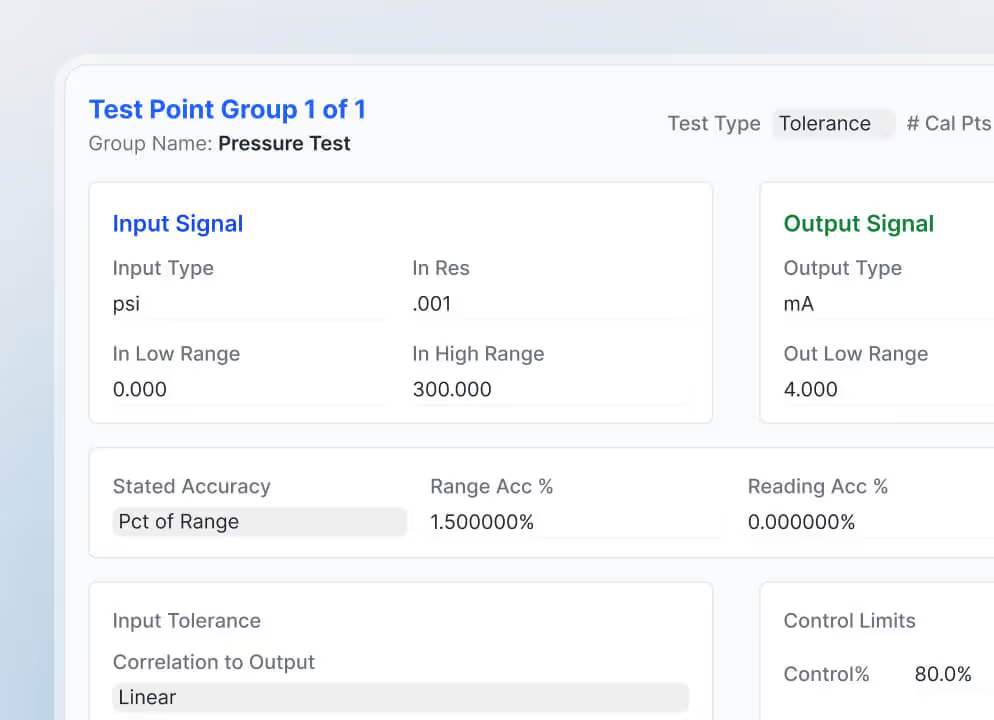

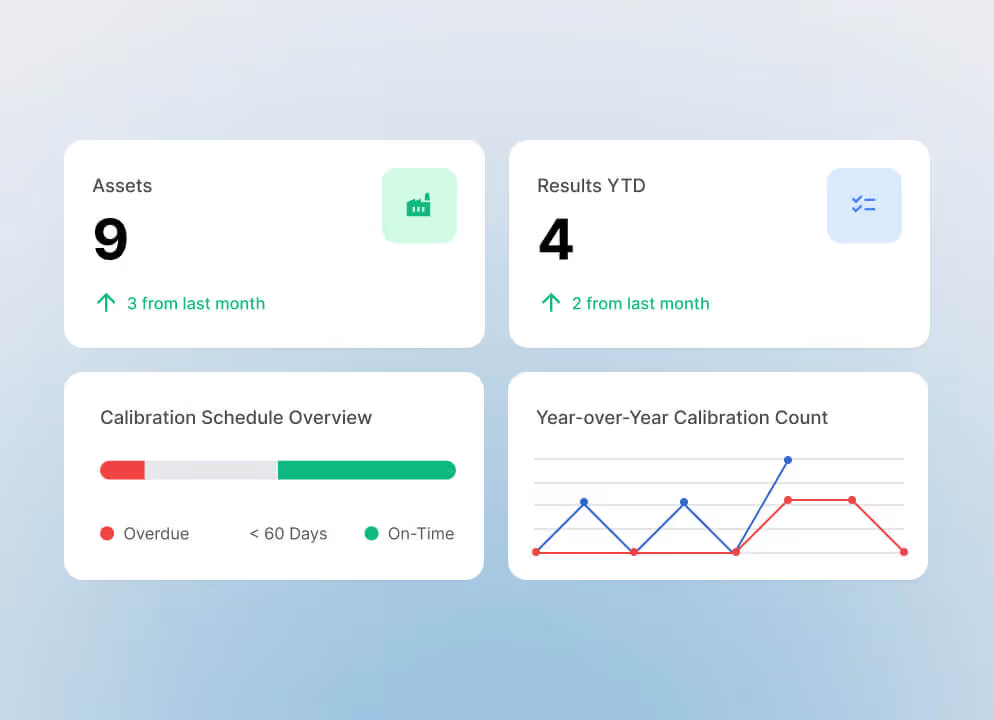

Calibration is a critical process in the pharmaceutical and medical device industries, ensuring that instruments and equipment are accurate and reliable. By comparing the readings of the instrument to a known reference standard, the user can make any necessary adjustments to bring it into alignment with the initial standard metric. Calibration management solutions are used to aid in this process, and play a vital role in maintaining the safety and efficacy of pharmaceuticals and medical devices.
Why calibration is important?
Calibration is essential in the pharmaceutical and medical device industries because inaccuracies in measurements can have serious consequences.
For example, a faulty instrument could lead to adverse reactions or ineffective treatment if an incorrect dose of medication is administered. Inaccurate measurements can also result in the rejection of batches of drugs or medical devices, which can have significant financial implications for manufacturers.
Additionally, calibration is important from a regulatory perspective. The U.S. Food and Drug Administration (FDA) and other regulatory bodies require that pharmaceutical and medical device manufacturers demonstrate that their equipment is calibrated and it meets certain standards. Failure to comply with these regulations can result in fines, recalls, and other penalties.
Different types of calibration processes
There are a variety of calibration processes in the pharmaceutical and medical device industries, each designed to meet specific needs and requirements. For optimal efficiency and accuracy, all of these processes should be performed within a single calibration management solution.
Some of the most commonly used calibration processes include:
- pH buffer: pH is an important parameter in many pharmaceutical and medical device applications. pH buffer solutions are used to calibrate pH meters, ensuring accurate readings.
- Conductivity: Conductivity is another important criterion in pharmaceutical and medical device applications. Calibration solutions are used to calibrate conductivity meters, which measure electricity conductivity.
- Temperature: Temperature is critical in many pharmaceutical and medical device applications, and temperature sensors must be calibrated to ensure accurate readings. Temperature calibration solutions are used to calibrate temperature sensors, such as thermocouples and RTDs.
- Pressure: Pressure is a crucial variable in many medical devices, such as ventilators and blood pressure monitors. Pressure calibration solutions are used to calibrate pressure sensors, safeguarding patients with accurate readings.
- Flow: Flow is an important parameter in many medical devices, like infusion pumps and blood flow monitors. Flow calibration solutions are used to calibrate flow sensors, ensuring accuracy and reliability.
Calibration methods
There are several methods for calibrating instruments and equipment in the pharmaceutical and medical device industries. The two most common methods are:
Manual calibration
Compare the readings of an instrument to a known reference and adjust the instrument manually to bring it into alignment with the reference standard. Manual calibration is simple and straightforward, but it can be time-consuming and prone to error.
In-situ calibration
Calibrate an instrument while it is in use, without the need to remove it from the process. In-situ calibration can be faster and more convenient than other methods, but requires specialized equipment and expertise.
Calibration Standards
In addition to calibration solutions and methods, there are standards that govern the calibration process in the pharmaceutical and medical device industries. The most common standards include:
ISO 17025
This international standard outlines the general requirements for the competence of testing and calibration laboratories. This approach typically involves the calculation of measurement uncertainty, which is used to determine pass/fail.
ISO 9001
This international standard outlines the requirements for a quality management system. It focuses on the actual processes that are followed and includes requirements for calibration and measurement traceability.
ISO 13485
This international standard outlines a quality management system specific to the development of medical devices and related services. While some countries use their own standard for medical devices, ISO 13485 is rapidly gaining global adoption.
FDA regulations
The FDA has specific requirements for calibration in the pharmaceutical and medical device industries, which are outlined in the Code of Federal Regulations (CFR).
These regulations define:
- Equipment that requires calibration
- Calibration frequency requirements
- Documentation and recordkeeping expectations
- Validation requirements
An important part of the FDA regulations is good manufacturing practices (GMP). GMP are a set of regulations that require pharmaceuticals and medical devices to be manufactured in a consistent and controlled manner. GMP includes requirements for calibration and validation of equipment, as well as documentation and record-keeping.
Calibration best practices
To guarantee that calibration is performed accurately and consistently, it is important to follow best practices.
1. Establish a calibration program
A formal calibration program should be established to ensure that all equipment is regularly calibrated to the appropriate standards.
2. Get your standards calibrated
You will never know if your devices are accurate, if you are using faulty reference standards. Annual certification on your test equipment will help to verify accuracy and consistency.
3. Use certified calibration management solutions
To establish precision and credibility, calibration management solutions should be certified by a recognized authority, like NIST.
4. Document calibration procedures
Calibration procedures should be documented in detail, including:
- Equipment used
- Reference standards used
- Procedures followed
- Results obtained
5. Maintain records
Calibration records should be maintained to provide evidence of calibration and to facilitate traceability.
6. Train personnel
Personnel responsible for calibration should be trained in the appropriate procedures and standards, to certify that calibration practices are performed consistently and accurately.
Paperless calibration management solutions
A paperless calibration management solution offers many advantages over a manual method. Organizations in the pharmaceutical and medical device industries often turn to a paperless calibration solution for the following reasons:
- Reduction in errors: a paperless solution will perform all mathematical functions and will record findings automatically.
- Validation and compliance: the calibration software solution should come pre-validated and be ISO/FDA compliant.
- Time savings: using a pen and paper to record calibrations is a manual, time-consuming process. With a software solution, your team spends less time on repetitive tasks and more time performing calibrations.
- Actionable insights: calibration software can provide decision makers with detailed insights into the statuses of their instrumentation. This allows them to make decisions based on reliable, accurate data.
Calibration is a critical process in the pharmaceutical and medical device industries, ensuring that instruments and equipment are accurate and reliable. There are many types of calibration solutions available, each designed to meet specific needs and requirements.
By following recommended best practices to perform and record calibration findings, companies and professionals can rest easy knowing they are following compliance and maintaining the best standards of quality.
The calibration management systems that support these activities play a vital role in safeguarding the safety and efficacy of pharmaceutical products and medical devices. By adopting a modern, paperless approach to calibration management, organisations can streamline workflows, improve traceability and maintain confidence in measurement accuracy across their operations.
Related resources
From ideas to impact
You’ve read the insights, now see how TMA Systems helps teams put them into practice.