
10 Best cloud-based CMMS/EAM solutions in 2026 (Comparison guide)
In this post
%20(1).avif)
.avif)
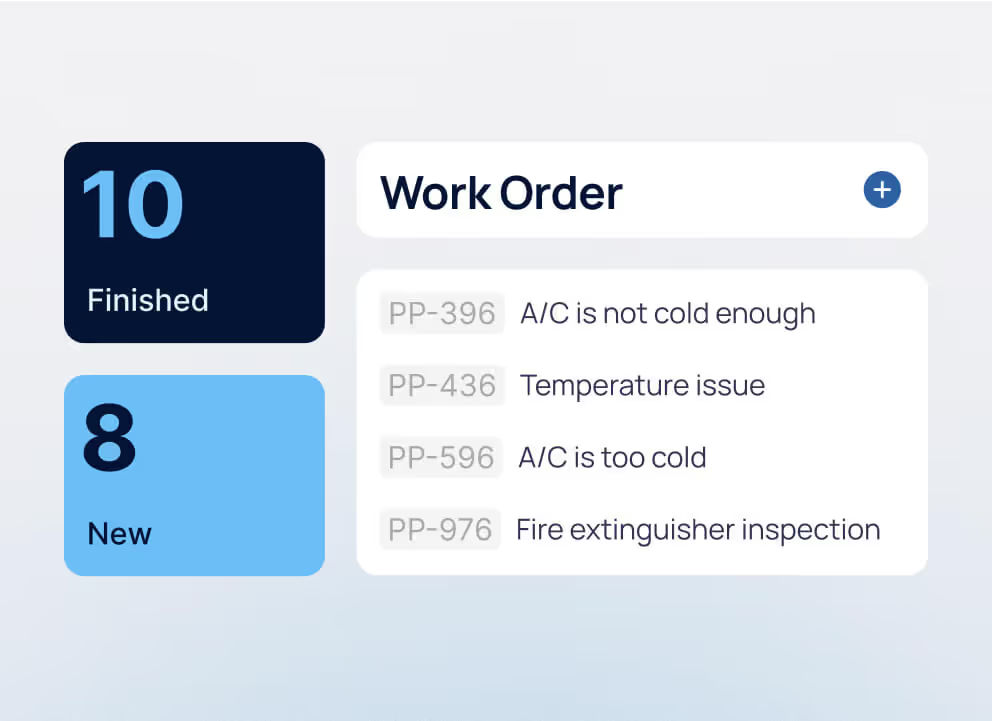

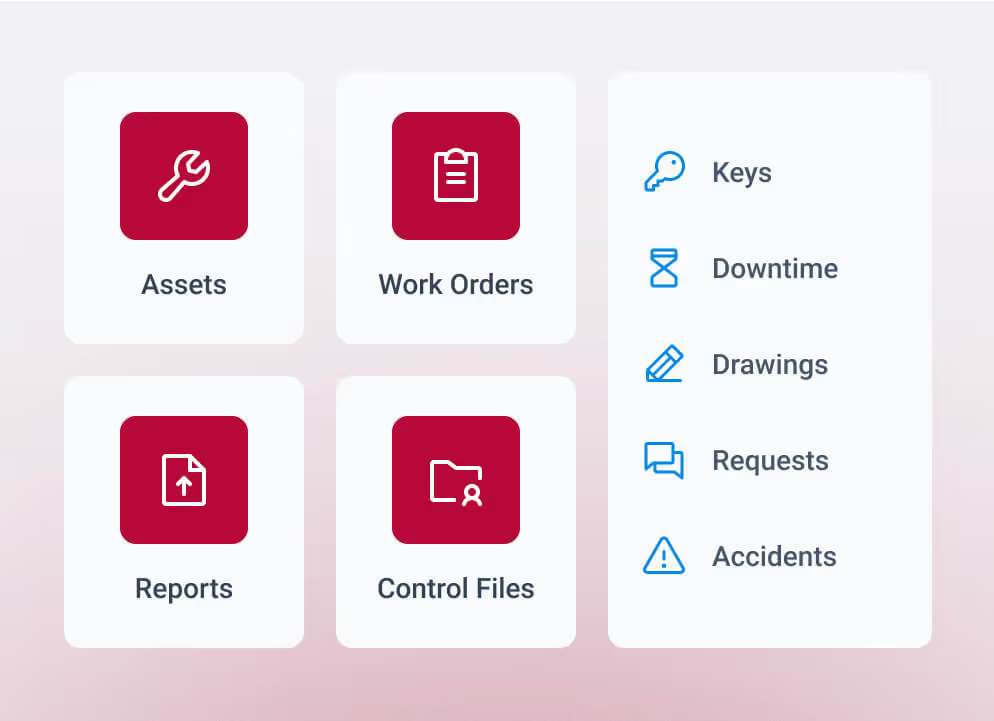

Facilities teams searching for the best cloud-based CMMS solution usually deal with the same operational problems: slow reporting, aging on-premise systems that take too much effort to maintain, limited remote access for technicians, and upgrades that keep getting pushed down the priority list while IT teams stay stretched thin. Modern CMMS (computerized maintenance management system) and enterprise asset management software platforms now support cloud deployment so facilities teams can access data faster, simplify system management, and improve visibility across daily operations.
That shift is reflected across the industry. According to Grand View Research, “Cloud-based CMMS platforms with mobile applications enable technicians to receive work orders, update maintenance logs, and access asset history in real time from any location.” For maintenance teams managing multiple sites, mobile technicians, or growing asset portfolios, cloud-based systems have become a practical operational decision tied directly to uptime, reporting accuracy, and long-term scalability.
What is cloud-based CMMS software?
A cloud-based CMMS stores maintenance data, work orders, asset history, and reporting tools on remote servers instead of local hardware managed inside the facility. Teams access the system through a web browser or mobile device, giving technicians, supervisors, and leadership access to the same operational data from the field, office, or multiple sites.
For many maintenance teams, the value comes from day-to-day operations. Cloud-based systems are typically faster to deploy, easier to update, and less dependent on internal IT support than legacy on-premise platforms. Technicians can review equipment history during inspections, close work requests from a phone or tablet, and document issues while standing at the equipment. Many platforms also support offline mode for remote facilities or environments with limited connectivity.
Cloud deployment also supports operational growth over time. Organizations can expand into centralized reporting, workflow automation, mobile maintenance workflows, and additional integrations without replacing the entire system. At the same time, cloud deployment does not automatically mean a platform is lightweight. Teams can run both basic CMMS platforms and enterprise-level EAM systems in the cloud, depending on reporting requirements, asset complexity, governance needs, and long-term maintenance planning goals.
Cloud-based CMMS vs on-premise vs hybrid
Deployment decisions affect maintenance operations long before teams compare feature lists. Facilities leaders usually feel the impact through stalled upgrades, delayed reporting, rising infrastructure costs, or technicians struggling to access information outside the maintenance office.
Cloud-based deployments reduce infrastructure management for internal IT teams and improve remote access to work orders, asset history, and mobile workflows. On-premise systems give organizations more direct control over infrastructure and data management, while hybrid environments combine local infrastructure with cloud-connected applications. The table below outlines the operational tradeoffs facilities teams should evaluate when comparing deployment models.
Deployment models shape the operational foundation of a maintenance platform, but they do not define how deep the software itself goes. The next decision centers on platform scope and whether a CMMS or EAM system aligns with the complexity of the operation.

Cloud-based CMMS vs EAM
After selecting a deployment model, facilities teams still need to determine how much operational depth the software should support. Both CMMS and EAM platforms can operate in cloud environments, but they serve different operational needs.
A CMMS typically focuses on maintenance execution, including work orders, inspections, preventive maintenance, and technician workflows. EAM platforms expand further into enterprise reporting, multi-site governance, capital planning, inventory standardization, and long-term asset lifecycle management. The table below outlines the practical differences between cloud CMMS and EAM systems so teams can evaluate which approach best fits their operational structure, reporting requirements, and long-term planning goals.
Organizations evaluating these platforms are balancing maintenance complexity, reporting expectations, internal resources, and long-term operational planning. A platform that fits a single facility may create reporting limitations in a distributed operation, while a highly configurable EAM system can introduce additional administrative overhead for smaller maintenance teams. The next section breaks down how these platforms were evaluated across deployment, usability, reporting, scalability, and operational fit.
How we evaluated the best cloud-based CMMS/EAM software
Facilities teams evaluating cloud maintenance platforms usually face the same problem: every vendor claims to improve efficiency, reduce downtime, and simplify operations. Actual performance depends on how teams use the system after implementation, how quickly technicians adopt workflows, and how reliably the platform supports reporting as operations grow. This evaluation focuses on operational fit and common buyer priorities instead of marketing claims.
- Deployment and onboarding support: Rollout timelines, migration planning, onboarding structure, and post-launch support all affect how quickly teams can transition from spreadsheets, aging systems, or disconnected maintenance workflows.
- Technician adoption and usability: Mobile access, work order workflows, offline functionality, and ease of navigation directly affect daily maintenance execution and data quality.
- Reporting and operational visibility: Strong systems provide clear visibility into labor, asset history, backlog, preventive maintenance performance, and maintenance costs without requiring extensive manual reporting work.
- Scalability and governance: Multi-site organizations need standardized asset structures, centralized reporting, approval workflows, and long-term governance that can support operational growth.
- Integrations and API ecosystem: Maintenance platforms must connect cleanly with ERP (enterprise resource planning) systems, purchasing tools, inventory systems, IoT devices, and other operational software already in place.
- Customer review sentiment and support quality: User feedback helps surface recurring issues around implementation, responsiveness, reporting limitations, and long-term usability that may not appear during a sales demo.
The sections that follow use these criteria to compare cloud-based CMMS and EAM platforms across operational complexity, deployment requirements, and day-to-day maintenance management needs.
Best cloud-based CMMS/EAM solutions: Comparison table
Facilities teams evaluating maintenance software usually narrow the field quickly once operational requirements become clear. Some platforms support enterprise governance across multiple facilities. Others prioritize technician workflows, mobile work execution, and faster deployment for smaller maintenance teams. The tables below compare leading cloud-based CMMS and EAM platforms using consistent evaluation criteria for implementation, operational fit, reporting depth, and long-term scalability.
These comparisons help maintenance leaders, executives, and IT stakeholders identify where each platform fits before reviewing deployment requirements, integrations, administrative overhead, and day-to-day maintenance usability in more detail.
Cloud-based EAM software: Comparison table
Enterprise EAM platforms are typically used in larger environments where maintenance operations span multiple facilities, asset classes, departments, or reporting structures. Teams evaluating the best enterprise asset management software should compare more than feature lists. Governance, reporting consistency, implementation support, and long-term scalability all affect how well the platform performs after rollout.
This table focuses on enterprise-grade cloud EAM platforms built for operational complexity, centralized oversight, and long-term asset lifecycle management.
Cloud-based CMMS software: Comparison table
Cloud CMMS platforms are often selected for maintenance execution, technician usability, and faster deployment timelines. Many organizations moving away from spreadsheets or aging maintenance systems start here before evaluating whether broader EAM functionality is necessary. Teams reviewing the best CMMS software options for maintenance operations should pay close attention to mobile workflows, reporting depth, inventory management, and long-term operational fit.
This table focuses on cloud-based CMMS platforms designed for maintenance teams, growing organizations, and equipment-focused operations.
The detailed breakdowns that follow provide operational context on where each platform performs well, where trade-offs arise, and how different systems align with maintenance team structure, reporting expectations, and long-term growth plans.
10 Best cloud-based CMMS/EAM software: Detailed overview
Shortlists start to look very different once facilities teams move past feature checklists and begin evaluating operational fit. A maintenance team managing one site with limited IT support has different requirements than an enterprise operation handling compliance reporting, centralized governance, and multi-site asset visibility. The “best” platform depends on the operational structure, reporting expectations, internal resources, and the extent of long-term scalability the organization actually needs.
The sections below take a closer look at how leading cloud-based CMMS and EAM platforms perform in real operating environments, including where they fit well and where teams should expect additional complexity, configuration, or administrative overhead.
1. WebTMA
WebTMA is a cloud-based enterprise asset management platform built for organizations managing complex facilities operations, large asset portfolios, and centralized maintenance governance across multiple sites. The platform supports preventive maintenance, compliance management, inventory tracking, asset lifecycle planning, enterprise reporting, and configurable operational workflows within a single environment.
Many organizations move toward WebTMA after reaching the limits of disconnected maintenance systems, inconsistent reporting standards, or CMMS platforms that cannot support enterprise-level operational oversight. The platform is designed for environments where departments, facilities, and operational teams need to work within standardized reporting structures while still maintaining flexibility for site-level workflows.
Implementation timelines vary based on asset volume, integrations, workflow complexity, and reporting requirements. Enterprise environments with multiple facilities, approval chains, and historical asset data often require more structured onboarding and configuration planning. TMA supports that process with phased rollout planning, implementation guidance, onboarding, reporting alignment, technician training, and long-term operational consulting focused on improving adoption and reporting consistency after deployment.
Plans and pricing
WebTMA uses a quote-based pricing model tied to operational scope, facility count, user requirements, integrations, and deployment complexity. Organizations evaluating enterprise-level reporting, governance, and scalability requirements generally work through a structured discovery and implementation planning process before final pricing is established.
Best for
Large organizations and multi-site facilities operations that require centralized reporting, configurable workflows, asset lifecycle visibility, inventory control, and long-term scalability tied to governance and operational standardization.
Gartner rating
Real customer insights
“The level of customer service provided by TMA far exceeds any other software vendor I have experience with. The product's functionality has enabled us to expand the software's use beyond its original intended use across multiple departments, leading to better integration.” — Business Manager, Finance
Organizations evaluating broader enterprise asset management software strategies for multi-site operations often prioritize platforms that support reporting consistency, operational governance, and long-term asset planning across facilities without requiring later process rebuilds.
2. MEX CMMS
MEX CMMS is designed for maintenance teams that need strong technician adoption, mobile work execution, and straightforward maintenance management without the overhead associated with larger enterprise systems. The platform supports preventive maintenance, work orders, inspections, inventory tracking, and offline mobile workflows across equipment-focused operations.
Maintenance teams managing paper-based processes, spreadsheets, or aging maintenance software often adopt MEX to improve response times and reduce gaps in maintenance documentation. Mobile workflows provide a major operational advantage, particularly for technicians working across facilities, warehouses, field environments, or remote areas where connectivity may be inconsistent.
Deployment timelines are generally shorter than those for large-scale EAM implementations because maintenance teams can start with core workflows and gradually expand their use. Organizations managing more complex enterprise governance requirements, centralized reporting standards, or long-term asset lifecycle planning may eventually require broader EAM capabilities as operational complexity grows.
Plans and pricing
MEX CMMS uses tiered subscription pricing based on users, operational requirements, and deployment scope. Teams evaluating MEX generally prioritize faster rollout timelines, lower administrative overhead, and quicker operational adoption compared to larger enterprise deployments.
Best for
Small to mid-sized maintenance teams, manufacturing operations, field service environments, and asset-intensive organizations focused on technician usability, mobile workflows, inventory management, and faster implementation.
Real customer insights
“It was so easy to set up, it was all a SaaS solution, so minimal interaction, just did the SSO for ease of authentication, and the rest just works. Users are happy and have had no issues so far.” — Infrastructure Team Lead, Services (non-Government)
Gartner rating
Organizations comparing cloud-based maintenance tools often focus heavily on technician adoption because maintenance data loses value quickly when work orders are incomplete, delayed, or inconsistently documented. Teams evaluating operational usability can also explore a live MEX CMMS trial environment to test workflows directly against daily maintenance requirements.
3. AssetWorks
Facilities and public-sector organizations managing broad asset portfolios often turn to AssetWorks when maintenance operations span departments, fleets, infrastructure, and support services. The platform combines maintenance management, asset tracking, fleet operations, and reporting within a centralized framework designed for higher education, healthcare, government, and municipal environments.
Broader feature sets and administrative controls can require additional governance planning, user administration, and training as reporting structures expand across departments and facilities.
Plans and pricing
AssetWorks generally uses quote-based enterprise pricing tied to deployment size, operational scope, modules, and support requirements.
Best for
Public sector organizations, higher education institutions, and facilities teams managing broad operational environments with centralized reporting requirements and diverse asset portfolios.
Capterra rating
Real customer insights
“One of the pros is the ease of it. Once you learn the program, you can zoom through.” — Lisa H., Office Specialist, Government Administration
4. IBM Maximo
IBM Maximo supports organizations managing large infrastructure environments, complex asset ecosystems, predictive maintenance programs, and enterprise-wide reporting requirements. The platform includes asset lifecycle management, IoT integrations, inventory management, compliance oversight, and advanced operational analytics across distributed operations.
Organizations usually dedicate significant operational and technical resources to implementation and administration because of the platform’s depth, configuration flexibility, and integration requirements. Teams evaluating Maximo often already operate formal governance structures, internal IT programs, and long-term asset planning initiatives.
Plans and pricing
Maximo pricing is generally enterprise-focused and quote-based, with costs influenced by deployment scale, integrations, user counts, analytics modules, and infrastructure requirements.
Best for
Large enterprises, infrastructure-heavy organizations, utilities, and global operations require advanced asset lifecycle visibility, enterprise integrations, predictive maintenance capabilities, and centralized governance across multiple facilities or business units.
Gartner rating
Real customer insights
“I have been using IBM Maximo for nearly as long as I have been in the workforce. The flexibility of IBM Maximo enables my company to use a single software solution for multiple purposes. Before using IBM Maximo, these would have all been paper systems and much more cumbersome to manage.” — Nathaniel H., Process Engineer, Automotive
5. Accruent Maintenance Connection
Accruent Maintenance Connection focuses on preventive maintenance, work order tracking, asset visibility, and operational reporting for organizations seeking more structure across maintenance workflows. The platform is commonly used across healthcare, manufacturing, education, and facilities operations that need centralized reporting and configurable maintenance processes.
Organizations managing distributed facilities or expanding reporting requirements may require additional workflow configuration and integration planning as operational demands grow.
Plans and pricing
Maintenance Connection uses quote-based pricing tied to deployment scope, integrations, support requirements, and operational scale.
Best for
Mid-sized to enterprise organizations seeking stronger maintenance visibility, preventive maintenance structure, and configurable workflows without the broader operational scope of a full enterprise EAM deployment.
Gartner rating
Real customer insights
“The flexibility for Maintenance Connection to adapt to our unique business needs has been outstanding. We needed a product we could customize in-house, and MC was an open book compared to other CMMS software.” — Douglas M., EAM Systems Admin
6. Brightly Asset Essentials
Brightly Asset Essentials is commonly adopted by facilities teams looking to improve maintenance visibility and standardize preventive maintenance workflows without introducing extensive enterprise administration requirements. The platform supports mobile work execution, asset tracking, reporting dashboards, and preventive maintenance scheduling across education, healthcare, and municipal operations.
Organizations requiring deeper lifecycle planning, centralized governance, or broader enterprise reporting structures may eventually outgrow the platform’s administrative and reporting depth.
Plans and pricing
Brightly Asset Essentials generally follows a subscription-based pricing structure influenced by user count, modules, and operational scale.
Best for
Facilities teams and growing organizations seeking structured maintenance management, mobile work execution, and operational reporting with reduced implementation complexity and administrative overhead.
Gartner rating
Real customer insights
“Brightly Asset Essentials helps us to track and manage assets easily. To make any decision, it gives real-time data. Also, it reduces costs and helps to improve productivity.” — Rutuja K., BIM Engineer
7. UpKeep
Mobile work execution sits at the center of UpKeep’s operational design. Maintenance teams use the platform to improve technician communication, simplify work order management, and replace paper-based maintenance processes with faster digital workflows.
Smaller operations and growing maintenance teams often adopt UpKeep because technicians learn the system quickly and begin documenting maintenance activity with minimal onboarding friction. Organizations with expanding governance requirements or more advanced lifecycle planning needs may eventually require broader enterprise reporting and administrative controls.
Plans and pricing
UpKeep offers tiered subscription pricing based on users, functionality, and operational requirements.
Best for
Small to mid-sized maintenance teams prioritizing technician adoption, mobile-first workflows, faster rollout timelines, and simplified maintenance management processes.
Gartner rating
Real customer insights
“This has been day versus night compared to our prior CMMS software. I love the easy-to-navigate interface, and the mobile app has been extremely handy to use. I also appreciate that I can quickly interact with an actual human being for customer support. As a team, we’ve been able to keep track of things much better, and I believe it will continue to prove extremely beneficial.” — Derek E., Asset Maintenance Lead
8. Fiix
Organizations formalizing maintenance programs across facilities often use Fiix to improve preventive maintenance tracking, inventory visibility, and operational reporting consistency. The platform supports ERP integrations, asset tracking, and standardized maintenance workflows across growing operations.
Organizations with more advanced governance requirements or enterprise reporting standards may require additional configuration, administrative oversight, and higher-tier functionality as maintenance programs mature across multiple facilities or departments.
Plans and pricing
Fiix uses subscription-based pricing that varies based on user count, reporting capabilities, integrations, and maintenance program complexity.
Best for
Mid-sized maintenance teams and growing operations looking to formalize preventive maintenance programs, improve asset visibility, and standardize maintenance workflows across facilities.
Gartner rating
Real customer insights
“My experience with Fiix has been a very positive one. The Fiixers are very knowledgeable and take the time to understand your needs and help find solutions.” — Ross M., Director of Operations, Import and Export
9. MaintainX
MaintainX focuses heavily on mobile work execution, inspections, digital procedures, and technician collaboration within maintenance and operations environments. Manufacturing operations, facilities teams, and service organizations commonly adopt the platform to improve maintenance documentation and increase field visibility.
Rapid technician adoption and mobile usability are major strengths, especially for organizations replacing paper forms or disconnected communication processes. Organizations requiring highly structured enterprise workflows or centralized governance may eventually need broader administrative controls and lifecycle reporting capabilities.
Plans and pricing
MaintainX offers tiered subscription pricing based on users, workflow requirements, and operational functionality.
Best for
Maintenance teams prioritizing technician usability, mobile workflows, inspection management, and faster maintenance documentation across growing operations.
Gartner rating
Real customer insights
“We love using the platform. It is easy to use and adopt, even for less digitally inclined users. It has helped us increase our facilities compliance, keeps us on schedule, and has more predictable costs and outcomes.” — Anonymous User, Facility Management, Non-Profit Organization
10. eMaint
eMaint supports preventive maintenance, configurable workflows, compliance documentation, and asset management across manufacturing, healthcare, facilities management, and regulated industries. Organizations with structured maintenance reporting and compliance requirements often use the platform to manage maintenance visibility across equipment, facilities, and operational assets.
Configuration flexibility supports long-term customization and workflow expansion, though smaller teams may face additional administrative complexity as reporting structures, workflows, and system requirements become more advanced over time.
Plans and pricing
eMaint uses quote-based pricing influenced by deployment requirements, reporting functionality, integrations, and operational scale.
Best for
Asset-intensive and regulated operations that require preventive maintenance structure, configurable workflows, compliance documentation, and detailed maintenance reporting across facilities.
Gartner rating
Real customer insights
“Great product, but there is always some room for improvement. By using it almost on a daily basis, my experience is very good.” — Leysan M., Maintenance Engineer, Higher Education
At this stage in the evaluation process, the differences between platforms usually come down to operational priorities. Some organizations need centralized governance, enterprise reporting, and long-term asset planning. Others need faster technician adoption, simpler workflows, and mobile maintenance execution that works consistently in the field. The next section focuses on how facilities teams can narrow those decisions based on operational structure, internal resources, and long-term maintenance strategy.
How to choose the right CMMS software
Selecting a maintenance platform usually becomes easier once facilities teams stop focusing on feature volume and start evaluating operational fit. A system that works well for a small maintenance department may create reporting gaps in a multi-site operation. An enterprise platform may introduce unnecessary administrative overhead for a team managing a single facility. The right decision depends on maintenance complexity, internal resources, reporting expectations, and how operations are expected to grow over time.
- Asset complexity and operational scope: Evaluate the number of facilities, asset types, maintenance workflows, and reporting structures the platform must support. Larger operations often require deeper governance and lifecycle visibility.
- Implementation readiness: Review asset data quality, preventive maintenance records, inventory structures, and existing workflows before deployment. Teams moving from spreadsheets or disconnected systems may require more onboarding support and cleanup work during implementation.
- Reporting and visibility requirements: Determine whether leadership needs basic maintenance reporting or enterprise-level visibility tied to compliance, budgeting, and asset lifecycle planning.
- Integrations and connected systems: Maintenance platforms often need to connect with ERP systems, purchasing software, IoT devices, and inventory tools already in place across the organization.
- Internal IT capacity and upgrade ownership: Some organizations have dedicated IT resources available for infrastructure management, upgrades, and configuration oversight. Others need a platform with lighter internal maintenance requirements and vendor-managed updates.
- Technician adoption and usability: Maintenance data loses value when technicians avoid the system or delay documentation. Mobile usability, work order simplicity, and offline functionality directly affect adoption on the shop floor and in the field.
Teams evaluating long-term operational fit often benefit from reviewing a broader framework for selecting a CMMS platform before narrowing the vendor list further.
Pilot programs, live demos, and technician feedback usually provide a clearer picture of system performance during daily maintenance operations.
Where TMA Systems fits in
TMA Systems supports organizations at different stages of maintenance maturity, from teams replacing aging on-premise systems to enterprises standardizing maintenance operations across multiple facilities. The platform portfolio aligns with the operational factors discussed throughout this guide, including scalability, reporting depth, implementation support, mobile usability, and long-term governance.
- WebTMA fits organizations managing complex, multi-site operations that require configurable workflows, centralized reporting, enterprise integrations, compliance visibility, and long-term asset lifecycle management. It supports facilities teams that need stronger governance and operational consistency across departments and locations.
- MEX CMMS fits maintenance teams prioritizing technician adoption, mobile work execution, inventory visibility, and faster deployment timelines. The platform is commonly used in equipment-focused operations where usability and day-to-day maintenance execution drive system success.
TMA also supports broader operational requirements through solutions for alarm monitoring, calibration management, implementation services, onboarding, and ongoing operational support that can scale alongside maintenance programs as facilities grow and reporting needs expand.
FAQs about cloud-based CMMS software
Related resources
From ideas to impact
You’ve read the insights, now see how TMA Systems helps teams put them into practice.