



Best Practices for Implementing CMS in Your Enterprise
In this post
%20(1).avif)
1
2
3
Calibration management software (CMS) empowers industries from healthcare to manufacturing to maintain accuracy, consistency, and operational efficiency. Through standardized procedures and regular audits, organizations can meet ISO 9001, ISO/IEC 17025, and FDA requirements with confidence.
From healthcare to manufacturing, calibration management is imperative for numerous industries. Proper equipment calibration is essential for accurate and consistent performance. This, in turn, yields higher product quality, regulatory compliance, and improved operational efficiency for the entire enterprise.
To manage calibration effectively and easily, many companies are turning to calibration management software (CMS) to help with their tasks. CMS helps organizations achieve their calibration schedules and targets quicker, more comprehensively, and with more automation than ever before. While choosing the right CMS is an important start, it means nothing if your enterprise is not ready to integrate the software into its business framework. Leaders must be willing to not only integrate CMS but to do so strategically through careful planning and consideration.
With that in mind, here are ten best practices for implementing calibration management software in your organization:
- Define your goals
Before implementing any form of CMS, it is important to define your goals and objectives clearly. Ask important questions: What do you want to achieve with the software? What are your expectations? What problems are you trying to solve? Knowing what you want to achieve will help you choose the right software and ensure that you maximize your use of it. - Evaluate your needs
It is important to evaluate your needs and requirements when choosing the right CMS for your enterprise. Consider the number of assets, the complexity of your calibration processes, and the level of automation required to streamline those processes. - Involve stakeholders
Implementing CMS affects many different people throughout your organization, including technicians, quality assurance personnel, and management. It is important to involve all these stakeholders in the decision-making process to understand their needs, concerns and the overall requirements for optimizing the software integration. - Train your staff
To get the most out of your CMS, it is important to provide comprehensive training to your staff. This process includes both training them on how to use the software and explicates the underlying calibration processes and best practices. Investing in staff training can help achieve better results and avoid costly mistakes. - Develop standard procedures
Developing standard operating procedures for calibration management is essential to ensuring consistent and accurate results. This includes setting benchmarks for calibration intervals, acceptance criteria, and calibration reports. These SOPs will ensure that everyone in the organization is following the same process, reducing the risk of errors and improving overall efficiency. - Establish data management practices
Data management is a critical component of calibration management. Establishing good data management practices (including data entry, data validation, and data storage) will help guarantee that your calibration records are accurate and complete. This is important for both compliance purposes and for making informed decisions about equipment maintenance and replacement. - Conduct regular audits
Regular audits of your calibration processes are essential, certifying that they are compliant with regulations and standards, such as ISO 9001, ISO/IEC 17025, and FDA regulations. Audits help identify areas for improvement and confirm that your processes are meeting your quality and performance targets. - Create a schedule
Establishing a schedule for calibration activities is imperative in making sure that your equipment is calibrated on time. From setting reminders for upcoming calibration events and initiating procedures for handling missed or overdue calibrations; a well-designed schedule can verify that your equipment is always performing accurately and consistently. This advances your efforts in further streamlining your processes. - Monitor performance
Once your calibration management software is implemented, it is important to monitor its performance to make certain that it is meeting your needs and expectations. By tracking metrics such as the number of calibrations performed, the time required to complete calibrations, and the number of overdue calibrations, you can identify areas for improvement and make informed decisions about how to optimize your calibration processes. - Continuous improvement
Most importantly, calibration management is an ongoing process that requires continuous improvement. This means constantly evaluating and improving your processes and software to optimize performance and ensure compliance with changing regulations and standards. By regularly assessing your calibration practices and evolving with the current business landscape, you can achieve better results and stay ahead of the competition.
Prime Technologies – Why choose us for calibration management
Your enterprise requires the help of a trusted service provider with the experience and brand reputation to match to guarantee a smooth transition when integrating and using your calibration management software.
Prime Technologies is the CMS provider of choice with more than 30 years of experience and leading solutions in the calibration management space.
A global leader in developing calibration solutions, we provide our clients with data-centric, holistic platforms that improve, integrate, and formalize your calibration maintenance management endeavors. Our flagship solution, ProCal, and our cloud-based offering, ProCalX, are both top of the line products that will prove to maximize your ROI. In addition to our product line, we provide training, best practices, and implementation strategies that ensure your CMS integration is seamless.
And now, following our acquisition by TMA Systems, we are more equipped than ever before to integrate state-of-the-art asset management systems into every facet of our client’s operations.
- From healthcare to manufacturing, calibration management software helps industries achieve accurate, consistent equipment performance and improved operational efficiency.
- Regular audits and standardized procedures help organizations meet ISO 9001, ISO/IEC 17025, and FDA regulations with confidence.
- Implementing a CMS streamlines scheduling, reporting, and performance monitoring for faster, error-free processes.

Download the eBook now
You’re all set!
Your eBook is on its way to your inbox. We hope it brings fresh insights and practical takeaways to help you get more from your maintenance operations.
Explore related resources
.avif)
.svg)
Calibration management software (CMS) empowers industries from healthcare to manufacturing to maintain accuracy, consistency, and operational efficiency. Through standardized procedures and regular audits, organizations can meet ISO 9001, ISO/IEC 17025, and FDA requirements with confidence.
From healthcare to manufacturing, calibration management is imperative for numerous industries. Proper equipment calibration is essential for accurate and consistent performance. This, in turn, yields higher product quality, regulatory compliance, and improved operational efficiency for the entire enterprise.
To manage calibration effectively and easily, many companies are turning to calibration management software (CMS) to help with their tasks. CMS helps organizations achieve their calibration schedules and targets quicker, more comprehensively, and with more automation than ever before. While choosing the right CMS is an important start, it means nothing if your enterprise is not ready to integrate the software into its business framework. Leaders must be willing to not only integrate CMS but to do so strategically through careful planning and consideration.
With that in mind, here are ten best practices for implementing calibration management software in your organization:
- Define your goals
Before implementing any form of CMS, it is important to define your goals and objectives clearly. Ask important questions: What do you want to achieve with the software? What are your expectations? What problems are you trying to solve? Knowing what you want to achieve will help you choose the right software and ensure that you maximize your use of it. - Evaluate your needs
It is important to evaluate your needs and requirements when choosing the right CMS for your enterprise. Consider the number of assets, the complexity of your calibration processes, and the level of automation required to streamline those processes. - Involve stakeholders
Implementing CMS affects many different people throughout your organization, including technicians, quality assurance personnel, and management. It is important to involve all these stakeholders in the decision-making process to understand their needs, concerns and the overall requirements for optimizing the software integration. - Train your staff
To get the most out of your CMS, it is important to provide comprehensive training to your staff. This process includes both training them on how to use the software and explicates the underlying calibration processes and best practices. Investing in staff training can help achieve better results and avoid costly mistakes. - Develop standard procedures
Developing standard operating procedures for calibration management is essential to ensuring consistent and accurate results. This includes setting benchmarks for calibration intervals, acceptance criteria, and calibration reports. These SOPs will ensure that everyone in the organization is following the same process, reducing the risk of errors and improving overall efficiency. - Establish data management practices
Data management is a critical component of calibration management. Establishing good data management practices (including data entry, data validation, and data storage) will help guarantee that your calibration records are accurate and complete. This is important for both compliance purposes and for making informed decisions about equipment maintenance and replacement. - Conduct regular audits
Regular audits of your calibration processes are essential, certifying that they are compliant with regulations and standards, such as ISO 9001, ISO/IEC 17025, and FDA regulations. Audits help identify areas for improvement and confirm that your processes are meeting your quality and performance targets. - Create a schedule
Establishing a schedule for calibration activities is imperative in making sure that your equipment is calibrated on time. From setting reminders for upcoming calibration events and initiating procedures for handling missed or overdue calibrations; a well-designed schedule can verify that your equipment is always performing accurately and consistently. This advances your efforts in further streamlining your processes. - Monitor performance
Once your calibration management software is implemented, it is important to monitor its performance to make certain that it is meeting your needs and expectations. By tracking metrics such as the number of calibrations performed, the time required to complete calibrations, and the number of overdue calibrations, you can identify areas for improvement and make informed decisions about how to optimize your calibration processes. - Continuous improvement
Most importantly, calibration management is an ongoing process that requires continuous improvement. This means constantly evaluating and improving your processes and software to optimize performance and ensure compliance with changing regulations and standards. By regularly assessing your calibration practices and evolving with the current business landscape, you can achieve better results and stay ahead of the competition.
Prime Technologies – Why choose us for calibration management
Your enterprise requires the help of a trusted service provider with the experience and brand reputation to match to guarantee a smooth transition when integrating and using your calibration management software.
Prime Technologies is the CMS provider of choice with more than 30 years of experience and leading solutions in the calibration management space.
A global leader in developing calibration solutions, we provide our clients with data-centric, holistic platforms that improve, integrate, and formalize your calibration maintenance management endeavors. Our flagship solution, ProCal, and our cloud-based offering, ProCalX, are both top of the line products that will prove to maximize your ROI. In addition to our product line, we provide training, best practices, and implementation strategies that ensure your CMS integration is seamless.
And now, following our acquisition by TMA Systems, we are more equipped than ever before to integrate state-of-the-art asset management systems into every facet of our client’s operations.
- From healthcare to manufacturing, calibration management software helps industries achieve accurate, consistent equipment performance and improved operational efficiency.
- Regular audits and standardized procedures help organizations meet ISO 9001, ISO/IEC 17025, and FDA regulations with confidence.
- Implementing a CMS streamlines scheduling, reporting, and performance monitoring for faster, error-free processes.
Register for your free webinar
You’re all set!
Your webinar is on its way to your inbox. We hope it brings fresh insights and practical takeaways to help you get more from your maintenance operations.
Explore related resources
.svg)
.svg)

.avif)

From healthcare to manufacturing, calibration management is imperative for numerous industries. Proper equipment calibration is essential for accurate and consistent performance. This, in turn, yields higher product quality, regulatory compliance, and improved operational efficiency for the entire enterprise.
To manage calibration effectively and easily, many companies are turning to calibration management software (CMS) to help with their tasks. CMS helps organizations achieve their calibration schedules and targets quicker, more comprehensively, and with more automation than ever before. While choosing the right CMS is an important start, it means nothing if your enterprise is not ready to integrate the software into its business framework. Leaders must be willing to not only integrate CMS but to do so strategically through careful planning and consideration.
With that in mind, here are ten best practices for implementing calibration management software in your organization:
- Define your goals
Before implementing any form of CMS, it is important to define your goals and objectives clearly. Ask important questions: What do you want to achieve with the software? What are your expectations? What problems are you trying to solve? Knowing what you want to achieve will help you choose the right software and ensure that you maximize your use of it. - Evaluate your needs
It is important to evaluate your needs and requirements when choosing the right CMS for your enterprise. Consider the number of assets, the complexity of your calibration processes, and the level of automation required to streamline those processes. - Involve stakeholders
Implementing CMS affects many different people throughout your organization, including technicians, quality assurance personnel, and management. It is important to involve all these stakeholders in the decision-making process to understand their needs, concerns and the overall requirements for optimizing the software integration. - Train your staff
To get the most out of your CMS, it is important to provide comprehensive training to your staff. This process includes both training them on how to use the software and explicates the underlying calibration processes and best practices. Investing in staff training can help achieve better results and avoid costly mistakes. - Develop standard procedures
Developing standard operating procedures for calibration management is essential to ensuring consistent and accurate results. This includes setting benchmarks for calibration intervals, acceptance criteria, and calibration reports. These SOPs will ensure that everyone in the organization is following the same process, reducing the risk of errors and improving overall efficiency. - Establish data management practices
Data management is a critical component of calibration management. Establishing good data management practices (including data entry, data validation, and data storage) will help guarantee that your calibration records are accurate and complete. This is important for both compliance purposes and for making informed decisions about equipment maintenance and replacement. - Conduct regular audits
Regular audits of your calibration processes are essential, certifying that they are compliant with regulations and standards, such as ISO 9001, ISO/IEC 17025, and FDA regulations. Audits help identify areas for improvement and confirm that your processes are meeting your quality and performance targets. - Create a schedule
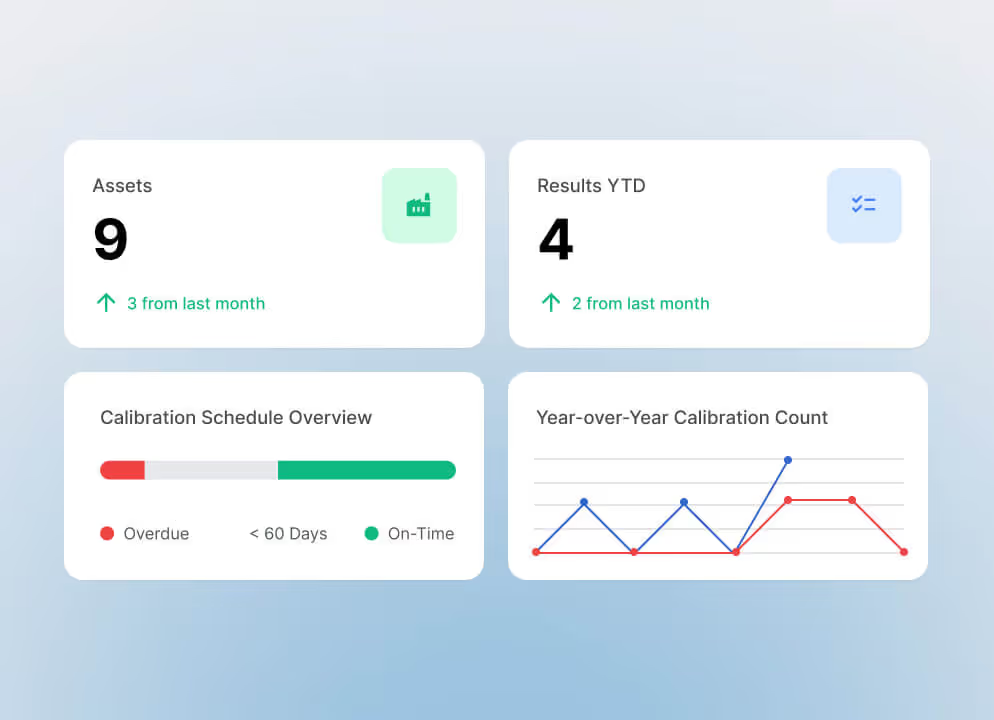
Establishing a schedule for calibration activities is imperative in making sure that your equipment is calibrated on time. From setting reminders for upcoming calibration events and initiating procedures for handling missed or overdue calibrations; a well-designed schedule can verify that your equipment is always performing accurately and consistently. This advances your efforts in further streamlining your processes. - Monitor performance
Once your calibration management software is implemented, it is important to monitor its performance to make certain that it is meeting your needs and expectations. By tracking metrics such as the number of calibrations performed, the time required to complete calibrations, and the number of overdue calibrations, you can identify areas for improvement and make informed decisions about how to optimize your calibration processes. - Continuous improvement
Most importantly, calibration management is an ongoing process that requires continuous improvement. This means constantly evaluating and improving your processes and software to optimize performance and ensure compliance with changing regulations and standards. By regularly assessing your calibration practices and evolving with the current business landscape, you can achieve better results and stay ahead of the competition.
Prime Technologies – Why choose us for calibration management
Your enterprise requires the help of a trusted service provider with the experience and brand reputation to match to guarantee a smooth transition when integrating and using your calibration management software.
Prime Technologies is the CMS provider of choice with more than 30 years of experience and leading solutions in the calibration management space.
A global leader in developing calibration solutions, we provide our clients with data-centric, holistic platforms that improve, integrate, and formalize your calibration maintenance management endeavors. Our flagship solution, ProCal, and our cloud-based offering, ProCalX, are both top of the line products that will prove to maximize your ROI. In addition to our product line, we provide training, best practices, and implementation strategies that ensure your CMS integration is seamless.
And now, following our acquisition by TMA Systems, we are more equipped than ever before to integrate state-of-the-art asset management systems into every facet of our client’s operations.


Related resources
Related resources
You’ve seen what’s possible—connect with us to learn how TMA Systems can support your goals beyond the event.
You’ve read the insights, now see how TMA Systems helps teams put them into practice.


From ideas to impact
You’ve read the insights, now see how TMA Systems helps teams put them into practice.
From screen to solution
You’ve watched what’s possible, now see how TMA Systems works for your organization.
From results to reality
You’ve seen the success, now discover how TMA Systems can deliver it for your team.
From insight to implementation
You’ve explored the strategies, now see how we can bring them to life across your real facilities.
From insight to implementation
You’ve explored the strategies, now see how we can bring them to life across your real facilities.