
Modernizing a regulated calibration program without sacrificing control
In this post
%20(1).avif)

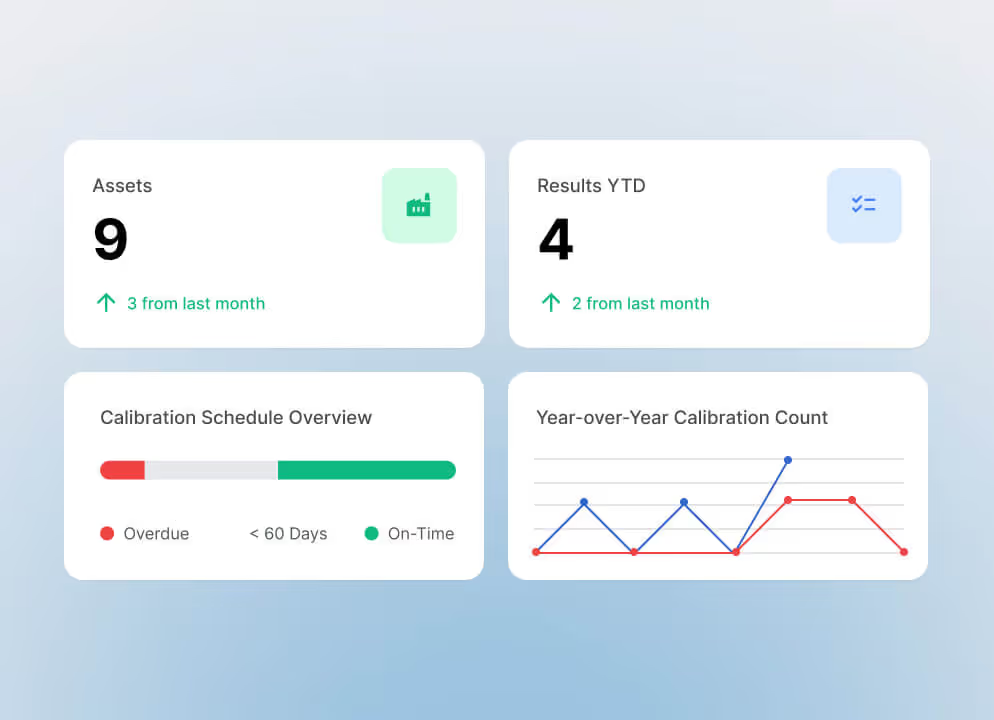

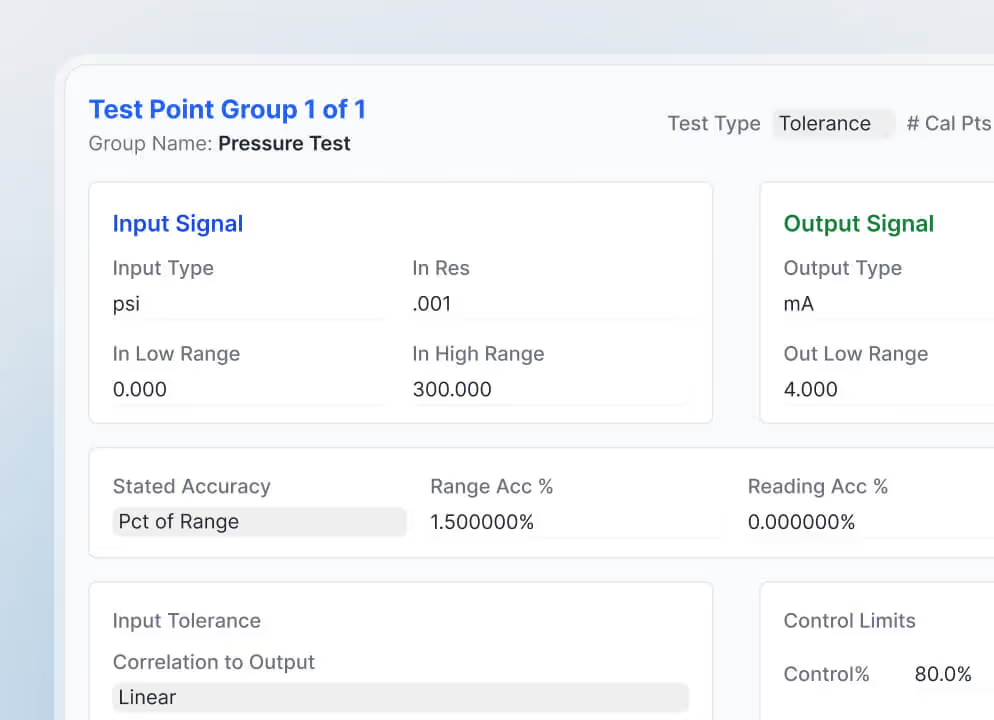

Modernization is often described in terms of speed: faster processes, easier access to information, and less manual work. In a regulated calibration program, however, speed is only part of the objective; the organization must also preserve control.
Every calibration record may need to demonstrate what work was performed, who performed it, what standard was used, what results were recorded, who reviewed the work and whether the instrument remained within its approved tolerance. If a process changes, the organization must be confident that traceability, data integrity, and regulatory compliance have not been weakened along the way.
That can make modernization feel risky. Teams may continue relying on familiar spreadsheets, paper records, or aging software because those processes are understood, even when they are inefficient.
But modernizing a calibration program does not require choosing between efficiency and control. When approached carefully, modernization can strengthen both.
Begin with the process, not the technology
A successful modernization initiative begins by understanding how calibration work happens today.
How are activities scheduled? How do technicians receive assignments and procedures? Where are as-found and as-left results recorded? How are test standards documented? Who reviews completed work? What happens when an instrument is found outside tolerance?
Mapping the current process exposes more than inefficiencies. It also identifies the controls that must be preserved, the informal workarounds teams have developed, and the points where important information can be lost.
This step is especially important when moving away from a long-established system. An older process may contain years of organizational knowledge that has never been formally documented. Replacing the technology without understanding that knowledge can create new gaps.
The goal should not be to reproduce every legacy step. It should be to determine which controls are essential, which activities can be simplified, and which manual practices can be eliminated entirely.

Establish clear requirements for data integrity
Regulated calibration programs depend on trustworthy records. Modernization must therefore address how data is created, changed, reviewed, stored, and retrieved.
Depending on the organization and applicable requirements, this may include electronic signatures, access controls, audit trails, approval of workflows, and complete calibration of histories. Life sciences organizations may also need to consider requirements such as 21 CFR Part 11 and the validation of computerized systems.
These requirements should be defined before selecting or configuring a new platform.
Questions to address include:
- Which users should be allowed to create, edit, review, or approve records?
- How will the system document changes to controlled information?
- What information must be retained for each calibration event?
- How will electronic records and signatures be protected?
- How quickly must records be retrievable during an audit?
- How will the organization verify that the system performs as intended?
Treating these controls as foundational requirements prevents compliance from becoming an afterthought late in the project.
Standardize workflows without ignoring operational reality
One of the greatest benefits of modern calibration management is the ability to establish consistent workflows. Organizations evaluating modernization initiatives should also understand whether a dedicated calibration platform or a broader asset management system is the right fit. What does your calibration program actually need?
Standardization helps ensure that technicians follow approved procedures, required information is captured, and results receive the appropriate review. It is particularly valuable for organizations operating across multiple departments, facilities, or regions.
However, standardization should not mean forcing every type of calibration into one inflexible process. A pressure transmitter in a chemical plant, a temperature sensor in food production, and a balance in a regulated laboratory may require different procedures, tolerances and approval paths.
The right system should provide a common framework while allowing workflows to reflect the instrument, risk level, location, and applicable regulatory requirements.
This balance gives leaders greater oversight without preventing technicians from doing the work in the way the asset requires.
Reduce manual entry at the source
Modernization delivers its greatest value when it removes manual steps rather than simply moving them onto a screen.
Consider a technician using a documenting process calibrator. If results are captured by the device but later typed into a spreadsheet or software record, the process remains slow and vulnerable to transcription errors.
Direct integration between calibration software and compatible calibrators allows results to move electronically from the worksite into the calibration record. The system can retain readings, instrument details, and information about the standards used without requiring the technician to enter everything again.
This improves efficiency, but it also strengthens control. Reducing manual transcription helps protect the accuracy and consistency of data on which compliance decisions depend.
Build review and exception handling into the workflow
A controlled calibration program must do more than collect results. It must ensure that those results receive appropriate attention.
Modern software can introduce a defined review step between the entry of results and final completion of the record. Supervisors or quality personnel can verify the work before it becomes part of the approved history.
Exception handling is equally important. When a result falls outside specification, the system should make the condition visible immediately. The organization may need to evaluate the instrument’s previous performance, determine whether products or processes were affected, and document corrective action.
When these activities depend on email, memory, or disconnected forms, follow-up can be inconsistent. Building approvals, alerts and documented exception handling into the calibration process creates a stronger and more defensible record.
Plan data migration carefully
Historical calibration data is not simply old information. It may be necessary for audits, trend analysis, investigations, and decisions about instrument performance.
Before migrating to a new platform, organizations should determine which records must be transferred, how the data will be cleaned, and how accuracy will be verified. Duplicate instruments, inconsistent naming, missing fields, and outdated ownership information should be addressed before they are imported into the new system.
Not every piece of legacy data must necessarily be migrated in the same way. Some records may need to remain actively searchable, while others can be retained in a controlled archive.
A documented migration plan protects continuity and ensures that modernization does not sever the instrument’s historical record.
Connect calibration with the broader technology environment
Calibration rarely operates in isolation. Instrument information may also exist within a computerized maintenance management system, enterprise asset management platform, enterprise resource planning system, or laboratory information management system.
Without integration, teams may maintain duplicate asset records, manually transfer schedules, or struggle to determine which platform contains the most current information.
A modern calibration platform should fit into the organization’s broader technology environment. Integration can allow calibration-specific procedures, results and traceability to remain in the system designed to manage them while relevant asset and work information flows to the other platforms that need it.
This creates a connected process without asking for a general-purpose system to perform every specialized calibration function.
Modernize in manageable stages
Organizations do not need to transform every site, instrument, or workflow at once.
A phased approach can begin with a specific facility, team, or group of instruments. This allows the organization to test workflows, validate configurations, train users, and resolve issues before expanding the system more broadly.
Success should be measured against defined objectives. These might include fewer overdue calibrations, less manual data entry, faster record retrieval, more consistent approvals, or better visibility into out-of-tolerance events.
Early results also help demonstrate value to stakeholders and build confidence among users who may be accustomed to the previous process.
Greater efficiency can create greater control
ProCalX is designed around this principle. The cloud-based platform centralizes instruments, schedules, results, and reports while supporting direct data capture from Fluke Documenting Process Calibrators. Structured approvals, out-of-tolerance alerts, role-based access and integrations with other business systems help organizations modernize without losing oversight of the calibration process.
The technology, however, is only one part of the transition. Strong modernization also requires clear requirements, careful migration, appropriate validation, user training, and ownership of the new workflows.
The objective is not modernization for its own sake. It is a calibration program that is easier to operate, easier to oversee, and better prepared to demonstrate control when regulators, auditors, or customers ask for evidence.
For regulated organizations, that is the real measure of progress; not simply replacing an older process, but creating one that is more accurate, traceable, and resilient than the process it replaced.
Related resources
From ideas to impact
You’ve read the insights, now see how TMA Systems helps teams put them into practice.