
Calibration Management Software vs. CMMS, EAM and ERP
In this post
%20(1).avif)



What does your calibration program actually need?
A system can show that a calibration happened without managing the calibration process itself. That distinction matters when organizations evaluate whether their current technology can provide the procedures, results, traceability, and control their calibration program requires.
Many organizations already rely on a computerized maintenance management system (CMMS), enterprise asset management (EAM) platform, or enterprise resource planning system to support operations. Can that existing platform manage calibration, or is dedicated calibration management software needed?
For basic reminders and certificate storage, an existing system may be enough. But regulated, instrument-dense or process-driven operations often need more than a recurring work order. They need to manage how calibration is planned, performed, documented, reviewed, and approved.
Understanding where each system fits can help organizations avoid duplicate technology without overlooking critical calibration requirements.
What does a CMMS do?
A Computerized Maintenance Management System or CMMS manages maintenance work, including work orders, preventive maintenance schedules, asset history, spare parts and technician workloads.
It may also schedule calibration as a recurring activity and store a certificate with the asset record. For a small or relatively simple program, that may be enough.
The limitation appears when the organization must manage the calibration itself, not merely record that it occurred. A completed work order may confirm that someone performed the task, but it may not define test points and tolerances, capture as-found and as-left results, establish test standard traceability, control review and approval or support an immediate response to an out-of-tolerance result.
How are EAM and ERP systems different?
An Enterprise Asset Management or EAM platform manages assets across their lifecycle, including maintenance, planning, performance, risk, cost and replacement decisions.
An Enterprise Resource Planning or ERP system connects broader business functions such as finance, purchasing, inventory and supply chain. Platforms such as SAP may also include asset and maintenance capabilities.
Both can provide valuable enterprise-wide visibility into what assets an organization owns, where they are located, what they cost, and how they affect operations.
However, enterprise breadth is not the same as calibration depth. An EAM or ERP may contain an instrument to record and generate a calibration-related work order without providing the specialized workflows needed to plan, perform, document and review the calibration event.
What does calibration management software add?
Calibration management software is purpose-built to manage the complete calibration process.
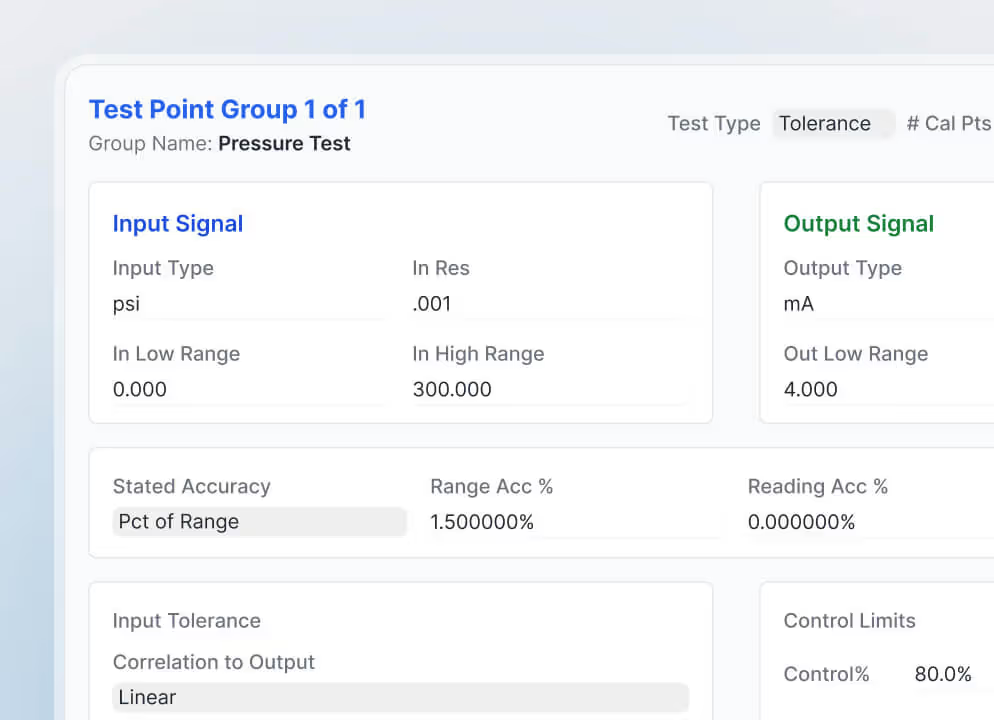
It can define the procedure and test points for an instrument, establish tolerances, document the measurement standard used, and capture the results of the work. It also maintains the traceability chain connecting those standards to recognized national or international standards.
A dedicated platform can record as-found and as-left results, generate calibration certificates, preserve complete instrument histories, and identify performance trends over time. It may also support review and approval of workflows, audit trails, electronic signatures and immediate alerts when results fall outside specification.
For technicians using documenting process calibrators, integration is another important difference. Calibration software can communicate directly with compatible devices, sending test information to the calibrator, and receiving completed results without manual transcription.
These are not simply additional fields in an asset record. Together, they create a controlled process for demonstrating that an instrument was tested correctly, against the proper standard, within the required tolerance and with appropriate review.

When might an existing CMMS, EAM or ERP be enough?
Not every organization needs a specialized calibration platform.
An existing system may be sufficient when the organization manages only a small number of instruments; calibrations are performed entirely by an outside provider, and the internal requirement is limited to tracking due dates and storing certificates.
It may also be appropriate when the instruments present relatively low risk; the calibration procedures are simple, and the organization is not subject to demanding traceability or electronic-record requirements.
In those situations, adding another system could create more complexity than value.
The decision changes as the calibration program grows. A dedicated platform becomes more important when an organization has a large or expanding instrument inventory, internal calibration technicians, multiple sites, complex procedures, tight tolerances or significant regulatory exposure.
The need is also stronger when out-of-tolerance instruments could affect product quality, process consistency, safety, or environmental performance.
Signs that a general-purpose system is no longer enough
The most useful test is not whether an existing platform has a field labeled “calibration.” The better question is whether it supports the full level of control the calibration program requires.
An organization may be outgrowing its current approach if technicians still record readings on paper, manually transfer results from calibrators or build certificates outside the system. The same is true if calibration procedures, standards, and results must be stored in separate files.
Other warning signs include difficulty reconstructing instrument history, inconsistent workflows across sites, limited visibility into overdue work and no immediate process for addressing out-of-tolerance results.
Audit preparation is another strong indicator. If teams must collect records from spreadsheets, shared drives, emails, and the CMMS before they can respond to an auditor, the organization may have maintenance tracking without true calibration management.
Do you need to choose one system?
In many cases, the best answer is not one system instead of another. It is a connected combination of systems, each performing the job it was designed to do.
The CMMS or EAM can remain the primary platform for asset maintenance, work planning and reliability. The ERP can continue managing financial, purchasing, and enterprise data. Calibration management software can provide the specialized procedures, results, standards traceability, approvals and certificates required by the calibration program.
Integration allows relevant information to move between them. A maintenance platform may initiate or display calibration work, while the calibration system manages execution and returns status or results. Shared asset information can remain aligned without requiring users to maintain duplicate records manually.
This approach creates a clearer system of record for each type of information while giving departments access to the data they need.
What should organizations evaluate?
Before deciding whether to add calibration management software, organizations should examine the real requirements of their program.
Start with the instruments. How many are being managed? How complex are the procedures? Are technicians working with process instrumentation such as pressure, temperature, flow, or electrical devices? Are documenting calibrators already in use?
Then consider risk and compliance. What could happen if an instrument operated outside tolerance? Would the organization need to evaluate affected products or processes? What records would an auditor expect to review? Are electronic signatures, audit trails, or validated workflows required?
Finally, assess the current workload. How much time is spent entering results, searching for records, preparing certificates, tracking approvals, and reconciling information across systems?
The answers will reveal whether the organization needs basic scheduling or a complete calibration process.
Choosing specialization without creating another silo
ProCalX is designed to provide specialized calibration depth while connecting with the organization’s broader technology environment.
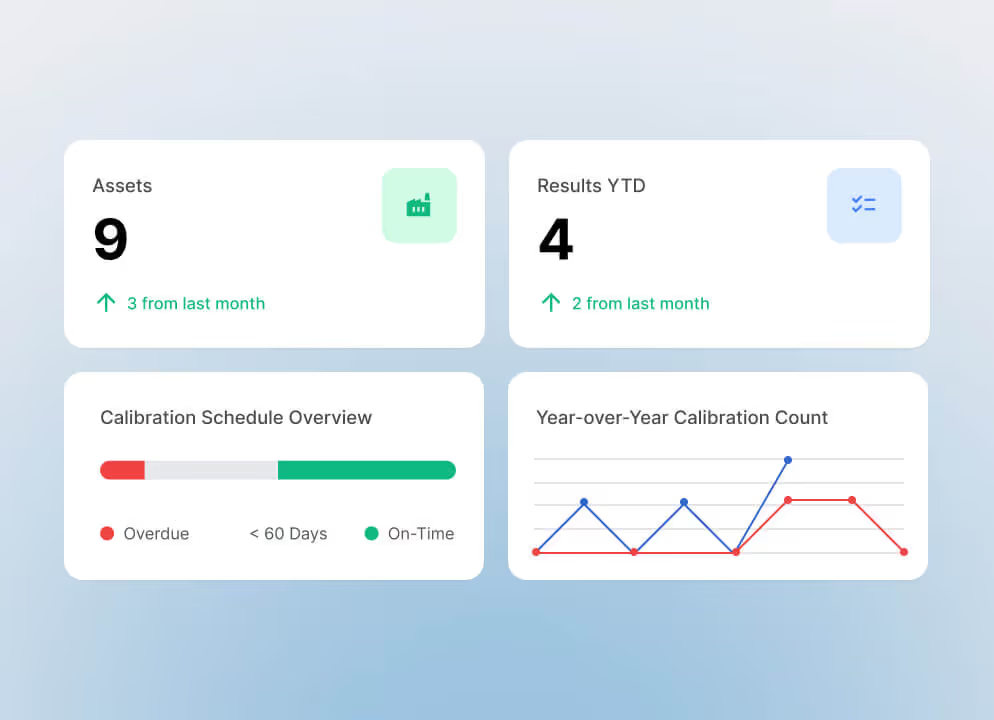
The cloud-based platform centralizes instrument records, schedules, procedures, results, and reporting. It supports direct integration with Fluke Documenting Process Calibrators, structured approvals, out-of-tolerance alerts, and connections with CMMS, EAM, ERP, LIMS, and reporting platforms.
This allows organizations to strengthen calibration management without replacing systems that continue to serve important maintenance and business functions.
Ultimately, the choice is not calibration management software versus CMMS, EAM or ERP. It is a decision about how much calibration depth the organization needs, and which combination of systems can deliver that depth without sacrificing visibility across the enterprise.
For a simple program, the existing platform may be enough. For a complex, regulated or growing program, dedicated calibration management software can provide the control, traceability and efficiency that a general-purpose system was never designed to deliver.
Related resources
From ideas to impact
You’ve read the insights, now see how TMA Systems helps teams put them into practice.