



Why Good Alarm Management is Good Risk Management
In this post
%20(1).avif)
1
2
3
Effective facilities management is a cornerstone of real-time risk management. By leveraging asset maintenance insights and alarm data, facility managers enhance resilience, safety, and business continuity across every ERM domain.
Good Facilities Management is Good Risk Management
Facility Managers should Recognize that they are Risk Managers
Why It Matters: Facilities management (FM) performance significantly impacts an institution’s ability to manage risk. You know this to be TRUE if you’ve ever described your daily activities as “fighting one fire after another”. It is why risk management is considered a core competency of Facilities Management professionals, according to the International Facility Management Association (IFMA).
“The responsibility for emergency preparedness, facility resilience and business continuity is central to the role of facility managers, who have the primary concern for the health and safety of the built environment and who serve as stewards of the built environment.” IFMA – “11 Core Competencies of Facilities Management”.
Risk Management Framework (Overview)
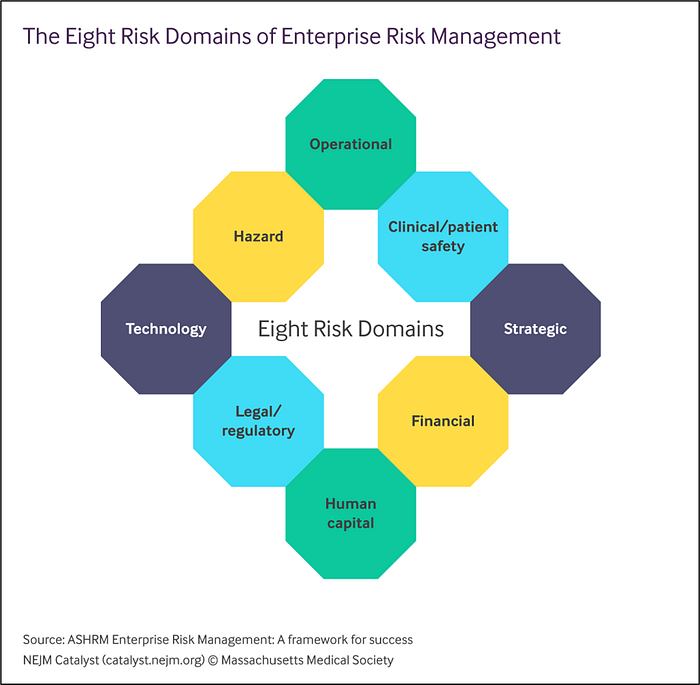
The American Society for Health Care Risk Management (ASHRM) has defined a framework for documenting and managing risk that is very useful for discussing FM impact on risk. ASHRM’s Enterprise Risk Management (ERM) framework defines eight risk domains.
How Facilities Management Impacts Risk Management
- The Operational Risk domain covers many top-of-mind elements of FM, including Equipment Maintenance and Adverse Event Management.
- Facility management performance can impact all eight risk domains.
- Some events, such as a work-related employee injury, fall into more than one risk category (Financial, Human Capital).

Next Steps
IFMA and ASHRM have many resources available to help you grow your risk management competency.
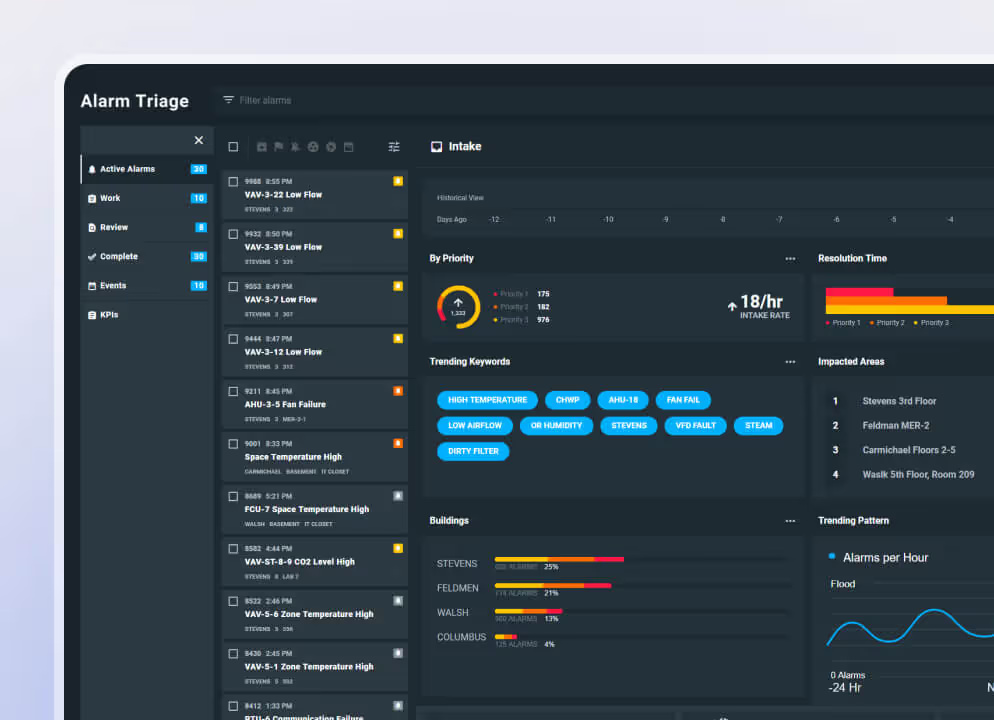
When you are ready to put it into practice, consider reaching out to Virtual Facility. We can help you identify your critical assets, spaces, and alarms by considering potential risk. Our platform curates your alarm data to build you a view focused on critical events / issues (as defined by you). Awareness, prioritization, and mitigation of high-risk facility issues…this is Real-Time Risk Management.
- IFMA names risk management as a core competency for facilities management professionals, tying daily “firefighting” directly to institutional risk control.
- ASHRM’s Enterprise Risk Management framework shows that facility operations—from equipment maintenance to adverse event management—touch every one of the eight risk domains.
- By curating alarm data around critical assets, spaces, and events, facilities teams move from reacting to issues to practicing real-time risk management across the enterprise.

Download the eBook now
You’re all set!
Your eBook is on its way to your inbox. We hope it brings fresh insights and practical takeaways to help you get more from your maintenance operations.
Explore related resources
.avif)
.svg)
Effective facilities management is a cornerstone of real-time risk management. By leveraging asset maintenance insights and alarm data, facility managers enhance resilience, safety, and business continuity across every ERM domain.
Good Facilities Management is Good Risk Management
Facility Managers should Recognize that they are Risk Managers
Why It Matters: Facilities management (FM) performance significantly impacts an institution’s ability to manage risk. You know this to be TRUE if you’ve ever described your daily activities as “fighting one fire after another”. It is why risk management is considered a core competency of Facilities Management professionals, according to the International Facility Management Association (IFMA).
“The responsibility for emergency preparedness, facility resilience and business continuity is central to the role of facility managers, who have the primary concern for the health and safety of the built environment and who serve as stewards of the built environment.” IFMA – “11 Core Competencies of Facilities Management”.
Risk Management Framework (Overview)
The American Society for Health Care Risk Management (ASHRM) has defined a framework for documenting and managing risk that is very useful for discussing FM impact on risk. ASHRM’s Enterprise Risk Management (ERM) framework defines eight risk domains.
How Facilities Management Impacts Risk Management
- The Operational Risk domain covers many top-of-mind elements of FM, including Equipment Maintenance and Adverse Event Management.
- Facility management performance can impact all eight risk domains.
- Some events, such as a work-related employee injury, fall into more than one risk category (Financial, Human Capital).
Next Steps
IFMA and ASHRM have many resources available to help you grow your risk management competency.
When you are ready to put it into practice, consider reaching out to Virtual Facility. We can help you identify your critical assets, spaces, and alarms by considering potential risk. Our platform curates your alarm data to build you a view focused on critical events / issues (as defined by you). Awareness, prioritization, and mitigation of high-risk facility issues…this is Real-Time Risk Management.
- IFMA names risk management as a core competency for facilities management professionals, tying daily “firefighting” directly to institutional risk control.
- ASHRM’s Enterprise Risk Management framework shows that facility operations—from equipment maintenance to adverse event management—touch every one of the eight risk domains.
- By curating alarm data around critical assets, spaces, and events, facilities teams move from reacting to issues to practicing real-time risk management across the enterprise.
Register for your free webinar
You’re all set!
Your webinar is on its way to your inbox. We hope it brings fresh insights and practical takeaways to help you get more from your maintenance operations.
Explore related resources
.svg)
.svg)

.avif)

Good Facilities Management is Good Risk Management
Facility Managers should Recognize that they are Risk Managers
Why It Matters: Facilities management (FM) performance significantly impacts an institution’s ability to manage risk. You know this to be TRUE if you’ve ever described your daily activities as “fighting one fire after another”. It is why risk management is considered a core competency of Facilities Management professionals, according to the International Facility Management Association (IFMA).
“The responsibility for emergency preparedness, facility resilience and business continuity is central to the role of facility managers, who have the primary concern for the health and safety of the built environment and who serve as stewards of the built environment.” IFMA – “11 Core Competencies of Facilities Management”.
Risk Management Framework (Overview)
The American Society for Health Care Risk Management (ASHRM) has defined a framework for documenting and managing risk that is very useful for discussing FM impact on risk. ASHRM’s Enterprise Risk Management (ERM) framework defines eight risk domains.
How Facilities Management Impacts Risk Management
- The Operational Risk domain covers many top-of-mind elements of FM, including Equipment Maintenance and Adverse Event Management.
- Facility management performance can impact all eight risk domains.
- Some events, such as a work-related employee injury, fall into more than one risk category (Financial, Human Capital).
Next Steps
IFMA and ASHRM have many resources available to help you grow your risk management competency.
When you are ready to put it into practice, consider reaching out to Virtual Facility. We can help you identify your critical assets, spaces, and alarms by considering potential risk. Our platform curates your alarm data to build you a view focused on critical events / issues (as defined by you). Awareness, prioritization, and mitigation of high-risk facility issues…this is Real-Time Risk Management.


Related resources
Related resources
You’ve seen what’s possible—connect with us to learn how TMA Systems can support your goals beyond the event.
You’ve read the insights, now see how TMA Systems helps teams put them into practice.


From ideas to impact
You’ve read the insights, now see how TMA Systems helps teams put them into practice.
From screen to solution
You’ve watched what’s possible, now see how TMA Systems works for your organization.
From results to reality
You’ve seen the success, now discover how TMA Systems can deliver it for your team.
From insight to implementation
You’ve explored the strategies, now see how we can bring them to life across your real facilities.
From insight to implementation
You’ve explored the strategies, now see how we can bring them to life across your real facilities.