



Optimizing Facility Management with Alarm and Event Management Software
In this post
%20(1).avif)
1
2
3
Alarm Triage + FDD: Master reactive ops first, then optimize. Chasing “proactive only” maintenance can backfire if you ignore the basics: BAS alarms are your first line of defense, FDD is the optimizer that comes after.
“Operations and Maintenance teams need to stop being reactive and start being proactive” — said many a Facility Management professional.
Ditching reactive maintenance sounds alluring, but it’s not a simple switch. Overlooking the vital role of Building Automation System (BAS) alarms in favor of proactive measures like Fault Detection & Diagnostic (FDD) systems risks weakening your first line of defense. BAS alarms provide real-time alerts to critical issues that demand immediate attention. Ignoring them while focusing on preventive/predictive maintenance can lead to catastrophic consequences far exceeding the potential savings brought about by FDD systems.
Finding the ideal balance — leveraging both for swift reaction and future prevention — is the key to unlocking true operational excellence. This article compares a typical FDD system and Virtual Facility’s Alarm Triage tool, emphasizing their complementary roles.
The End of Reactive Maintenance
While the benefits of doing more proactive maintenance are widely recognized (refer to Figure 1), so too is the business impact of overlooking a critical BAS alarm. This oversight could lead to unplanned downtime in critical spaces, loss of research, and adverse effects on patients or occupants.

Figure 1: The Benefits of Performing more Proactive Maintenance
The reality is that complete elimination of reactive maintenance is unattainable. Equipment failures occur unexpectedly, and some assets are best managed by allowing them to run to failure.
Instead of ditching reactive maintenance, a better approach is to master it. Swift, effective reactive response (thanks to efficient BAS alarms) frees up time for proactive approaches like FDD. Prioritize reactive efficiency to create time for planned maintenance naturally (think reduction in repeat work). It’s a transition, not a switch. Aiming for a balanced mix of reactive and proactive efforts is a realistic and beneficial goal.
Each has their Role — Understand the Difference
While both BAS alarms and FDD systems aim to improve facility management, they function differently as shown in the comparison of Figure 2.
BAS alarms act as the “firefighters,” providing immediate alerts to critical issues demanding swift action. Think blaring sirens calling for reactive response.
FDD systems, on the other hand, are the “detectives,” constantly analyzing data to identify potential problems before they erupt. Imagine them quietly uncovering hidden clues to prevent future breakdowns. Both are vital, but for different purposes: one reacts efficiently, the other proactively prevents.
“FDD systems help prioritize efforts toward optimal system performance, as opposed to reactively fixing things only when they are broken.” [Berkeley]

Figure 2: Summary Comparison of Alarm Triage (BAS Alarms) vs. Fault Detection & Diagnostic Systems
Data Sources
A key distinction between BAS alarms and FDD faults lies in their data sources and urgency levels.
BAS alarms signal real-time deviations of an individual BAS point requiring immediate operator action to prevent potentially significant consequences.
FDD faults are generated in the FDD system based on logic that relates multiple BAS points for evaluation against rule-based or model-based diagnostics. They indicate opportunities for optimizing performance, often allowing for planned and scheduled maintenance.
FDD: Purpose and Usage
“Fault detection and diagnostic (FDD) tools are the software that automates the process of detecting faults and suboptimal performance of building systems and helps to diagnose their potential causes…
(FDD) Analytics can identify issues before they grow into occupant complaints or equipment failures.” [Berkeley]
FDD systems help you optimize performance (energy usage and operation of HVAC equipment) through the scheduling of planned work in your Computerized Maintenance Management System (CMMS). FDD faults are ranked in importance based on time active, maintenance impact, or estimated energy and cost savings. They are not designed for real-time monitoring and response which means they are not ideal for monitoring critical equipment for response to urgent facility issues.
Virtual Facility Alarm Triage Purpose and Usage
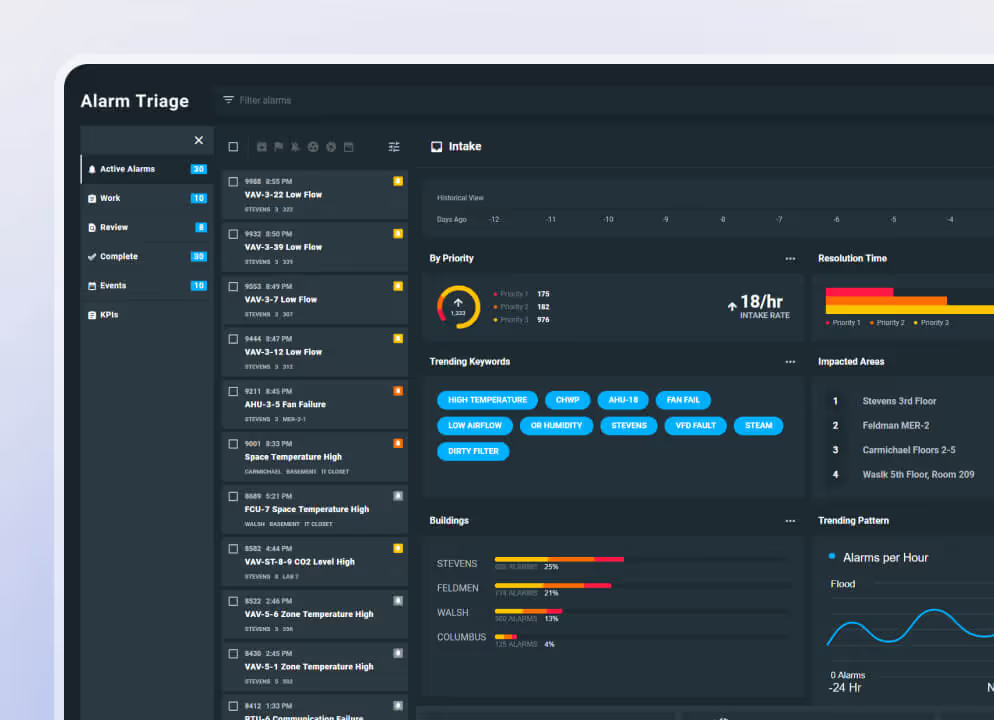
Virtual Facility’s Alarm Triage tool helps you manage operational risk ensuring that your team is always responding to the most important facility issue. Alarms from different systems are consolidated in the platform, parsed and grouped to add context, and then presented via single view of critical alarms, equipment, and spaces. Alarms (and their associated events) are ranked based on risk considering likelihood, impact of consequence, and time to event. When ingested into Alarm Triage, BAS alarms can be used to assign and coordinate unplanned work in your CMMS (triggering a work order). An “automatic Q/A” function tells you whether the work was completed successfully.
Monitoring and Response
Monitoring and response strategies also differ between alarms and faults. Alarms demand continuous monitoring for prompt reaction to critical situations, while faults permit periodic checks, often on a weekly basis [Berkeley].
“Faults detected through FDD are generally not the type needing immediate attention, but rather, issues that allow for planned and scheduled maintenance.” [Iowa]
Impact of Patient / Occupant Safety
In healthcare, missing a critical BAS alarm isn’t just a financial risk, it’s a safety risk. Ignoring it could jeopardize patients, staff, or visitors (NFPA 99: Category 1–2). On the other hand, FDD faults, while important, might cause discomfort at worst (NFPA 99: Category 3). Think fire alarm vs. drafty room. Both matter, but the BAS alarm screams “immediate action” for safety, while FDD whispers “long-term comfort improvement.” Master both for total protection and well-being.
“Since notification of emergency-type faults are generally available through the BAS directly (e.g., a chiller is off-line), the issues found through an FDD may not be urgent from a safety and comfort perspective.” [Berkeley]
Business / Financial Impact
BAS alarms are your urgent calls to action, preventing immediate issues with big consequences. Think $$$ to $$$$ fixes for burst pipes or failing chillers.
FDD faults are whispers of future trouble, offering opportunities to optimize for smaller, proactive savings ($ to $$). Think better HVAC scheduling, temperature tweaks, and eliminating simultaneous heating/cooling. Both are important, but BAS alarms demand your immediate attention first.
Missing an alarm that can prevent an unplanned shutdown of an operating room (OR) may “cost” $10,000 — $50,000 / hour, while a simultaneous heating/cooling fault may cost $10 — $100/hr. Loss of lab specimens from a missed cryo-freezer alarm could cost upwards of $500,000 for a single event. Addressing a leaking chilled water valve, just one example from Figure 3, could save you $11,291 annually.
![Figure 3. Example of FDD Fault Displayed Information Ref [ Figure 4 from FDD Study UC Davis]](https://cdn.prod.website-files.com/684fe1193816f269101b5b38/696dbec1f456c476127d108f_1*BWiIdgzRC_J3WbCe__4sag.png)
Figure 3. Example of FDD Fault Displayed Information Ref [ Figure 4 from FDD Study UC Davis]
Addressing numerous FDD faults can result in accumulation of significant savings over time. The University of Iowa reported an impressive $780,000 in energy savings during the first year of implementing Fault Detection and Diagnostic (FDD) systems [Iowa].
However, the potential impact of missing a critical BAS alarm cannot be understated. Neglecting a critical HVAC alarm, particularly in environments housing sensitive research samples or medical materials, can negate years of FDD energy savings in a single incident.
Real-world examples highlight the severe consequences of disregarding critical alarms. For instance, the loss of temperature control in a chemistry-biology research lab at Rensselaer Polytechnic Institute resulted in the destruction of decades of scientific research, incurring a cost exceeding $1 million [Ref Janitor]. Similarly, alarming failures at an Ohio Fertility Clinic led to the loss of eggs and embryos, impacting individuals’ family planning and causing the hospital to temporarily lose its CMS accreditation [Ohio Fertility Clinic].
Impact on the FM Workforce
For many optimization tools the limiting factor is not the technology, rather it is having the personnel and the time to act upon the information. Understanding and planning for the workforce impact is important to garnering maximum benefit.
While Alarm Triage enhances the effectiveness of operators and dispatchers in responding to BAS alarms, additional resources may be necessary for the efficient use of FDD systems. Specialized engineers may be required to review and prioritize identified faults, diagnose root causes, and prescribe corrective actions. The Berkeley Labs Analytics study estimated this effort to be around 8 hours per building per month, emphasizing the need for dedicated personnel. They also found that the typical FDD user reviews their results on a weekly basis (not in real-time) because of constraints on Operations & Maintenance (O&M) staff time. [Berkeley]
A common challenge is the lack of staff time to review the FDD dashboards and reports, and to investigate and implement recommended findings. [Berkeley]
Getting Started — Alarms are Foundational, Faults are Optional
Both types of systems can be useful and beneficial to facility management teams.
Alarms should be viewed as foundational, being essential for facility operation, while faults are considered optional. You don’t need them to operate a facility. Consequently, it is recommended to prioritize alarm management (reactive operations) before delving into FDD systems (proactive operations). Focusing on FDD without establishing a minimum competency in alarm management exposes you to significant risk, particularly in critical facilities where a missed alarm could nullify years of FDD savings in a single event.
The Importance of Effective Alarming
Technology innovation has made BAS alarms seemingly “free” contributing to alarm overload, nuisance alarms and an influx of too many “critical” alarms. Despite these shortcomings, we should not overlook the fundamental purpose of BAS alarms. A good BAS alarm provides an opportunity for O&M teams to address an equipment failure before it escalates into more severe consequences, such as occupant impact, loss of research, or shutdown of a revenue-generating space.
Setting the Vision for the Future
The strategic use of both BAS alarms and Fault Detection and Diagnostic (FDD) faults is paramount for achieving success in facility management. Integrating FDD faults into Alarm Triage, treating them akin to BAS alarms, creates a unified view for monitoring and assigning both reactive and proactive maintenance tasks (Figure 4). This approach enables operators and dispatchers to respond in real-time to faults, contingent on the absence of critical alarms taking precedence. Furthermore, it facilitates the feedback loop on the successful completion of assigned tasks.
Work orders within the CMMS can be triggered manually or automatically from Alarm Triage, covering both FDD faults and BAS alarms. Leveraging analytics aids in identifying macro and micro trends in both reactive and proactive maintenance efforts.

Figure 4. Integrated System for Monitoring and Responding to BAS Alarms and FDD Faults Holistically (Virtual Facility)
Take Action — Improve Reactive Operations and Mitigate Risk by Elevating Your Alarm System’s Effectiveness
Explore how to seamlessly integrate BAS alarms with your FDD system by reaching out to us at Virtual Facility. Our suite of tools is designed to transform your alarm system into a valuable O&M tool, mitigating operational risks rather than being a source of problems. Whether through a call or a demo request, discover how we can assist you in optimizing your facility management processes.

Thumbnail — Comparison of Alarm Triage (BAS Alarming) vs FDD Systems
- BAS alarms are essential for safe facility operation; FDD is powerful but optional and should only come after effective alarm management.
- Missing a critical HVAC alarm that shuts down an operating room can “cost” $10,000–$50,000 per hour in lost operation.
- A single failure to act on a critical BAS alarm (like a cryo-freezer or research lab incident) can wipe out years of FDD-driven energy savings in one event.

Download the eBook now
You’re all set!
Your eBook is on its way to your inbox. We hope it brings fresh insights and practical takeaways to help you get more from your maintenance operations.
Explore related resources
.avif)
.svg)
Alarm Triage + FDD: Master reactive ops first, then optimize. Chasing “proactive only” maintenance can backfire if you ignore the basics: BAS alarms are your first line of defense, FDD is the optimizer that comes after.
“Operations and Maintenance teams need to stop being reactive and start being proactive” — said many a Facility Management professional.
Ditching reactive maintenance sounds alluring, but it’s not a simple switch. Overlooking the vital role of Building Automation System (BAS) alarms in favor of proactive measures like Fault Detection & Diagnostic (FDD) systems risks weakening your first line of defense. BAS alarms provide real-time alerts to critical issues that demand immediate attention. Ignoring them while focusing on preventive/predictive maintenance can lead to catastrophic consequences far exceeding the potential savings brought about by FDD systems.
Finding the ideal balance — leveraging both for swift reaction and future prevention — is the key to unlocking true operational excellence. This article compares a typical FDD system and Virtual Facility’s Alarm Triage tool, emphasizing their complementary roles.
The End of Reactive Maintenance
While the benefits of doing more proactive maintenance are widely recognized (refer to Figure 1), so too is the business impact of overlooking a critical BAS alarm. This oversight could lead to unplanned downtime in critical spaces, loss of research, and adverse effects on patients or occupants.
Figure 1: The Benefits of Performing more Proactive Maintenance
The reality is that complete elimination of reactive maintenance is unattainable. Equipment failures occur unexpectedly, and some assets are best managed by allowing them to run to failure.
Instead of ditching reactive maintenance, a better approach is to master it. Swift, effective reactive response (thanks to efficient BAS alarms) frees up time for proactive approaches like FDD. Prioritize reactive efficiency to create time for planned maintenance naturally (think reduction in repeat work). It’s a transition, not a switch. Aiming for a balanced mix of reactive and proactive efforts is a realistic and beneficial goal.
Each has their Role — Understand the Difference
While both BAS alarms and FDD systems aim to improve facility management, they function differently as shown in the comparison of Figure 2.
BAS alarms act as the “firefighters,” providing immediate alerts to critical issues demanding swift action. Think blaring sirens calling for reactive response.
FDD systems, on the other hand, are the “detectives,” constantly analyzing data to identify potential problems before they erupt. Imagine them quietly uncovering hidden clues to prevent future breakdowns. Both are vital, but for different purposes: one reacts efficiently, the other proactively prevents.
“FDD systems help prioritize efforts toward optimal system performance, as opposed to reactively fixing things only when they are broken.” [Berkeley]
Figure 2: Summary Comparison of Alarm Triage (BAS Alarms) vs. Fault Detection & Diagnostic Systems
Data Sources
A key distinction between BAS alarms and FDD faults lies in their data sources and urgency levels.
BAS alarms signal real-time deviations of an individual BAS point requiring immediate operator action to prevent potentially significant consequences.
FDD faults are generated in the FDD system based on logic that relates multiple BAS points for evaluation against rule-based or model-based diagnostics. They indicate opportunities for optimizing performance, often allowing for planned and scheduled maintenance.
FDD: Purpose and Usage
“Fault detection and diagnostic (FDD) tools are the software that automates the process of detecting faults and suboptimal performance of building systems and helps to diagnose their potential causes…
(FDD) Analytics can identify issues before they grow into occupant complaints or equipment failures.” [Berkeley]
FDD systems help you optimize performance (energy usage and operation of HVAC equipment) through the scheduling of planned work in your Computerized Maintenance Management System (CMMS). FDD faults are ranked in importance based on time active, maintenance impact, or estimated energy and cost savings. They are not designed for real-time monitoring and response which means they are not ideal for monitoring critical equipment for response to urgent facility issues.
Virtual Facility Alarm Triage Purpose and Usage
Virtual Facility’s Alarm Triage tool helps you manage operational risk ensuring that your team is always responding to the most important facility issue. Alarms from different systems are consolidated in the platform, parsed and grouped to add context, and then presented via single view of critical alarms, equipment, and spaces. Alarms (and their associated events) are ranked based on risk considering likelihood, impact of consequence, and time to event. When ingested into Alarm Triage, BAS alarms can be used to assign and coordinate unplanned work in your CMMS (triggering a work order). An “automatic Q/A” function tells you whether the work was completed successfully.
Monitoring and Response
Monitoring and response strategies also differ between alarms and faults. Alarms demand continuous monitoring for prompt reaction to critical situations, while faults permit periodic checks, often on a weekly basis [Berkeley].
“Faults detected through FDD are generally not the type needing immediate attention, but rather, issues that allow for planned and scheduled maintenance.” [Iowa]
Impact of Patient / Occupant Safety
In healthcare, missing a critical BAS alarm isn’t just a financial risk, it’s a safety risk. Ignoring it could jeopardize patients, staff, or visitors (NFPA 99: Category 1–2). On the other hand, FDD faults, while important, might cause discomfort at worst (NFPA 99: Category 3). Think fire alarm vs. drafty room. Both matter, but the BAS alarm screams “immediate action” for safety, while FDD whispers “long-term comfort improvement.” Master both for total protection and well-being.
“Since notification of emergency-type faults are generally available through the BAS directly (e.g., a chiller is off-line), the issues found through an FDD may not be urgent from a safety and comfort perspective.” [Berkeley]
Business / Financial Impact
BAS alarms are your urgent calls to action, preventing immediate issues with big consequences. Think $$$ to $$$$ fixes for burst pipes or failing chillers.
FDD faults are whispers of future trouble, offering opportunities to optimize for smaller, proactive savings ($ to $$). Think better HVAC scheduling, temperature tweaks, and eliminating simultaneous heating/cooling. Both are important, but BAS alarms demand your immediate attention first.
Missing an alarm that can prevent an unplanned shutdown of an operating room (OR) may “cost” $10,000 — $50,000 / hour, while a simultaneous heating/cooling fault may cost $10 — $100/hr. Loss of lab specimens from a missed cryo-freezer alarm could cost upwards of $500,000 for a single event. Addressing a leaking chilled water valve, just one example from Figure 3, could save you $11,291 annually.
Figure 3. Example of FDD Fault Displayed Information Ref [ Figure 4 from FDD Study UC Davis]
Addressing numerous FDD faults can result in accumulation of significant savings over time. The University of Iowa reported an impressive $780,000 in energy savings during the first year of implementing Fault Detection and Diagnostic (FDD) systems [Iowa].
However, the potential impact of missing a critical BAS alarm cannot be understated. Neglecting a critical HVAC alarm, particularly in environments housing sensitive research samples or medical materials, can negate years of FDD energy savings in a single incident.
Real-world examples highlight the severe consequences of disregarding critical alarms. For instance, the loss of temperature control in a chemistry-biology research lab at Rensselaer Polytechnic Institute resulted in the destruction of decades of scientific research, incurring a cost exceeding $1 million [Ref Janitor]. Similarly, alarming failures at an Ohio Fertility Clinic led to the loss of eggs and embryos, impacting individuals’ family planning and causing the hospital to temporarily lose its CMS accreditation [Ohio Fertility Clinic].
Impact on the FM Workforce
For many optimization tools the limiting factor is not the technology, rather it is having the personnel and the time to act upon the information. Understanding and planning for the workforce impact is important to garnering maximum benefit.
While Alarm Triage enhances the effectiveness of operators and dispatchers in responding to BAS alarms, additional resources may be necessary for the efficient use of FDD systems. Specialized engineers may be required to review and prioritize identified faults, diagnose root causes, and prescribe corrective actions. The Berkeley Labs Analytics study estimated this effort to be around 8 hours per building per month, emphasizing the need for dedicated personnel. They also found that the typical FDD user reviews their results on a weekly basis (not in real-time) because of constraints on Operations & Maintenance (O&M) staff time. [Berkeley]
A common challenge is the lack of staff time to review the FDD dashboards and reports, and to investigate and implement recommended findings. [Berkeley]
Getting Started — Alarms are Foundational, Faults are Optional
Both types of systems can be useful and beneficial to facility management teams.
Alarms should be viewed as foundational, being essential for facility operation, while faults are considered optional. You don’t need them to operate a facility. Consequently, it is recommended to prioritize alarm management (reactive operations) before delving into FDD systems (proactive operations). Focusing on FDD without establishing a minimum competency in alarm management exposes you to significant risk, particularly in critical facilities where a missed alarm could nullify years of FDD savings in a single event.
The Importance of Effective Alarming
Technology innovation has made BAS alarms seemingly “free” contributing to alarm overload, nuisance alarms and an influx of too many “critical” alarms. Despite these shortcomings, we should not overlook the fundamental purpose of BAS alarms. A good BAS alarm provides an opportunity for O&M teams to address an equipment failure before it escalates into more severe consequences, such as occupant impact, loss of research, or shutdown of a revenue-generating space.
Setting the Vision for the Future
The strategic use of both BAS alarms and Fault Detection and Diagnostic (FDD) faults is paramount for achieving success in facility management. Integrating FDD faults into Alarm Triage, treating them akin to BAS alarms, creates a unified view for monitoring and assigning both reactive and proactive maintenance tasks (Figure 4). This approach enables operators and dispatchers to respond in real-time to faults, contingent on the absence of critical alarms taking precedence. Furthermore, it facilitates the feedback loop on the successful completion of assigned tasks.
Work orders within the CMMS can be triggered manually or automatically from Alarm Triage, covering both FDD faults and BAS alarms. Leveraging analytics aids in identifying macro and micro trends in both reactive and proactive maintenance efforts.
Figure 4. Integrated System for Monitoring and Responding to BAS Alarms and FDD Faults Holistically (Virtual Facility)
Take Action — Improve Reactive Operations and Mitigate Risk by Elevating Your Alarm System’s Effectiveness
Explore how to seamlessly integrate BAS alarms with your FDD system by reaching out to us at Virtual Facility. Our suite of tools is designed to transform your alarm system into a valuable O&M tool, mitigating operational risks rather than being a source of problems. Whether through a call or a demo request, discover how we can assist you in optimizing your facility management processes.
Thumbnail — Comparison of Alarm Triage (BAS Alarming) vs FDD Systems
- BAS alarms are essential for safe facility operation; FDD is powerful but optional and should only come after effective alarm management.
- Missing a critical HVAC alarm that shuts down an operating room can “cost” $10,000–$50,000 per hour in lost operation.
- A single failure to act on a critical BAS alarm (like a cryo-freezer or research lab incident) can wipe out years of FDD-driven energy savings in one event.
Register for your free webinar
You’re all set!
Your webinar is on its way to your inbox. We hope it brings fresh insights and practical takeaways to help you get more from your maintenance operations.
Explore related resources
.svg)
.svg)

.avif)

“Operations and Maintenance teams need to stop being reactive and start being proactive” — said many a Facility Management professional.
Ditching reactive maintenance sounds alluring, but it’s not a simple switch. Overlooking the vital role of Building Automation System (BAS) alarms in favor of proactive measures like Fault Detection & Diagnostic (FDD) systems risks weakening your first line of defense. BAS alarms provide real-time alerts to critical issues that demand immediate attention. Ignoring them while focusing on preventive/predictive maintenance can lead to catastrophic consequences far exceeding the potential savings brought about by FDD systems.
Finding the ideal balance — leveraging both for swift reaction and future prevention — is the key to unlocking true operational excellence. This article compares a typical FDD system and Virtual Facility’s Alarm Triage tool, emphasizing their complementary roles.
The End of Reactive Maintenance
While the benefits of doing more proactive maintenance are widely recognized (refer to Figure 1), so too is the business impact of overlooking a critical BAS alarm. This oversight could lead to unplanned downtime in critical spaces, loss of research, and adverse effects on patients or occupants.
Figure 1: The Benefits of Performing more Proactive Maintenance
The reality is that complete elimination of reactive maintenance is unattainable. Equipment failures occur unexpectedly, and some assets are best managed by allowing them to run to failure.
Instead of ditching reactive maintenance, a better approach is to master it. Swift, effective reactive response (thanks to efficient BAS alarms) frees up time for proactive approaches like FDD. Prioritize reactive efficiency to create time for planned maintenance naturally (think reduction in repeat work). It’s a transition, not a switch. Aiming for a balanced mix of reactive and proactive efforts is a realistic and beneficial goal.
Each has their Role — Understand the Difference
While both BAS alarms and FDD systems aim to improve facility management, they function differently as shown in the comparison of Figure 2.
BAS alarms act as the “firefighters,” providing immediate alerts to critical issues demanding swift action. Think blaring sirens calling for reactive response.
FDD systems, on the other hand, are the “detectives,” constantly analyzing data to identify potential problems before they erupt. Imagine them quietly uncovering hidden clues to prevent future breakdowns. Both are vital, but for different purposes: one reacts efficiently, the other proactively prevents.
“FDD systems help prioritize efforts toward optimal system performance, as opposed to reactively fixing things only when they are broken.” [Berkeley]
Figure 2: Summary Comparison of Alarm Triage (BAS Alarms) vs. Fault Detection & Diagnostic Systems
Data Sources
A key distinction between BAS alarms and FDD faults lies in their data sources and urgency levels.
BAS alarms signal real-time deviations of an individual BAS point requiring immediate operator action to prevent potentially significant consequences.
FDD faults are generated in the FDD system based on logic that relates multiple BAS points for evaluation against rule-based or model-based diagnostics. They indicate opportunities for optimizing performance, often allowing for planned and scheduled maintenance.
FDD: Purpose and Usage
“Fault detection and diagnostic (FDD) tools are the software that automates the process of detecting faults and suboptimal performance of building systems and helps to diagnose their potential causes…
(FDD) Analytics can identify issues before they grow into occupant complaints or equipment failures.” [Berkeley]
FDD systems help you optimize performance (energy usage and operation of HVAC equipment) through the scheduling of planned work in your Computerized Maintenance Management System (CMMS). FDD faults are ranked in importance based on time active, maintenance impact, or estimated energy and cost savings. They are not designed for real-time monitoring and response which means they are not ideal for monitoring critical equipment for response to urgent facility issues.
Virtual Facility Alarm Triage Purpose and Usage
Virtual Facility’s Alarm Triage tool helps you manage operational risk ensuring that your team is always responding to the most important facility issue. Alarms from different systems are consolidated in the platform, parsed and grouped to add context, and then presented via single view of critical alarms, equipment, and spaces. Alarms (and their associated events) are ranked based on risk considering likelihood, impact of consequence, and time to event. When ingested into Alarm Triage, BAS alarms can be used to assign and coordinate unplanned work in your CMMS (triggering a work order). An “automatic Q/A” function tells you whether the work was completed successfully.
Monitoring and Response
Monitoring and response strategies also differ between alarms and faults. Alarms demand continuous monitoring for prompt reaction to critical situations, while faults permit periodic checks, often on a weekly basis [Berkeley].
“Faults detected through FDD are generally not the type needing immediate attention, but rather, issues that allow for planned and scheduled maintenance.” [Iowa]
Impact of Patient / Occupant Safety
In healthcare, missing a critical BAS alarm isn’t just a financial risk, it’s a safety risk. Ignoring it could jeopardize patients, staff, or visitors (NFPA 99: Category 1–2). On the other hand, FDD faults, while important, might cause discomfort at worst (NFPA 99: Category 3). Think fire alarm vs. drafty room. Both matter, but the BAS alarm screams “immediate action” for safety, while FDD whispers “long-term comfort improvement.” Master both for total protection and well-being.
“Since notification of emergency-type faults are generally available through the BAS directly (e.g., a chiller is off-line), the issues found through an FDD may not be urgent from a safety and comfort perspective.” [Berkeley]
Business / Financial Impact
BAS alarms are your urgent calls to action, preventing immediate issues with big consequences. Think $$$ to $$$$ fixes for burst pipes or failing chillers.
FDD faults are whispers of future trouble, offering opportunities to optimize for smaller, proactive savings ($ to $$). Think better HVAC scheduling, temperature tweaks, and eliminating simultaneous heating/cooling. Both are important, but BAS alarms demand your immediate attention first.
Missing an alarm that can prevent an unplanned shutdown of an operating room (OR) may “cost” $10,000 — $50,000 / hour, while a simultaneous heating/cooling fault may cost $10 — $100/hr. Loss of lab specimens from a missed cryo-freezer alarm could cost upwards of $500,000 for a single event. Addressing a leaking chilled water valve, just one example from Figure 3, could save you $11,291 annually.
Figure 3. Example of FDD Fault Displayed Information Ref [ Figure 4 from FDD Study UC Davis]
Addressing numerous FDD faults can result in accumulation of significant savings over time. The University of Iowa reported an impressive $780,000 in energy savings during the first year of implementing Fault Detection and Diagnostic (FDD) systems [Iowa].
However, the potential impact of missing a critical BAS alarm cannot be understated. Neglecting a critical HVAC alarm, particularly in environments housing sensitive research samples or medical materials, can negate years of FDD energy savings in a single incident.
Real-world examples highlight the severe consequences of disregarding critical alarms. For instance, the loss of temperature control in a chemistry-biology research lab at Rensselaer Polytechnic Institute resulted in the destruction of decades of scientific research, incurring a cost exceeding $1 million [Ref Janitor]. Similarly, alarming failures at an Ohio Fertility Clinic led to the loss of eggs and embryos, impacting individuals’ family planning and causing the hospital to temporarily lose its CMS accreditation [Ohio Fertility Clinic].
Impact on the FM Workforce
For many optimization tools the limiting factor is not the technology, rather it is having the personnel and the time to act upon the information. Understanding and planning for the workforce impact is important to garnering maximum benefit.
While Alarm Triage enhances the effectiveness of operators and dispatchers in responding to BAS alarms, additional resources may be necessary for the efficient use of FDD systems. Specialized engineers may be required to review and prioritize identified faults, diagnose root causes, and prescribe corrective actions. The Berkeley Labs Analytics study estimated this effort to be around 8 hours per building per month, emphasizing the need for dedicated personnel. They also found that the typical FDD user reviews their results on a weekly basis (not in real-time) because of constraints on Operations & Maintenance (O&M) staff time. [Berkeley]
A common challenge is the lack of staff time to review the FDD dashboards and reports, and to investigate and implement recommended findings. [Berkeley]
Getting Started — Alarms are Foundational, Faults are Optional
Both types of systems can be useful and beneficial to facility management teams.
Alarms should be viewed as foundational, being essential for facility operation, while faults are considered optional. You don’t need them to operate a facility. Consequently, it is recommended to prioritize alarm management (reactive operations) before delving into FDD systems (proactive operations). Focusing on FDD without establishing a minimum competency in alarm management exposes you to significant risk, particularly in critical facilities where a missed alarm could nullify years of FDD savings in a single event.
The Importance of Effective Alarming
Technology innovation has made BAS alarms seemingly “free” contributing to alarm overload, nuisance alarms and an influx of too many “critical” alarms. Despite these shortcomings, we should not overlook the fundamental purpose of BAS alarms. A good BAS alarm provides an opportunity for O&M teams to address an equipment failure before it escalates into more severe consequences, such as occupant impact, loss of research, or shutdown of a revenue-generating space.
Setting the Vision for the Future
The strategic use of both BAS alarms and Fault Detection and Diagnostic (FDD) faults is paramount for achieving success in facility management. Integrating FDD faults into Alarm Triage, treating them akin to BAS alarms, creates a unified view for monitoring and assigning both reactive and proactive maintenance tasks (Figure 4). This approach enables operators and dispatchers to respond in real-time to faults, contingent on the absence of critical alarms taking precedence. Furthermore, it facilitates the feedback loop on the successful completion of assigned tasks.
Work orders within the CMMS can be triggered manually or automatically from Alarm Triage, covering both FDD faults and BAS alarms. Leveraging analytics aids in identifying macro and micro trends in both reactive and proactive maintenance efforts.
Figure 4. Integrated System for Monitoring and Responding to BAS Alarms and FDD Faults Holistically (Virtual Facility)
Take Action — Improve Reactive Operations and Mitigate Risk by Elevating Your Alarm System’s Effectiveness
Explore how to seamlessly integrate BAS alarms with your FDD system by reaching out to us at Virtual Facility. Our suite of tools is designed to transform your alarm system into a valuable O&M tool, mitigating operational risks rather than being a source of problems. Whether through a call or a demo request, discover how we can assist you in optimizing your facility management processes.
Thumbnail — Comparison of Alarm Triage (BAS Alarming) vs FDD Systems


Related resources
Related resources
You’ve seen what’s possible—connect with us to learn how TMA Systems can support your goals beyond the event.
You’ve read the insights, now see how TMA Systems helps teams put them into practice.


From ideas to impact
You’ve read the insights, now see how TMA Systems helps teams put them into practice.
From screen to solution
You’ve watched what’s possible, now see how TMA Systems works for your organization.
From results to reality
You’ve seen the success, now discover how TMA Systems can deliver it for your team.
From insight to implementation
You’ve explored the strategies, now see how we can bring them to life across your real facilities.
From insight to implementation
You’ve explored the strategies, now see how we can bring them to life across your real facilities.