How to Choose the Right Calibration Management Software
In this post
%20(1).avif)
1
2
3
The global calibration management software (CMS) market is projected to reach $489.47 million by 2027, underscoring the growing demand for digital accuracy and compliance solutions. Modern CMS platforms integrate seamlessly with ERP and CMMS systems, ensuring real-time data exchange and eliminating manual errors.
Calibration management software (CMS) is essential for maintaining the accuracy and reliability of enterprise equipment and devices. From reducing downtime to improving efficiency to increasing the overall profitability – CMS has become a necessary technology component with across industries.
Due to its trend-shifting nature, it is no surprise that the global CMS market is expected to reach $489.47 million by 2027. There is now a wide and diverse market for CMS – a factor that can make it challenging for enterprises to choose the right tool for their specific needs.
What are some of the key considerations for enterprises when picking a CMS?
Ease-of-use
The most important consideration for any software is its accessibility. When first choosing a CMS, you should look for a solution that is intuitive and user-friendly making it easy for any user to navigate and understand the software’s functionality.
Compatibility
Imagine buying the best possible software for your enterprise, but then finding out that it does not complement or supplement your existing operational framework. Choose a CMS that is compatible with the hardware and software currently being used by your organization. This ensures that it either fills a gap or adds value in tandem with existing software and hardware, resulting in a complete and more relevant IT-OT stack.
Integration
The CMS should integrate seamlessly with other enterprise software and systems, including ERP and CMMS. Integration ensures that data is transferred seamlessly between different software systems, a key to improving accuracy and reducing errors.
Features and functionality
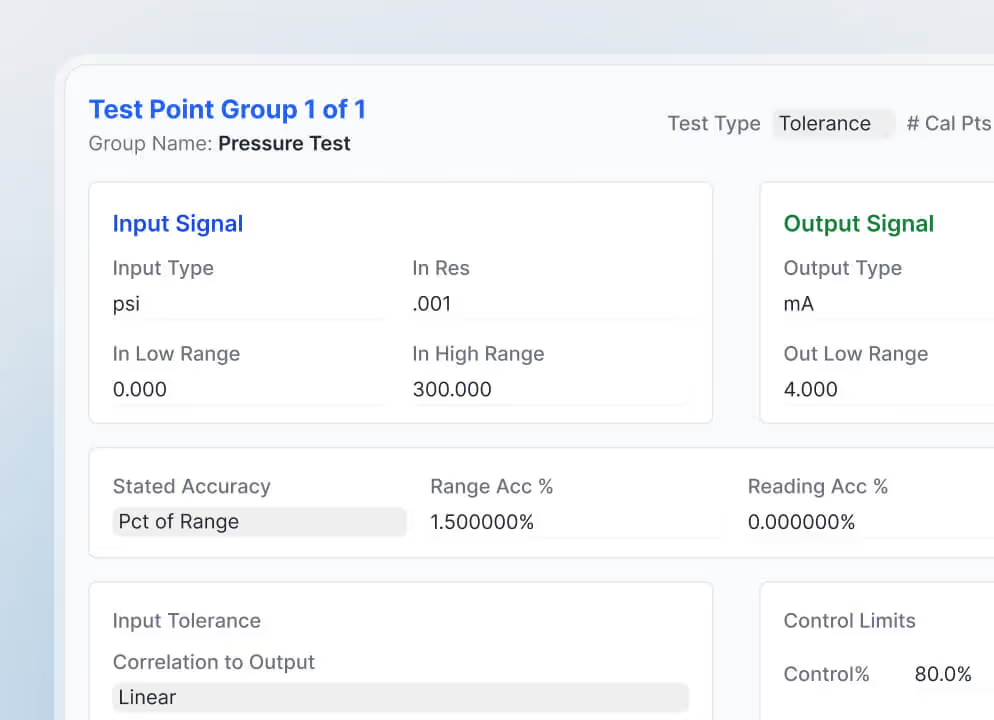
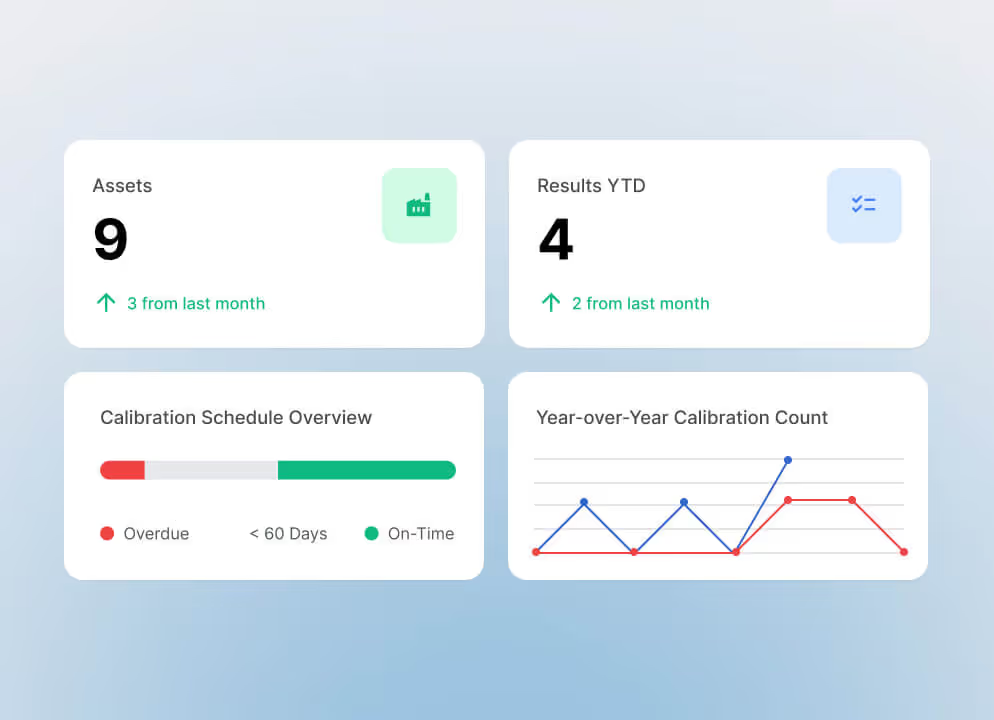
A CMS should provide a wide selection of essential features and tools required for effective calibration management. The software should be able to schedule calibration tasks, maintain calibration history, manage calibration certificates, generate reports, and provide alerts for overdue calibration duties.
Configurable
The CMS should be configurable to meet your specific needs, calibration requirements, workflows, and processes. This provides flexibility and agility, enabling you to get the optimum results from the solution.
Scalability
Your CMS of choice should be capable of growing with your enterprise’s needs. As your enterprise scales, your calibration management requirements will also expand. The software should be capable of handling larger volumes of data, more equipment, and additional users.
Data security
Data security is critical when selecting any software solution, and calibration management is no exception. Your CMS should provide robust security features to ensure that sensitive data including calibration certificates and equipment information are protected from unauthorized access of any kind.
Support and training
Enterprises should look for a CMS that provides adequate support and training. New software integrations can be daunting, which is why training to help users understand the software’s functionality and features is imperative. Technical support is also crucial to resolve issues or problems that may arise during use.
Prime Technologies – The provider of choice
With so many CMS options available today, keeping your enterprise efficient and productive requires the partnership with an experienced and reputable service provider.
With over almost 30 years of experience, Prime Technologies has been a global leader in developing calibration management software. Our extensive expertise allows us to provide holistic, data-centric software that improve, integrate, and formalize your enterprise’s calibration and maintenance management endeavors.
As part of the TMA Systems family of companies, Prime Technologies is more empowered than ever to integrate world-class and cutting-edge asset management software into the very fabric of your operations.
- Global calibration management software market is projected to reach $489.47 million by 2027, reflecting growing demand for digital calibration and compliance solutions.
- Seamless integration with ERP and CMMS systems ensures accurate, real-time data exchange and eliminates manual recordkeeping errors.
- A scalable, secure, and configurable CMS adapts to evolving enterprise needs, supporting more users, assets, and data without compromising performance.

Download the eBook now
You’re all set!
Your eBook is on its way to your inbox. We hope it brings fresh insights and practical takeaways to help you get more from your maintenance operations.
Explore related resources
.avif)
The global calibration management software (CMS) market is projected to reach $489.47 million by 2027, underscoring the growing demand for digital accuracy and compliance solutions. Modern CMS platforms integrate seamlessly with ERP and CMMS systems, ensuring real-time data exchange and eliminating manual errors.
Calibration management software (CMS) is essential for maintaining the accuracy and reliability of enterprise equipment and devices. From reducing downtime to improving efficiency to increasing the overall profitability – CMS has become a necessary technology component with across industries.
Due to its trend-shifting nature, it is no surprise that the global CMS market is expected to reach $489.47 million by 2027. There is now a wide and diverse market for CMS – a factor that can make it challenging for enterprises to choose the right tool for their specific needs.
What are some of the key considerations for enterprises when picking a CMS?
Ease-of-use
The most important consideration for any software is its accessibility. When first choosing a CMS, you should look for a solution that is intuitive and user-friendly making it easy for any user to navigate and understand the software’s functionality.
Compatibility
Imagine buying the best possible software for your enterprise, but then finding out that it does not complement or supplement your existing operational framework. Choose a CMS that is compatible with the hardware and software currently being used by your organization. This ensures that it either fills a gap or adds value in tandem with existing software and hardware, resulting in a complete and more relevant IT-OT stack.
Integration
The CMS should integrate seamlessly with other enterprise software and systems, including ERP and CMMS. Integration ensures that data is transferred seamlessly between different software systems, a key to improving accuracy and reducing errors.
Features and functionality
A CMS should provide a wide selection of essential features and tools required for effective calibration management. The software should be able to schedule calibration tasks, maintain calibration history, manage calibration certificates, generate reports, and provide alerts for overdue calibration duties.
Configurable
The CMS should be configurable to meet your specific needs, calibration requirements, workflows, and processes. This provides flexibility and agility, enabling you to get the optimum results from the solution.
Scalability
Your CMS of choice should be capable of growing with your enterprise’s needs. As your enterprise scales, your calibration management requirements will also expand. The software should be capable of handling larger volumes of data, more equipment, and additional users.
Data security
Data security is critical when selecting any software solution, and calibration management is no exception. Your CMS should provide robust security features to ensure that sensitive data including calibration certificates and equipment information are protected from unauthorized access of any kind.
Support and training
Enterprises should look for a CMS that provides adequate support and training. New software integrations can be daunting, which is why training to help users understand the software’s functionality and features is imperative. Technical support is also crucial to resolve issues or problems that may arise during use.
Prime Technologies – The provider of choice
With so many CMS options available today, keeping your enterprise efficient and productive requires the partnership with an experienced and reputable service provider.
With over almost 30 years of experience, Prime Technologies has been a global leader in developing calibration management software. Our extensive expertise allows us to provide holistic, data-centric software that improve, integrate, and formalize your enterprise’s calibration and maintenance management endeavors.
As part of the TMA Systems family of companies, Prime Technologies is more empowered than ever to integrate world-class and cutting-edge asset management software into the very fabric of your operations.
- Global calibration management software market is projected to reach $489.47 million by 2027, reflecting growing demand for digital calibration and compliance solutions.
- Seamless integration with ERP and CMMS systems ensures accurate, real-time data exchange and eliminates manual recordkeeping errors.
- A scalable, secure, and configurable CMS adapts to evolving enterprise needs, supporting more users, assets, and data without compromising performance.

Register for your free webinar
You’re all set!
Your webinar is on its way to your inbox. We hope it brings fresh insights and practical takeaways to help you get more from your maintenance operations.
Explore related resources
.avif)
Calibration management software (CMS) is essential for maintaining the accuracy and reliability of enterprise equipment and devices. From reducing downtime to improving efficiency to increasing the overall profitability – CMS has become a necessary technology component with across industries.
Due to its trend-shifting nature, it is no surprise that the global CMS market is expected to reach $489.47 million by 2027. There is now a wide and diverse market for CMS – a factor that can make it challenging for enterprises to choose the right tool for their specific needs.
What are some of the key considerations for enterprises when picking a CMS?
Ease-of-use
The most important consideration for any software is its accessibility. When first choosing a CMS, you should look for a solution that is intuitive and user-friendly making it easy for any user to navigate and understand the software’s functionality.
Compatibility
Imagine buying the best possible software for your enterprise, but then finding out that it does not complement or supplement your existing operational framework. Choose a CMS that is compatible with the hardware and software currently being used by your organization. This ensures that it either fills a gap or adds value in tandem with existing software and hardware, resulting in a complete and more relevant IT-OT stack.
Integration
The CMS should integrate seamlessly with other enterprise software and systems, including ERP and CMMS. Integration ensures that data is transferred seamlessly between different software systems, a key to improving accuracy and reducing errors.
Features and functionality
A CMS should provide a wide selection of essential features and tools required for effective calibration management. The software should be able to schedule calibration tasks, maintain calibration history, manage calibration certificates, generate reports, and provide alerts for overdue calibration duties.
Configurable
The CMS should be configurable to meet your specific needs, calibration requirements, workflows, and processes. This provides flexibility and agility, enabling you to get the optimum results from the solution.
Scalability
Your CMS of choice should be capable of growing with your enterprise’s needs. As your enterprise scales, your calibration management requirements will also expand. The software should be capable of handling larger volumes of data, more equipment, and additional users.
Data security
Data security is critical when selecting any software solution, and calibration management is no exception. Your CMS should provide robust security features to ensure that sensitive data including calibration certificates and equipment information are protected from unauthorized access of any kind.
Support and training
Enterprises should look for a CMS that provides adequate support and training. New software integrations can be daunting, which is why training to help users understand the software’s functionality and features is imperative. Technical support is also crucial to resolve issues or problems that may arise during use.
Prime Technologies – The provider of choice
With so many CMS options available today, keeping your enterprise efficient and productive requires the partnership with an experienced and reputable service provider.
With over almost 30 years of experience, Prime Technologies has been a global leader in developing calibration management software. Our extensive expertise allows us to provide holistic, data-centric software that improve, integrate, and formalize your enterprise’s calibration and maintenance management endeavors.
As part of the TMA Systems family of companies, Prime Technologies is more empowered than ever to integrate world-class and cutting-edge asset management software into the very fabric of your operations.
Related resources
Related resources
You’ve seen what’s possible—connect with us to learn how TMA Systems can support your goals beyond the event.
You’ve read the insights, now see how TMA Systems helps teams put them into practice.


From ideas to impact
You’ve read the insights, now see how TMA Systems helps teams put them into practice.


From screen to solution
You’ve watched what’s possible, now see how TMA Systems works for your organization.


From insight to implementation
You’ve explored the strategies, now see how we can bring them to life across your real facilities.


From insight to implementation
You’ve explored the strategies, now see how we can bring them to life across your real facilities.


.avif)