



Achieve the most effective calibration record maintenance through software document management
In this post
%20(1).avif)
1
2
3
Digital calibration record systems minimize manual errors and ensure consistent, accurate documentation across all equipment. Automated alerts and real-time data access boost efficiency while preventing missed calibration schedules. With secure storage and easy retrieval, organizations can streamline audits, maintain compliance, and adapt confidently to evolving industry standard
Calibration records are vital components of quality control and reliability across various industries. It serves as documented proof that measuring instruments and equipment are functioning correctly and providing accurate results. The accuracy of these instruments is paramount, as any deviation could lead to costly errors or, in some cases, life-threatening consequences. However, managing calibration records can be a daunting task, especially when done manually. This blog post explores the importance of calibration records, the challenges associated with their management, and how document management software solutions can streamline this process.
Challenges in managing calibration records
Traditionally, calibration records were maintained in paper form. While this may have sufficed in the past, manual record-keeping presents several challenges. The most common one is — susceptibility to human errors. Transcription errors, misfiling, and data entry mistakes often compromise the accuracy of calibration records.
Paper records can also be difficult to access, especially when needed urgently. This can lead to delays in decision-making and problem-solving. Not to mention, storing a large volume of paper records requires physical space and can become a logistical challenge. In addition, keeping up with evolving industry standards and regulations is more challenging with manual record-keeping.
Role of software solutions in calibration records management
Document management software solutions are engineered to address the shortcomings of manual calibration record management, offering a multitude of advantages. These benefits encompass enhanced accuracy and consistency, as automation significantly diminishes the potential for human errors, thereby ensuring that calibration records remain consistently precise.
Furthermore, these systems provide superior accessibility and retrieval capabilities, with digital records readily available at any time and from any location, streamlining the process of data retrieval. Real-time updates and notifications are another valuable feature, as software solutions offer reminders for upcoming calibrations, reducing the risk of missing crucial dates.
In addition, these solutions are tailored to facilitate compliance with industry standards and regulations, incorporating features that aid organizations in adhering to the latest requirements and maintaining their regulatory obligations.
Key features to look for in calibration record management software
When choosing calibration record management software, it’s essential to consider the following key features:
- User-friendly interface: The software should be intuitive and easy for employees to use.
- Customization options: The ability to tailor the software to your organization’s unique needs and processes.
- Data security and access control: Robust security features to protect sensitive calibration data and ensure that only authorized personnel can access or modify records.
- Integration capabilities: Compatibility with other software or systems already in use within the organization.
- Reporting and analytics features: Tools for generating reports and extracting valuable insights from calibration data.
Steps for implementing calibration record management software
Implementing calibration record management software involves several critical steps:
Step 1: Assessing your organization’s needs
Identify the specific requirements and goals of your organization in terms of calibration record management.
Step 2: Selecting the right software solution
Research and choose a software solution that aligns with your organization’s needs and offers the features mentioned above.
Step 3: Data migration and system setup
Migrate existing calibration records to the new software and configure the system to meet your requirements.
Step 4: User training and onboarding
Ensure that all relevant employees are trained to use the software effectively.
Prime Technologies: Pioneering calibration record innovation
Prime Technologies offers state-of-the-art solutions that can revolutionize how your organization handles calibration records. Our user-friendly interfaces, robust data security, and powerful analytics capabilities make us a trusted partner for organizations seeking a comprehensive and efficient calibration management solution. By partnering with Prime Technologies, you can take your calibration record management to the next level, ensuring not only precision and compliance but also a strategic advantage in an ever-evolving business landscape. Don’t miss the opportunity to streamline your calibration record management – take the step towards excellence with us.
- Digital calibration record systems reduce human error and data entry mistakes, ensuring accuracy and consistency across all equipment documentation.
- Automated alerts and real-time access to calibration data improve efficiency and prevent missed calibration deadlines.
- Secure, compliant, and easily retrievable digital records simplify audits and help organizations meet evolving industry standards with confidence.

Download the eBook now
You’re all set!
Your eBook is on its way to your inbox. We hope it brings fresh insights and practical takeaways to help you get more from your maintenance operations.
Explore related resources
.avif)
.svg)
Digital calibration record systems minimize manual errors and ensure consistent, accurate documentation across all equipment. Automated alerts and real-time data access boost efficiency while preventing missed calibration schedules. With secure storage and easy retrieval, organizations can streamline audits, maintain compliance, and adapt confidently to evolving industry standard
Calibration records are vital components of quality control and reliability across various industries. It serves as documented proof that measuring instruments and equipment are functioning correctly and providing accurate results. The accuracy of these instruments is paramount, as any deviation could lead to costly errors or, in some cases, life-threatening consequences. However, managing calibration records can be a daunting task, especially when done manually. This blog post explores the importance of calibration records, the challenges associated with their management, and how document management software solutions can streamline this process.
Challenges in managing calibration records
Traditionally, calibration records were maintained in paper form. While this may have sufficed in the past, manual record-keeping presents several challenges. The most common one is — susceptibility to human errors. Transcription errors, misfiling, and data entry mistakes often compromise the accuracy of calibration records.
Paper records can also be difficult to access, especially when needed urgently. This can lead to delays in decision-making and problem-solving. Not to mention, storing a large volume of paper records requires physical space and can become a logistical challenge. In addition, keeping up with evolving industry standards and regulations is more challenging with manual record-keeping.
Role of software solutions in calibration records management
Document management software solutions are engineered to address the shortcomings of manual calibration record management, offering a multitude of advantages. These benefits encompass enhanced accuracy and consistency, as automation significantly diminishes the potential for human errors, thereby ensuring that calibration records remain consistently precise.
Furthermore, these systems provide superior accessibility and retrieval capabilities, with digital records readily available at any time and from any location, streamlining the process of data retrieval. Real-time updates and notifications are another valuable feature, as software solutions offer reminders for upcoming calibrations, reducing the risk of missing crucial dates.
In addition, these solutions are tailored to facilitate compliance with industry standards and regulations, incorporating features that aid organizations in adhering to the latest requirements and maintaining their regulatory obligations.
Key features to look for in calibration record management software
When choosing calibration record management software, it’s essential to consider the following key features:
- User-friendly interface: The software should be intuitive and easy for employees to use.
- Customization options: The ability to tailor the software to your organization’s unique needs and processes.
- Data security and access control: Robust security features to protect sensitive calibration data and ensure that only authorized personnel can access or modify records.
- Integration capabilities: Compatibility with other software or systems already in use within the organization.
- Reporting and analytics features: Tools for generating reports and extracting valuable insights from calibration data.
Steps for implementing calibration record management software
Implementing calibration record management software involves several critical steps:
Step 1: Assessing your organization’s needs
Identify the specific requirements and goals of your organization in terms of calibration record management.
Step 2: Selecting the right software solution
Research and choose a software solution that aligns with your organization’s needs and offers the features mentioned above.
Step 3: Data migration and system setup
Migrate existing calibration records to the new software and configure the system to meet your requirements.
Step 4: User training and onboarding
Ensure that all relevant employees are trained to use the software effectively.
Prime Technologies: Pioneering calibration record innovation
Prime Technologies offers state-of-the-art solutions that can revolutionize how your organization handles calibration records. Our user-friendly interfaces, robust data security, and powerful analytics capabilities make us a trusted partner for organizations seeking a comprehensive and efficient calibration management solution. By partnering with Prime Technologies, you can take your calibration record management to the next level, ensuring not only precision and compliance but also a strategic advantage in an ever-evolving business landscape. Don’t miss the opportunity to streamline your calibration record management – take the step towards excellence with us.
- Digital calibration record systems reduce human error and data entry mistakes, ensuring accuracy and consistency across all equipment documentation.
- Automated alerts and real-time access to calibration data improve efficiency and prevent missed calibration deadlines.
- Secure, compliant, and easily retrievable digital records simplify audits and help organizations meet evolving industry standards with confidence.
Register for your free webinar
You’re all set!
Your webinar is on its way to your inbox. We hope it brings fresh insights and practical takeaways to help you get more from your maintenance operations.
Explore related resources
.svg)
.svg)

.avif)
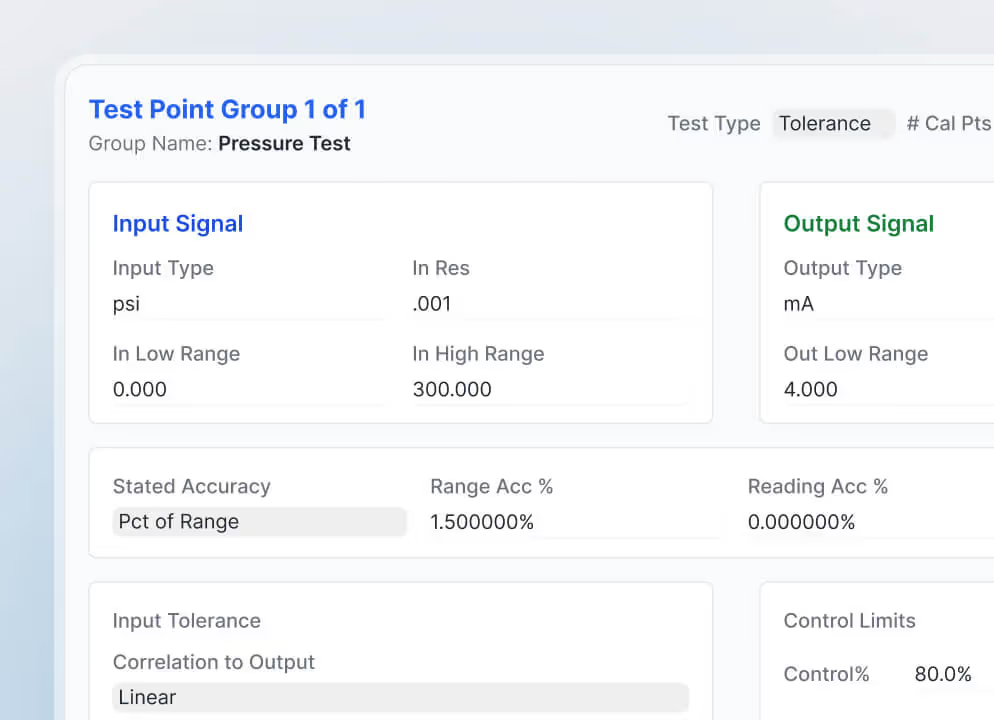

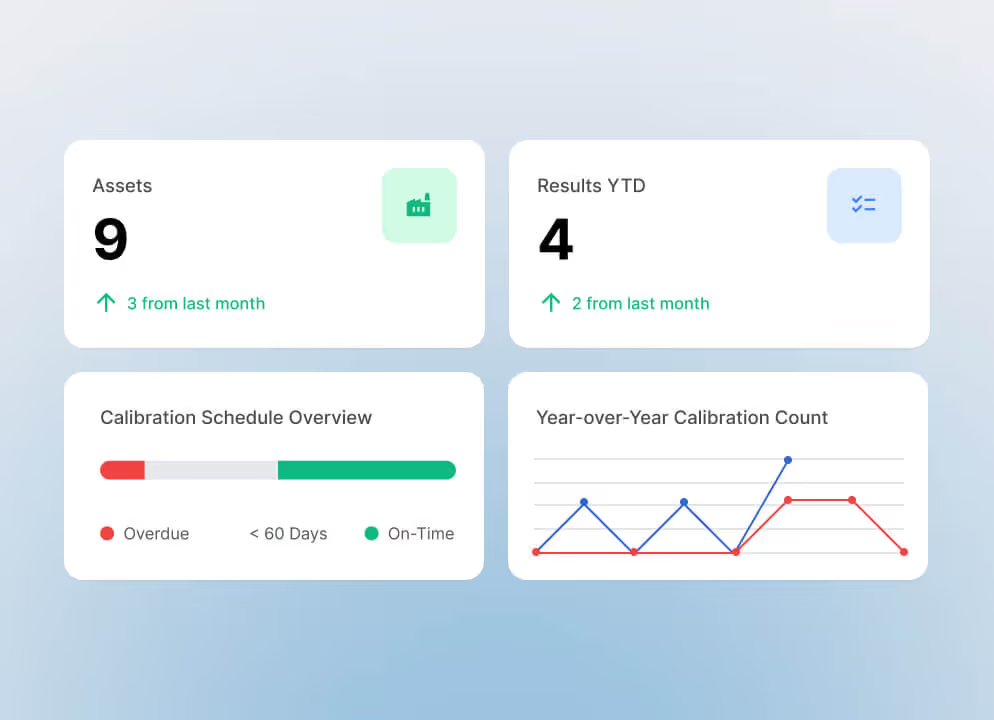
Calibration records are vital components of quality control and reliability across various industries. It serves as documented proof that measuring instruments and equipment are functioning correctly and providing accurate results. The accuracy of these instruments is paramount, as any deviation could lead to costly errors or, in some cases, life-threatening consequences. However, managing calibration records can be a daunting task, especially when done manually. This blog post explores the importance of calibration records, the challenges associated with their management, and how document management software solutions can streamline this process.
Challenges in managing calibration records
Traditionally, calibration records were maintained in paper form. While this may have sufficed in the past, manual record-keeping presents several challenges. The most common one is — susceptibility to human errors. Transcription errors, misfiling, and data entry mistakes often compromise the accuracy of calibration records.
Paper records can also be difficult to access, especially when needed urgently. This can lead to delays in decision-making and problem-solving. Not to mention, storing a large volume of paper records requires physical space and can become a logistical challenge. In addition, keeping up with evolving industry standards and regulations is more challenging with manual record-keeping.
Role of software solutions in calibration records management
Document management software solutions are engineered to address the shortcomings of manual calibration record management, offering a multitude of advantages. These benefits encompass enhanced accuracy and consistency, as automation significantly diminishes the potential for human errors, thereby ensuring that calibration records remain consistently precise.
Furthermore, these systems provide superior accessibility and retrieval capabilities, with digital records readily available at any time and from any location, streamlining the process of data retrieval. Real-time updates and notifications are another valuable feature, as software solutions offer reminders for upcoming calibrations, reducing the risk of missing crucial dates.
In addition, these solutions are tailored to facilitate compliance with industry standards and regulations, incorporating features that aid organizations in adhering to the latest requirements and maintaining their regulatory obligations.
Key features to look for in calibration record management software
When choosing calibration record management software, it’s essential to consider the following key features:
- User-friendly interface: The software should be intuitive and easy for employees to use.
- Customization options: The ability to tailor the software to your organization’s unique needs and processes.
- Data security and access control: Robust security features to protect sensitive calibration data and ensure that only authorized personnel can access or modify records.
- Integration capabilities: Compatibility with other software or systems already in use within the organization.
- Reporting and analytics features: Tools for generating reports and extracting valuable insights from calibration data.
Steps for implementing calibration record management software
Implementing calibration record management software involves several critical steps:
Step 1: Assessing your organization’s needs
Identify the specific requirements and goals of your organization in terms of calibration record management.
Step 2: Selecting the right software solution
Research and choose a software solution that aligns with your organization’s needs and offers the features mentioned above.
Step 3: Data migration and system setup
Migrate existing calibration records to the new software and configure the system to meet your requirements.
Step 4: User training and onboarding
Ensure that all relevant employees are trained to use the software effectively.
Prime Technologies: Pioneering calibration record innovation
Prime Technologies offers state-of-the-art solutions that can revolutionize how your organization handles calibration records. Our user-friendly interfaces, robust data security, and powerful analytics capabilities make us a trusted partner for organizations seeking a comprehensive and efficient calibration management solution. By partnering with Prime Technologies, you can take your calibration record management to the next level, ensuring not only precision and compliance but also a strategic advantage in an ever-evolving business landscape. Don’t miss the opportunity to streamline your calibration record management – take the step towards excellence with us.


Related resources
Related resources
You’ve seen what’s possible—connect with us to learn how TMA Systems can support your goals beyond the event.
You’ve read the insights, now see how TMA Systems helps teams put them into practice.


From ideas to impact
You’ve read the insights, now see how TMA Systems helps teams put them into practice.
From screen to solution
You’ve watched what’s possible, now see how TMA Systems works for your organization.
From results to reality
You’ve seen the success, now discover how TMA Systems can deliver it for your team.
From insight to implementation
You’ve explored the strategies, now see how we can bring them to life across your real facilities.
From insight to implementation
You’ve explored the strategies, now see how we can bring them to life across your real facilities.