
From Alarm Fatigue to Accountability: How a Higher Education Facilities Team Turned Building Alarms into Automated Maintenance Work
In this post
%20(1).avif)


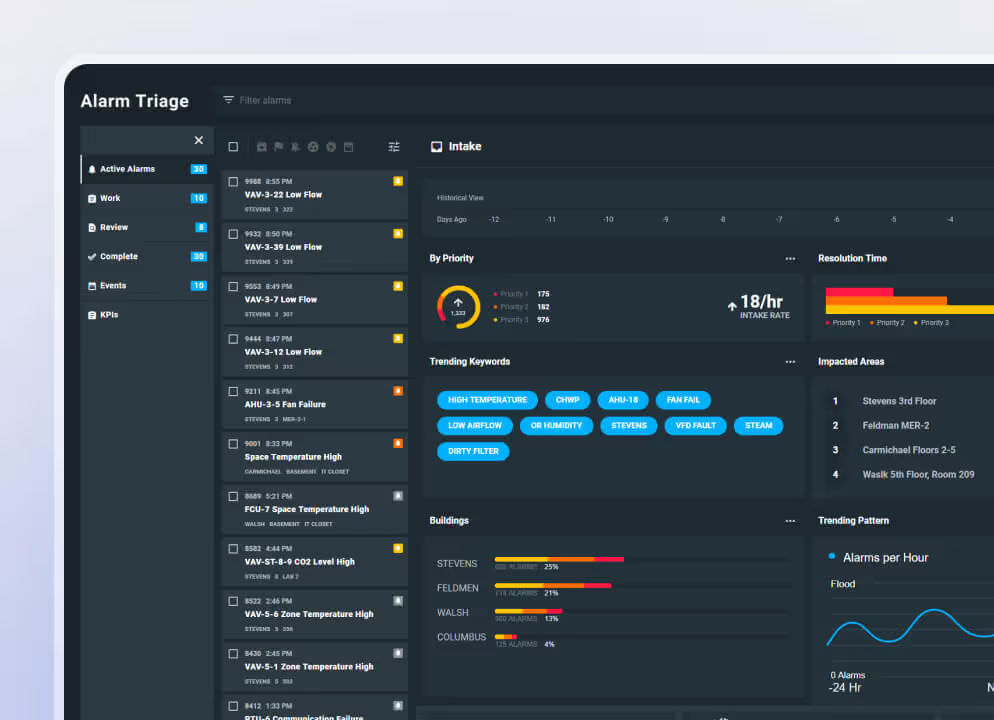

Our client is a higher education institution responsible for maintaining a large and expanding campus environment that includes dozens of facilities and millions of square feet of academic, residential, and operational space. As the institution added campuses and expanded existing buildings, its facilities team faced increasing operational complexity without a corresponding increase in staffing.
The facilities team supports building systems across multiple disciplines, including general maintenance, HVAC, plumbing, electrical, and building automation. To continue delivering reliable service with existing resources, the team looked for a better way to connect building alarms with maintenance action.
The challenge
As the campuses grew, the team needed a more structured way to connect building automation system alarms to work in their current CMMS, WebTMA. The team lacked a consistent way to turn building alarms into assigned, trackable maintenance work.
Instead, daily operations centered on immediate issues as they surfaced from building occupants. That made it hard to stay ahead of problems and sustain a coordinated approach.
The lack of a consistent alarm-to-work order process created several operational challenges:
- Work depended on someone noticing a problem and submitting a work order, which created gaps in coverage, especially after hours.
- Teams often reset equipment without addressing the root cause.
- Alarm volume was high and sometimes exceeded what teams could manage in a day, making it hard to separate meaningful alerts from nuisance signals.
- Without consistent workflows, work could be missed, delayed, or handled unevenly across teams.
"It was essentially Groundhog Day. Something happens, somebody resets something, and that's the end of that. We weren't really properly capturing that work." — Building Automation Systems Manager, Higher Education Institution
Over time, skilled trades carried out most of the workload; general maintenance had limited visibility, and teams often revisited the same issues without resolving the underlying problem.
The Virtual Facility solution
To create a more proactive operating model, the institution implemented Virtual Facility to integrate building automation system alarms directly within their CMMS. Rather than relying on manual reporting, alarms now automatically generate work orders and route them to the appropriate personnel for action.
This automated workflow helps ensure issues are identified and addressed as they occur, even during nights, weekends, and other periods when facilities may be unoccupied.
Building the foundation
The implementation included close collaboration between leadership, maintenance teams, HVAC specialists, and CMMS administrators. Together, they developed the framework needed to support effective alarm management.
Key implementation activities included:
- Defining alarm categories and priority levels
- Organizing and mapping equipment assets within their CMMS
- Developing standard operating procedures for alarm response
- Reinforcing escalation paths for maintenance staff, skilled trades, supervisors, and vendors
- Tuning alarm thresholds to reduce unnecessary notifications and improve signal quality
This approach transformed critical alarm response from a collection of isolated events into a standardized maintenance workflow
A structured response process
Work now follows a defined escalation path:
- General maintenance performs the initial response
- Skilled trades investigate and resolve more complex issues
- Supervisors, contractors, or equipment manufacturers become involved when additional expertise is required
Because every issue remains visible until completed, teams have greater accountability and fewer opportunities for work to be overlooked.
"Now we're asking questions. Now we're making changes. And we're spreading out our workflow so that it's not just the skilled trades." — Building Automation Systems Manager, Higher Education Institution
Turning nuisance alarms into actionable insight
The team also changed how it viewed nuisance alarms. Rather than ignoring recurring alerts, facilities staff began using alarm trends to identify larger equipment and operational issues.
Repeated alarm activity now helps teams:
- Identify underperforming equipment
- Create targeted internal work orders
- Provide documented evidence during vendor discussions
- Address recurring issues before they become larger failures
The result is a more proactive maintenance strategy focused on root-cause resolution rather than repeated resets.
Results & impact
With a structured workflow in place, the team saw more consistent responses and clearer visibility into operations.
Faster, more consistent response
- Alarms are often addressed within 30 minutes
- Work orders typically reach technicians within 20 minutes
- Issues that once went unnoticed overnight or over the weekend are now captured and handled as they occur
“Within 20 minutes, a mechanic had it on their tablet and took care of it without any human interaction” — Building Automation Systems Manager, Higher Education Institution
Better accountability and follow-through
The automated process provides visibility throughout the entire maintenance lifecycle.
- Every alarm is tracked through resolution
- Open work remains visible until completed
- Teams can track repair history, vendor involvement, and outstanding issues
- Problems waiting on parts or contractor support are less likely to be forgotten
"There were times when things would get forgotten. Now it stays in someone's queue until it's resolved." — Building Automation Systems Manager, Higher Education Institution
Improved root-cause resolution
By reducing reliance on manual processes and equipment resets, the team is better equipped to investigate and resolve the underlying causes of failures.
- Recurring issues are identified and addressed more effectively
- Historical alarm and work-order data support better decision-making
- Vendors receive documented evidence that helps accelerate troubleshooting and repair efforts
More balanced workload across the team
- General maintenance handles more initial response
- Skilled trades spend more time on complex diagnosis and repair
Stronger performance under pressure
- During a steam outage in freezing conditions, teams responded and coordinated repairs across shifts without waiting for manager direction
As the campus has grown, the team has absorbed additional workload without increasing staff, maintaining steady responses with less strain on skilled trades.
Looking ahead
The team continues to refine how alarms are structured and prioritized as more data becomes available. Categories are adjusted to better reflect how systems behave, helping teams focus on the issues that matter most.
Alarm and repair history are shaping how recurring issues are handled, guiding vendor work and addressing problems earlier.
As new campuses come online, the same workflows are applied to maintain consistency.
The team is also preparing for workforce changes. As experienced technicians retire, newer staff rely more on system-driven workflows and mobile tools, helping maintain performance without adding resources.
"We're trying to manage our buildings and manage our assets with the resources we have. We're trying to do more with less." — Building Automation Systems Manager, Higher Education Institution
Related resources
From results to reality
You’ve seen the success, now discover how TMA Systems can deliver it for your team.