
CMMS for hospitals: A 2026 guide to maintenance and compliance
In this post
%20(1).avif)

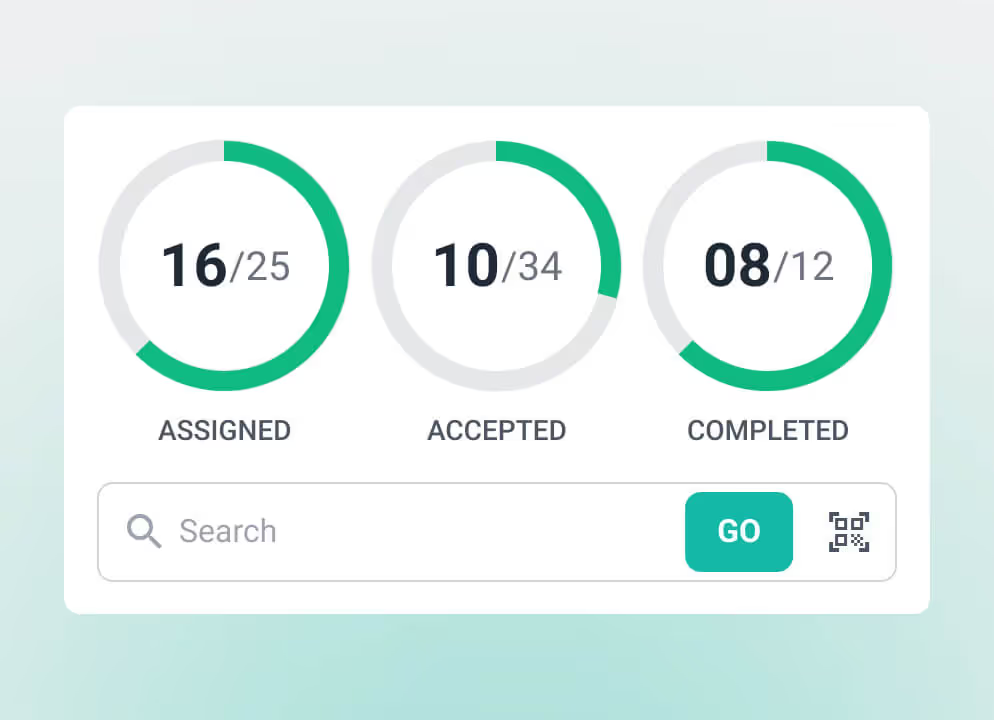

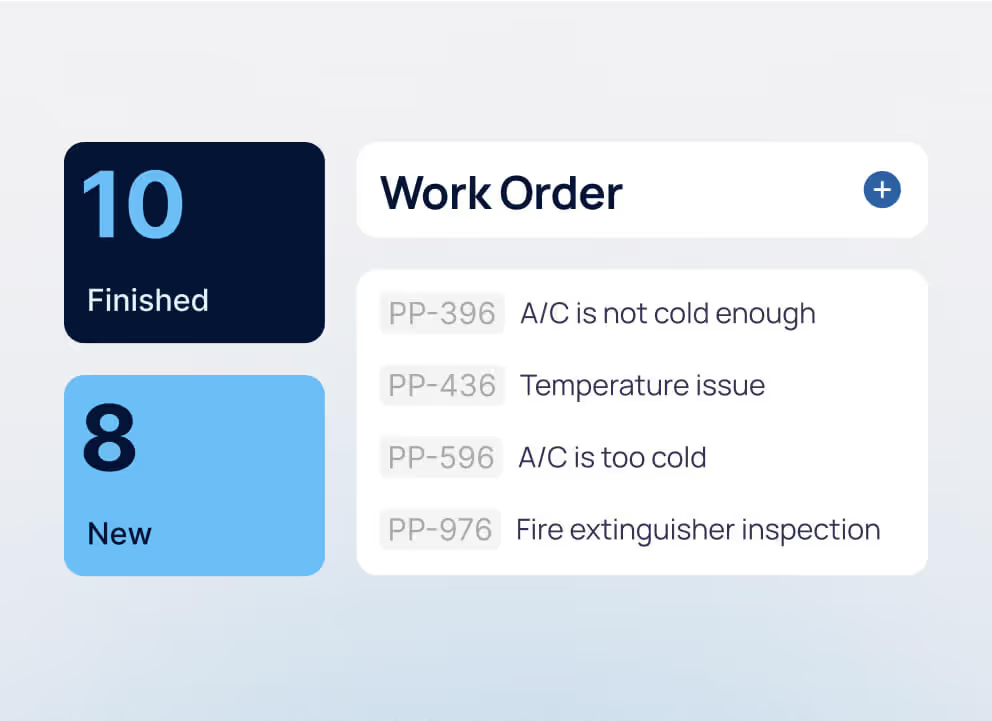

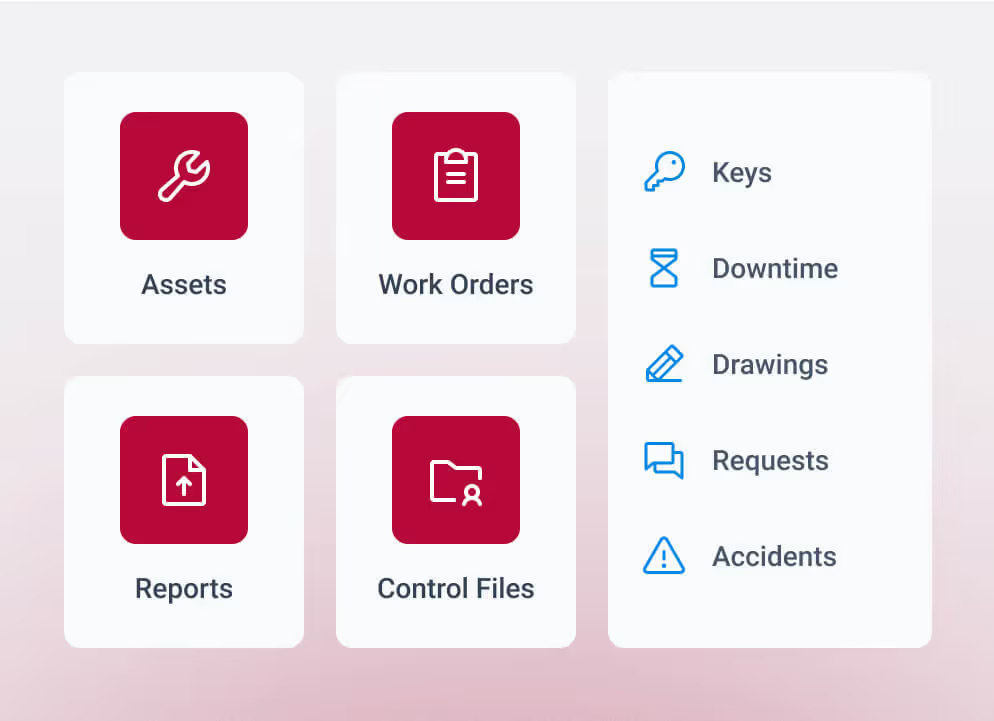

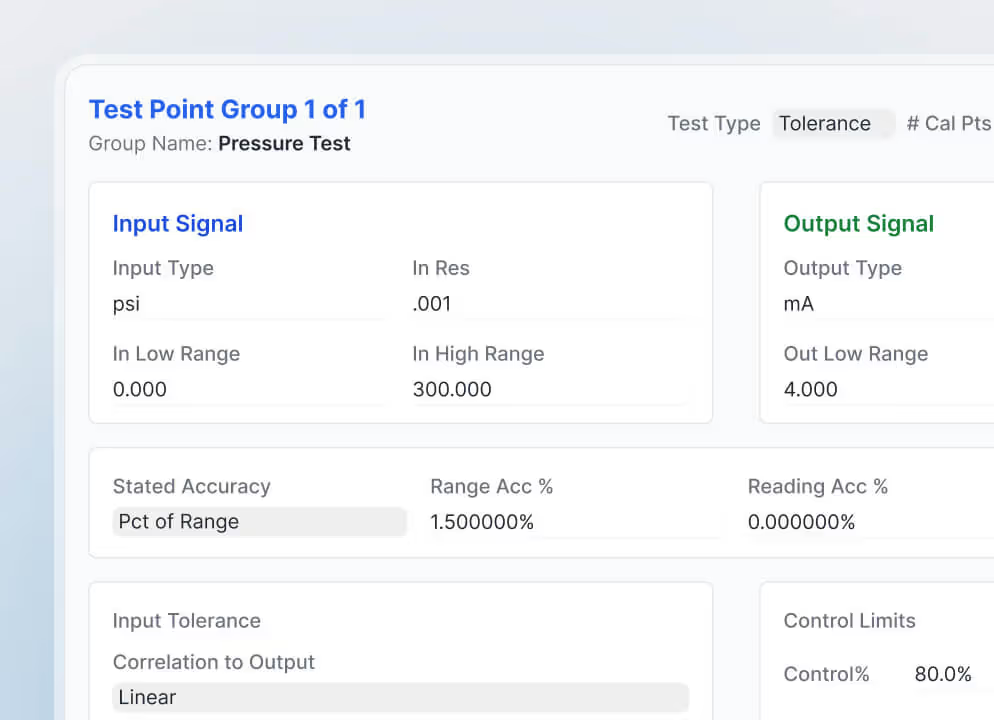



A CMMS (computerized maintenance management system) helps hospitals to automate maintenance, improve operational efficiency, keep systems running safely, and achieve compliance and audit-readiness.
The question isn’t whether a hospital needs preventive maintenance, reliable documentation, or visibility into critical assets. It’s whether the systems supporting the work make it easier to do well.
Hospital facilities teams already know the stakes: 24/7 operations, regulatory requirements, aging critical equipment, rising costs, and limited skilled labor. The more useful question when evaluating a hospital facility management software is how well it supports the work behind those responsibilities.
Hospitals and clinics accounted for 57.82% of the healthcare facilities management market in 2025, with regulatory requirements and skilled workforce shortages among the forces shaping the market. For facilities teams, that puts even more importance on the systems used to manage preventive maintenance, document work, support compliance readiness, and create visibility across healthcare facilities and assets. All of this underscores the importance and impact of a CMMS for hospitals.
This guide enables you to take a step-by-step, practical approach to evaluating CMMS software for hospitals. You should start with an understanding of the work itself. Then, look at the required capabilities in support of such work.
Why hospital maintenance requires a different approach
In a hospital, maintenance priorities aren’t determined by the asset alone. Teams also have to consider where that asset is located, who relies on it, how its failure could affect patient care or patient safety, and what regulatory requirements apply.
- Patient care and safety: The potential impact on patients, staff, or clinical operations can change how quickly a maintenance issue needs to be addressed.
- Asset criticality: The role an asset plays in clinical care or hospital operations can determine how maintenance is prioritized.
- Regulatory compliance and documentation: Inspections, maintenance, and completed work need accurate records that teams can access when needed.
- Around-the-clock operations: Maintenance needs to be planned and completed with minimal disruption to patient care and hospital operations.
- Facility-wide consistency: Multiple buildings or locations require consistent maintenance practices across different assets, teams, and operational needs.
A hospital CMMS brings the information behind these decisions together, helping maintenance teams prioritize, document, and manage maintenance more consistently.
How a CMMS improves hospital maintenance and facility operations
It’s not uncommon for a large hospital to manage tens of thousands of assets, including biomedical, clinical, facility, infrastructure, IT, and general assets.
A CMMS gives hospital facilities teams a central system for managing maintenance work, asset information, documentation, and performance data. More importantly, it connects that information to the decisions that hospital maintenance teams make everyday: what needs attention, what comes first and whether the work is getting done.
Build a preventive maintenance program around critical hospital assets
Preventive maintenance isn’t simply about completing more scheduled work. A CMMS for hospitals helps teams build recurring maintenance schedules around asset requirements and criticality, while maintaining the service history needed to identify overdue or deferred work. This helps healthcare facilities teams focus resources on the assets with the greatest impact on patient care and hospital operations.
Prioritize maintenance based on patient care and operational risk
Not every work order carries the same level of risk. A hospital CMMS helps teams prioritize work using factors such as asset criticality, location, and potential impact on patient care or operations. With that context built into the work, teams can more consistently determine what needs attention first and route resources accordingly.
Keep maintenance documentation ready for surveys and audits
Survey readiness depends on being able to show that required maintenance and inspections were completed. A CMMS for hospitals centralizes maintenance histories, inspections, and PM records so teams can access documentation when needed. According to Grand View Research, CMMS platforms can also support this work by maintaining detailed maintenance records, tracking inspections, and generating compliance reports automatically.

Give technicians access to accurate information in the field
Technicians need accurate information where the work is happening. Mobile CMMS software access puts work orders, asset histories and maintenance information in their hands, while online and offline capabilities can keep work moving throughout areas where connectivity may be limited.
Connect maintenance data across hospitals, departments, and systems
A CMMS for hospitals creates a consistent way to capture maintenance and asset data across healthcare facilities while giving leaders visibility at both the system and facility level. Teams can compare PM completion, backlog, and asset performance across locations to identify trends and areas that may need attention.
Getting these outcomes depends on more than having the right functionality. A CMMS needs to fit the hospital’s workflows, existing systems, and operational complexity.
For healthcare organizations, HEMS provides a healthcare-specific CMMS built for HTM and medical equipment management, with capabilities for preventive maintenance, compliance documentation, reporting, mobile work, and capital planning.
For broader maintenance and facility operations, WebTMA provides CMMS/EAM capabilities for complex enterprise needs, while MEX offers a streamlined CMMS for managing day-to-day maintenance, work orders, preventive maintenance, and assets.
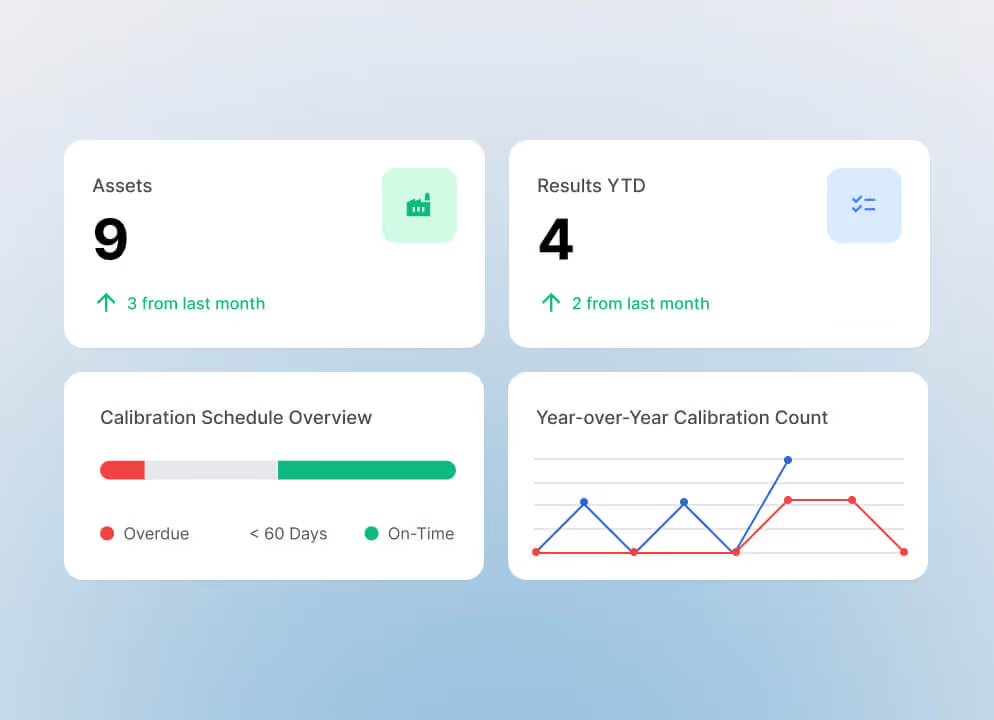
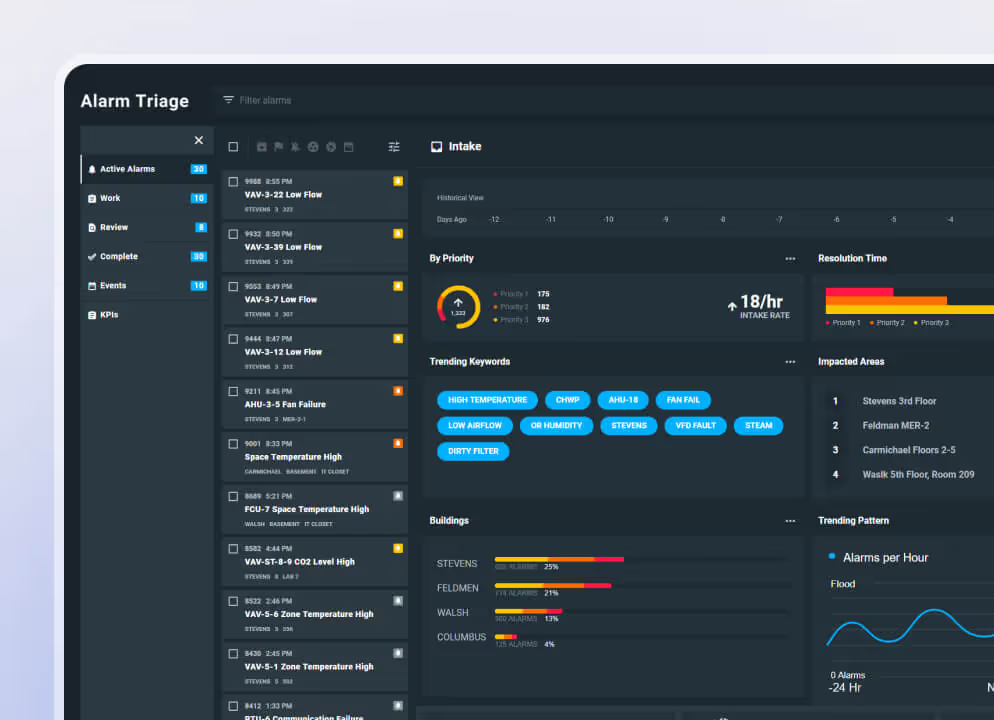
Hospitals can also extend their maintenance operations with specialized tools. Virtual Facility connects building systems and sensors with the CMMS to prioritize alarms and automatically turn validated alerts into maintenance work orders, while ProCal and ProCalX support calibration management, including calibration scheduling, records, audit trails, and compliance reporting.
The right solution depends on the hospital’s maintenance priorities, operational complexity, and the types of assets and workflows it needs to manage.
What hospitals should look for when choosing a CMMS
The right healthcare CMMS should support how maintenance happens today while giving the organization room to evolve. That means looking beyond individual features and evaluating how the system fits your workflows, people, technology environment, and reporting requirements.
What to evaluate
- Configurability: Can the CMMS adapt to your workflows, terminology, and priorities?
- Reporting and documentation: Can the teams easily capture, access, and report on the information they need?
- Mobile usability: Can technicians access and update the information they need wherever they’re working, online or offline?
- Integration capabilities: Can the CMMS connect with the systems your hospital already relies on?
- Scalability: Can it support more facilities, assets, and users without sacrificing consistency or visibility?
- Implementation and ongoing support: What will implementation require, and what support is available after go-live?
Before building a shortlist, map these criteria against how maintenance actually works in your organization today and where it needs to go next. Then use those requirements to structure vendor demos around real workflows rather than generic feature walkthroughs.
How TMA Systems supports hospital CMMS software needs
Hospital maintenance needs can vary significantly by facility, team, and asset type. TMA Systems offers CMMS and EAM solutions that can be configured and scaled around those needs, with implementation and ongoing support to help organizations put the technology into practice.
- WebTMA: A configurable CMMS/EAM platform for managing facility maintenance, work orders, preventive maintenance, critical asset information, and streamlined reporting across hospitals.
- HEMS: Built for healthcare technology teams to manage medical equipment, maintenance history, compliance documentation, and the lifecycle of clinical assets.
- MEX: Supports maintenance and asset management tools for work orders, inspections, asset lifecycle history, and preventive maintenance scheduling.
- Virtual Facility: Alarm intelligence software that connects building systems and sensors with the CMMS, helping hospital facilities teams prioritize alarms and automatically turn validated alerts into maintenance work orders.
- ProCal and ProCalX: Calibration management software for teams that need to schedule, document, and maintain traceable calibration records for regulated equipment.
The right fit starts with the work your teams need to accomplish, the systems already in place, and the complexity of your healthcare environment. TMA Systems can help identify the solution and the implementation approach that best supports those needs.
FAQs about CMMS for hospitals
Related resources
From ideas to impact
You’ve read the insights, now see how TMA Systems helps teams put them into practice.