



Case Study: Food & Beverage 2
In this post
%20(1).avif)


Background
This Fortune 500 company looked to ensure the company and its operations were in FDA compliance. Calibration records were not consistently kept; some were kept in digital files, such as Excel spreadsheets, while other records remained in paper format. When audited, this company could not deliver complete calibration results.
Objectives:
There were four primary goals of this organization, in addition to moving into full FDA regulatory compliance. One was to develop a better process to obtain and store data on instrumentation and instrument maintenance. Second, the company looked to develop a way for management to share calibration instructions and increase the accountability of the team. Third, there was a need to provide operators with data so they could move away from operating by “feel” (as an example, operators lacking accurate information would run too much steam to ensure a product was properly sterilized). And fourth, the company looked to eliminate inefficiencies caused by technicians frequently swapping instruments from one line to another to check readings and taking down two lines.
Solution
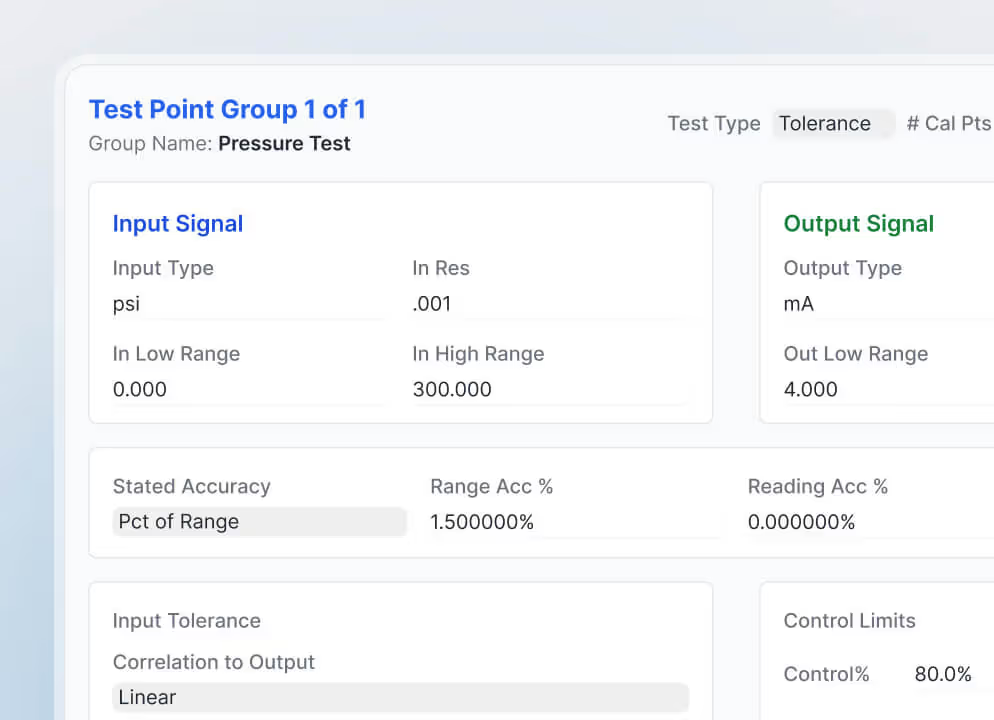
It was determined that ProCal 21 CFR Part 11 compliant calibration management software would be the optimal solution. ProCal introduced a process and system to the team where they could consistently and accurately record results. ProCal brought immediate results that will continue to improve over time with additional optimization.
Result
Once the transition to ProCal was complete, there were clear benefits to using the new calibration solution:
Full FDA regulatory compliance: All records are now retained in one centralized location and are easily accessible.
Change out costs reduced: Eliminated need to take down lines during instrument change outs, resulting in ~$14K/hour cost reduction.
Energy cost savings: Steam usage went down 15–20% due to trust in instrumentation, resulting in a 9% reduction in the overall energy bill.
Costly reworks reduced: Finished product loss went down ~1%, resulting in $800K savings per year.
More efficient operations: Lines rarely gos to a non-sterile condition, resulting in $100K/year savings.
Related resources
From results to reality
You’ve seen the success, now discover how TMA Systems can deliver it for your team.

